
24/7 Customer Support

Free returns

Same-day & Next-day Delivery

Quality Guaranteed

Unlock Your Welcome Offers: FREE Delivery | Up to 80% OFF | Free 30-day JoyPlus trial
Download the APP
Upgrading your car's standard halogen bulbs to modern LED headlight bulbs is one of the most impactful changes you can make for night-time driving. The promise of brighter, clearer light is appealing, but the market is filled with options that can lead to frustration, wasted money and even an MOT failure. As a Joybuy Product Recommendation Officer, my role is to help you see through the marketing clutter and make a confident choice.
Before you buy, be aware of these common pitfalls that catch out many UK drivers:
To ensure you get a reliable and effective upgrade, focus on these core parameters. Getting them right is non-negotiable for performance and safety.
This is the most critical step. Headlight bulbs are not one-size-fits-all. Your vehicle requires a specific fitment code, which you can find in your owner's manual or printed on the base of the old bulb.
If your car was made in the last 15-20 years, it almost certainly has a CANbus system. This network allows different electronic parts of the car to communicate. When you replace a 55W halogen with a 25W LED, the system can misinterpret the lower power draw as a fault. A quality plug and play headlight will have integrated circuitry (a built-in driver or resistor) to report the correct status to your car's computer, preventing error codes. For some highly sensitive vehicle systems, an additional decoder may still be required.
An effective halogen replacement bulb must replicate the precise position of the original halogen filament. This ensures the light is correctly projected by your car's headlight reflector or projector housing, creating a sharp cut-off line. This illuminates the road and kerb ahead without spilling light upwards into the eyes of other drivers.
In terms of colour, most drivers prefer 6000K cool white headlights. This colour temperature provides a crisp, modern look similar to daylight, which can improve contrast and make it easier to spot hazards. While colour is a matter of preference, the beam pattern is a matter of safety and legality.
Instead of a generic list, we've matched specific bulbs to different types of UK drivers, explaining how each choice addresses the common pitfalls.
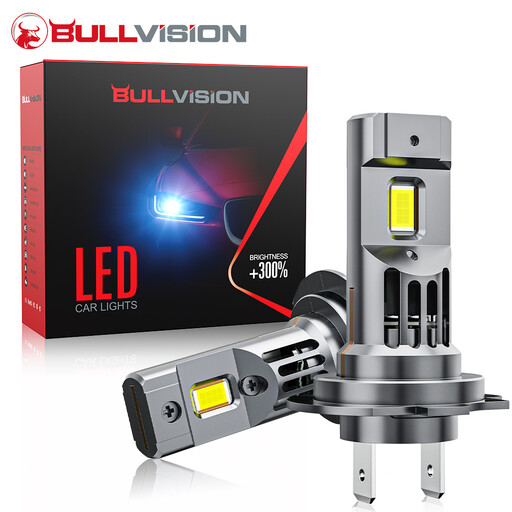
Why This Fits Their Persona: This is for the driver who wants a noticeable improvement over stock halogens without complexity. As an H4 bulb, it handles both high and low beams, making it a cost-effective, all-in-one upgrade for many popular hatchbacks and older cars on UK roads.
Its 1:1 size design aims to replicate the original halogen dimensions closely, increasing the chance of a clean fit without obstructing the dust cover. The integrated CANbus driver is designed for wide compatibility, reducing the risk of errors on many common vehicle models.
Provides both high and low beam functions in a single, easy-to-install unit. The design focuses on simulating the original beam pattern to provide a safer, more focused light.
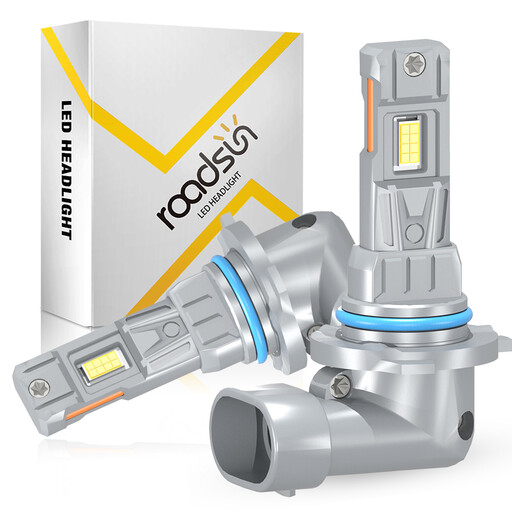
Why This Fits Their Persona: Ideal for the driver whose car is a daily workhorse. They prioritise reliability and longevity over everything else. The focus on a 70,000+ hour lifespan and robust, all-weather construction makes this a "fit and forget" solution for years of commuting.
It directly counters the trap of unrealistic lifespan claims by specifying its use of an integrated heat dissipation system and premium materials. The 1:1 sizing is designed for a direct fit, avoiding the need for modifications that could compromise reliability.
Engineered for an extended operational life, reducing the hassle of frequent replacements. Its durable, weatherproof build ensures consistent performance through rain, fog and cold British winters.
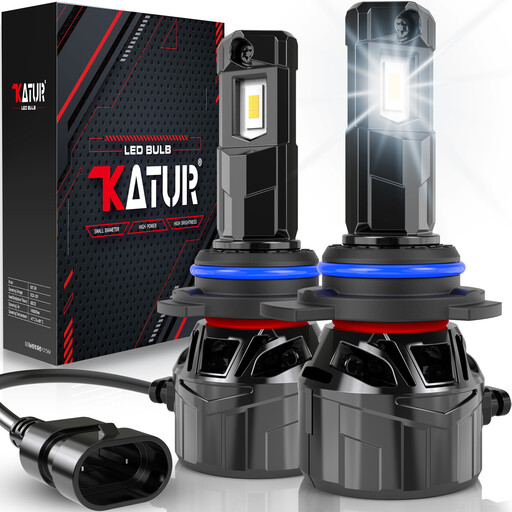
Why This Fits Their Persona: This driver seeks the highest level of performance and is interested in the technical specifications. The high wattage and lumen figures, combined with an advanced cooling system featuring a 16,000 RPM fan and copper heat tubes, appeal to those wanting maximum road illumination.
It avoids the "brightness vs focus" trap by pairing its high output with a design that aims for a precise beam. It also sets realistic expectations by noting that some sensitive vehicle systems may still require a decoder, honestly addressing the CANbus gamble.
Delivers a very high light output for superior visibility on dark B-roads and motorways. The sophisticated thermal management system is designed to sustain that high performance over time.
We have compiled a complete, real-time list of products that fully satisfy these strict selection criteria and UK safety regulations.
This is an important and complex point. According to DVSA guidelines updated in 2021, fitting LED bulbs into a headlight unit that was originally designed for halogen bulbs is technically an MOT failure. This is because the headlight's reflector and lens are optimised for a halogen filament, and an LED may not produce a compliant beam pattern. For this reason, many bright car bulbs are advertised for off-road use only. For road use, it is your responsibility to ensure any modification produces a safe, correct beam pattern that does not dazzle other road users and to stay informed of the latest MOT regulations.
For most vehicles, no special tools are required. The term plug and play headlights means they are designed to be a direct replacement, using the same connector and fitting as the original. However, accessing the bulb housing can be tight on some cars, and you may need to remove other components first. It is always recommended to consult your vehicle's manual and to wear gloves during installation, as bulbs can get hot and skin oils can damage the new LED.
While they use similar technology, they serve very different functions. Headlight bulbs are for general forward illumination. LED fog lights are designed to cast a very wide, low-profile beam that illuminates the road surface directly in front of the car, cutting underneath the fog layer. Using a standard headlight bulb in a fog light housing will create excessive glare in foggy conditions, reducing your visibility rather than improving it. Always use bulbs specifically designed for the intended application.