
24/7 Customer Support

Free returns

Same-day & Next-day Delivery

Quality Guaranteed

Unlock Your Welcome Offers: FREE Delivery | Up to 80% OFF | Free 30-day JoyPlus trial
Download the APP
Upgrading your car's standard halogen bulbs to modern LED headlight bulbs seems like a straightforward way to improve night-time visibility and give your vehicle a contemporary look. However, the market is flooded with options, and many UK drivers find themselves disappointed with bulbs that fail to deliver on their promises. Flickering lights, dashboard error warnings and a beam pattern that dazzles oncoming traffic are common complaints.
As the Joybuy Product Recommendation Officer, my role is to help you navigate these issues. This guide cuts through the marketing clutter to focus on what truly matters, ensuring you select reliable and effective car light bulbs that are fit for purpose.
Before you add any bulbs to your basket, be aware of these frequent pitfalls that can lead to wasted money and frustration.
Many brands advertise incredibly high lumen (brightness) figures. While a bright light is desirable, it is useless without control. The most critical factor is the beam pattern. A poorly designed bulb will scatter light everywhere, creating glare for other road users and failing to illuminate the road ahead effectively. This not only makes driving less safe but is also a reason for an MOT failure. A quality LED bulb should replicate the focused beam pattern of a standard halogen bulb.
The term "plug and play LED headlights" suggests a simple, tool-free installation. Unfortunately, this is not always the case. Some bulbs have bulky cooling fans or external drivers that prevent the headlight's dust cap from being refitted, exposing the unit to moisture and dirt. Others may require separate adapters to fit into the housing, adding an extra layer of complexity you were trying to avoid. A true plug-and-play bulb should have a 1:1 design, matching the size of the original bulb.
Modern vehicles use a Controller Area Network (CANbus) system to monitor the car's functions, including the lights. Standard halogen bulbs have a different power draw to LEDs. If an LED bulb is not designed correctly, the CANbus system may think the bulb has failed, resulting in a persistent dashboard warning light or flickering. While many products claim to be "CANbus error free LED bulbs," this is not a universal guarantee, especially for sensitive systems in many European cars.
To ensure your new automotive lighting is an improvement, focus on these core parameters.
Before looking at any other feature, you must identify the correct fitment code for your vehicle. This code (e.g., H7 LED bulb, H4 LED bulb, H11 LED bulb) is specific to your car's make and model for its dipped beam, main beam or fog lights. It is not interchangeable. You can find this information in your vehicle's handbook, by checking the markings on the existing bulb or using an online bulb finder tool.
LED chips generate significant heat, and managing this heat is crucial for performance and lifespan. There are two main types of cooling systems:
A bulb with an effective cooling system will maintain its brightness and last for its stated lifespan, which is often in the tens of thousands of hours.
Measured in Kelvin (K), colour temperature describes the appearance of the light. Standard halogens are typically around 3200K (warm yellow), while most cool white headlight bulbs are in the 6000K to 6500K range. This produces a crisp, white light similar to daylight, which many drivers find improves clarity and reduces eye strain.
Based on these practical considerations, we have matched several products to common UK driver profiles.
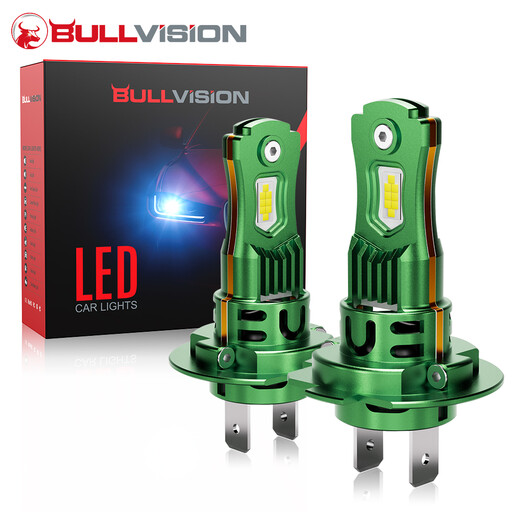
Why This Fits Their Persona: This user wants a noticeable, cost-effective improvement over their dim halogen bulbs without any installation hassle. They likely drive a common UK model and value a simple, direct replacement.
Its 1:1 mini design directly addresses the 'plug and play' pitfall, as it requires no extra adapters and is sized to fit within standard headlight housings, allowing the dust cap to be refitted easily.
Features a built-in cooling fan and an integrated CANbus-ready driver, aiming to provide a straightforward upgrade for a high percentage of vehicles without causing errors.
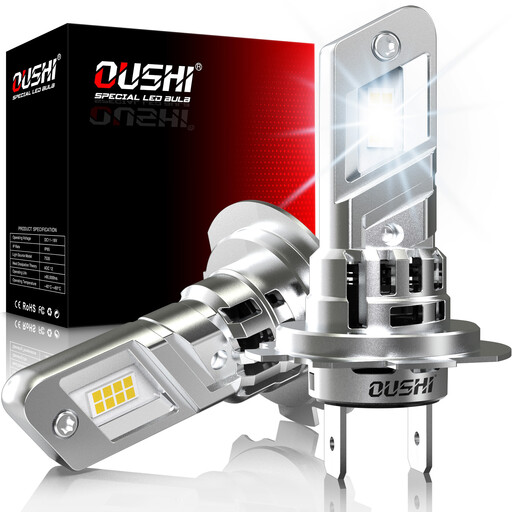
Why This Fits Their Persona: This driver owns a newer vehicle, possibly a German or other European brand, and prioritises performance and error-free operation. They are willing to invest in a higher-tier product to avoid the CANbus gamble.
This bulb is specifically marketed with an enhanced CANbus system that is better suited for European vehicles, directly tackling the most common source of dashboard errors and flickering for this user group.
Combines a high-speed turbo fan for efficient cooling with a 1:1 mini size for a true plug-and-play installation, offering both high performance and convenience.
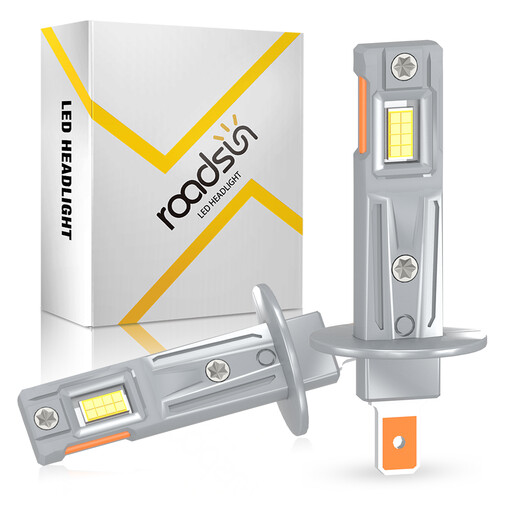
Why This Fits Their Persona: This user is specifically looking to upgrade their **LED fog light bulbs**. Their priority is not just brightness, but the ability of the light to cut through fog, rain and snow for maximum safety in poor British weather.
Instead of just focusing on raw lumens, this bulb's description highlights its "strong penetration performance," addressing the specific need for effective illumination in adverse conditions, rather than just creating a wall of glare.
Features a durable, IP67-rated build for all-weather reliability and a long lifespan. Its 1:1 mini size ensures a simple plug-and-play installation into the fog light housing.
We have compiled a complete, real-time list of products that fully satisfy these strict selection criteria and UK safety regulations.
The legality of aftermarket LED headlight bulbs in the UK is a nuanced topic. As of 2026, for a vehicle to pass its MOT, its headlamps must produce a clear and appropriate beam pattern that does not cause dazzle. While many LED upgrade bulbs are marketed for "off-road use," if they are designed to a high standard and correctly installed in a compatible headlight unit, they can produce a compliant beam pattern. It is the driver's responsibility to ensure their vehicle's lighting is safe and legal for road use.
It depends on your vehicle. Cars manufactured after the mid-2000s, particularly from European brands like Volkswagen, BMW, Audi and Mercedes-Benz, tend to have more sensitive CANbus systems. For these vehicles, an additional CANbus decoder may be required to prevent dashboard errors or flickering, even if the bulb is advertised as "CANbus ready." Many product descriptions will note this, so it is important to check for compatibility with your specific model.
For many cars, the process is as simple as changing a standard bulb: open the bonnet, access the back of the headlight unit, twist and remove the old bulb and insert the new one. However, on some models, access can be tight, and you may need to remove the battery or the entire headlight assembly to reach the bulbs. Always consult your vehicle's handbook first and ensure the lights are off and cool before you begin.