
24/7 Customer Support

Free returns

Same-day & Next-day Delivery

Quality Guaranteed

Unlock Your Welcome Offers: FREE Delivery | Up to 80% OFF | Free 30-day JoyPlus trial
Download the APP
Upgrading your car's halogen headlights to modern LEDs can transform your night-time driving experience, offering improved visibility and a sharper, more contemporary look. However, the market is filled with confusing claims and technical jargon that can lead to a frustrating and costly purchase. Many drivers end up with bulbs that flicker, throw error codes or fail an MOT.
As a Joybuy Product Recommendation Officer, my role is to help you navigate these challenges. This guide cuts through the marketing clutter, focusing on the practical details you need to select the right LED headlight bulbs for your vehicle. We will highlight common pitfalls and explain the key factors that ensure a successful car headlight upgrade.
Before you add any bulbs to your basket, be aware of these frequent issues that catch out unwary buyers:
To ensure you get a safe, effective and legal upgrade, focus on these three non-negotiable parameters.
First and foremost, you must match the bulb's fitment type to your vehicle's requirements. The most common types in the UK are:
Always check your car's owner's manual or inspect the existing bulb to confirm the fitment. Beyond the base, look for plug and play car bulbs that are designed to be a 1:1 replacement in size. Measure your headlight housing's depth to ensure there is enough clearance for the new bulb's cooling system and the dust cap.
The colour of the light is measured in Kelvin (K). Standard halogen bulbs are typically around 3200K, producing a yellowish light. Most bright car bulbs in the LED category are around 6000K cool white headlights, which provides a crisp, modern xenon white headlights look and excellent clarity. Avoid bulbs advertised above 6500K, as they can appear overly blue, reduce visibility in rain or fog and attract unwanted attention.
More importantly, the bulb's design must ensure a correct beam pattern. The LED chips should be positioned to mimic the filament in a halogen bulb. This creates the sharp horizontal cut-off needed for dipped beams, illuminating the road and verges without dazzling other road users.
LEDs generate heat, and managing it is critical to their performance and lifespan. An overheating bulb will dim and fail prematurely. Look for bulbs with a robust cooling system, which is usually one of two types:
A quality cooling system is what allows manufacturers to claim long lifespans, but always treat figures like "50,000 hours" as a theoretical maximum rather than a real-world guarantee.
We have filtered through the options to match specific products with common UK driver profiles.
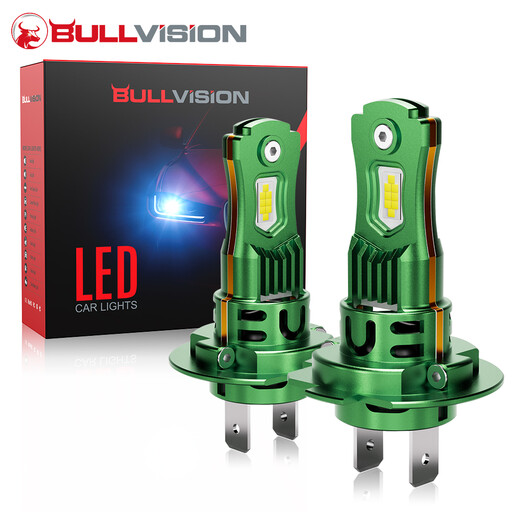
Why This Fits Their Persona: This user wants a noticeable improvement over stock halogens without complexity. These bulbs are designed for a direct, no-fuss replacement in common H7 fittings, making them ideal for a first-time car headlight upgrade.
Its 1:1 size design directly addresses the "universal fit" pitfall, aiming to fit within the original housing without needing modifications or leaving the dust cap off.
True plug-and-play installation with no adapter required. The built-in CANbus driver is designed for compatibility with a high percentage of vehicles.
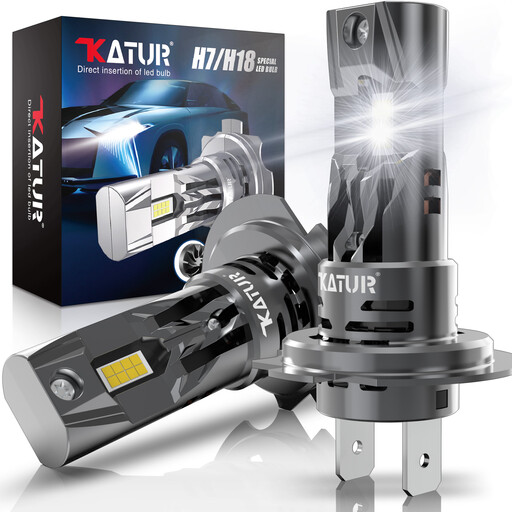
Why This Fits Their Persona: For drivers who frequently travel on unlit B-roads or motorways at night, maximum safe illumination is a priority. This bulb's high-power chips and active cooling are geared towards sustained, high-intensity output.
It tackles the beam pattern issue by using ultra-thin chip spacing to better simulate a halogen filament, aiming for a focused beam that minimises glare for oncoming traffic.
Features a powerful 16,000 RPM turbo fan and an external driver, a design choice that helps manage heat effectively for consistent brightness and a longer operational life.
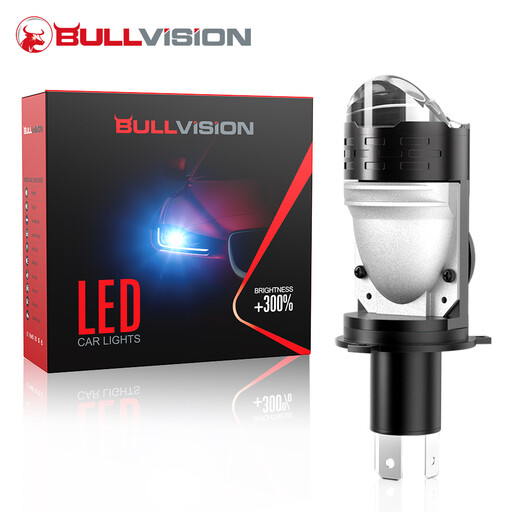
Why This Fits Their Persona: This is for owners of vehicles that use a single H4 bulb for both high and low beams. This bulb is specifically designed to perform both functions, providing a comprehensive upgrade in one package.
It directly addresses the beam pattern problem for dual-function bulbs by simulating the original H4 design to create distinct high and low beam patterns from a single unit.
Offers a complete high and low beam upgrade with a single, plug-and-play bulb. The integrated fan and CANbus-ready design provide a modern, all-in-one solution.
We have compiled a complete, real-time list of products that fully satisfy these strict selection criteria and UK safety regulations.
This is a critical point. As of late 2026, the regulations state that replacement bulbs must be E-marked to the relevant standard (ECE R37 for halogen) to be considered road legal. Most aftermarket LED bulbs are not E-marked for this purpose. While many will pass an MOT if they produce the correct beam pattern without causing glare, their use on public roads technically falls into a legal grey area. It is the vehicle owner's responsibility to ensure their car is roadworthy. We advise checking the latest DVSA guidelines before installation.
If your car was manufactured after 2005, it almost certainly has a CANbus system. Many CANbus error free LED bulbs have built-in resistors that work for the majority of vehicles. However, some premium European brands like BMW, Audi, Volkswagen and Mercedes-Benz have highly sensitive systems that may still detect the lower power draw and trigger a dashboard error. In these cases, an additional external CANbus decoder or resistor may be required.
While packaging often advertises lifespans of 30,000 to 50,000 hours, this is a theoretical figure achieved in laboratory conditions. The real-world lifespan of an LED headlight bulb is determined by the effectiveness of its cooling system and how often it is used. A bulb with a high-quality fan or a large, well-designed heat sink will last significantly longer than a cheaper alternative. Even so, a good quality LED bulb should comfortably outlast several sets of traditional halogen bulbs.