
24/7 Customer Support

Free returns

Same-day & Next-day Delivery

Quality Guaranteed

Unlock Your Welcome Offers: FREE Delivery | Up to 80% OFF | Free 30-day JoyPlus trial
Download the APP
Replacing dim halogen or ageing HID lighting can improve the appearance of a vehicle, but choosing LED headlight bulbs by brightness claims alone can lead to wasted money, poor beam control or warning lights on the dashboard. The correct bulb base, housing space, cooling method and vehicle electronics all matter.
This guide explains the main buying traps and compares suitable options for common H4, H7, HIR2/9012, HB4/9006 and D2S applications.
A bulb described as “universal” still needs the correct socket and physical clearance. An H7 LED headlight bulb cannot replace an H4 or HIR2 bulb simply because the voltage is similar. Check the existing bulb marking, handbook or a reliable vehicle fitment catalogue before ordering.
Also inspect the space behind the headlamp. A large heat sink or cooling fan may prevent the dust cap from being refitted properly.
Advertised lumen figures describe the stated light output, but they do not automatically confirm a controlled beam on the road. The LED chips should sit in a position similar to the original filament or HID arc. Poor alignment can create dark areas, excessive foreground light or glare for oncoming drivers.
Look for 1:1 bulb dimensions, narrow chip placement and clear installation guidance. After fitting, check the beam pattern and headlamp alignment.
LEDs use less energy than many halogen bulbs, but they still generate heat around the chips. Fan-cooled models can move heat quickly but may produce noise or eventually suffer fan failure. Fanless LED headlight bulbs are quieter and often easier to fit, although their aluminium body must have sufficient space to dissipate heat.
Some vehicles monitor bulb current and may show a dashboard error, flicker or rapid flashing. CANbus-ready headlight bulbs can reduce this risk, but no compatibility statement should be treated as universal. Sensitive vehicles may still need a decoder or resistor module.
Confirm both the base and function:
The terms high and low beam LED bulbs may describe a dual-beam H4 product or a pair intended for separate headlamp functions. Read the specification rather than relying on the title alone.
A 6000K LED headlight bulb generally produces a cool white appearance. A 6500K xenon white bulb appears slightly cooler and may look more blue-white. Colour temperature is not the same as brightness or beam quality.
For regular UK driving, choose a product with a controlled beam and suitable road compatibility rather than selecting only by the highest Kelvin figure. Check your vehicle’s lighting requirements, MOT position and insurer’s conditions before fitting an aftermarket conversion.
Aluminium housings, copper components and cooling fans are common ways to manage heat. IP65 or IP68 water-resistance ratings are product specifications, but the headlamp’s original seal and dust cap must also be restored correctly.
A plug-and-play LED bulb should connect to the factory socket without cutting wires or adding an external driver. Even so, installation is not always identical across vehicles. Switch off the lights, allow the original bulb to cool, avoid touching LED chips and test polarity, beam direction and dashboard warnings before completing the job.
In the UK, confirm that an LED conversion is suitable for your specific headlamp and road use. If the vehicle is used on public roads, check current MOT guidance, manufacturer instructions and insurance requirements.
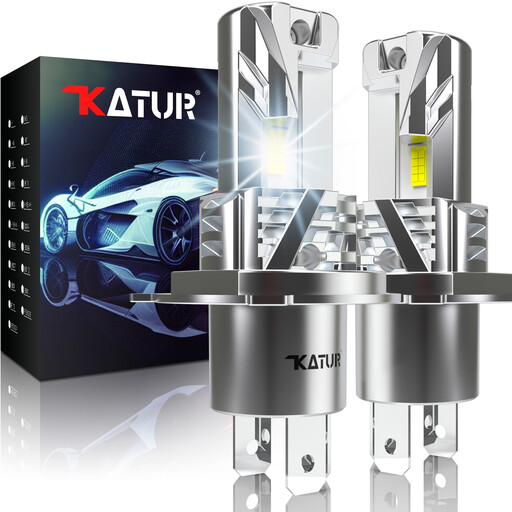
Why This Fits Their Persona: A compact option for drivers replacing one H4 bulb type in a car, SUV or motorbike, particularly where dust-cap space is limited.
The fanless mini design avoids fan noise and removes one moving component. Check the listing warning regarding CANbus-sensitive vehicles before purchase.
6000K white output, 1:1 mini halogen design, fanless construction and plug-and-play connection.
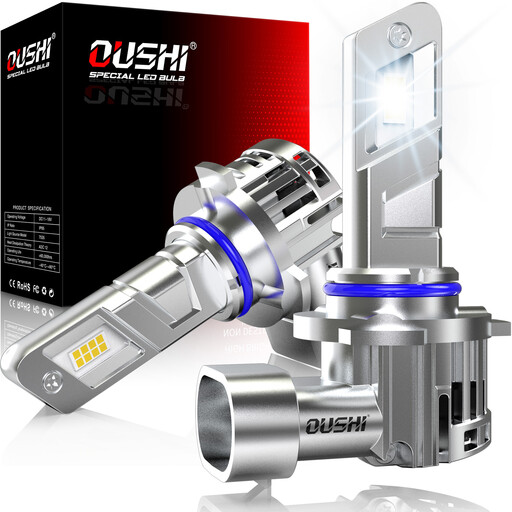
Why This Fits Their Persona: Suits owners seeking a compact HIR2 replacement with a stated high output, integrated driver and rapid fan cooling.
Its 1:1 mini format is designed for direct socket installation, while the listing notes that some sensitive vehicles may still require a CANbus decoder.
HIR2/9012 fitment, 6500K stated colour temperature, integrated driver and built-in turbo fan.
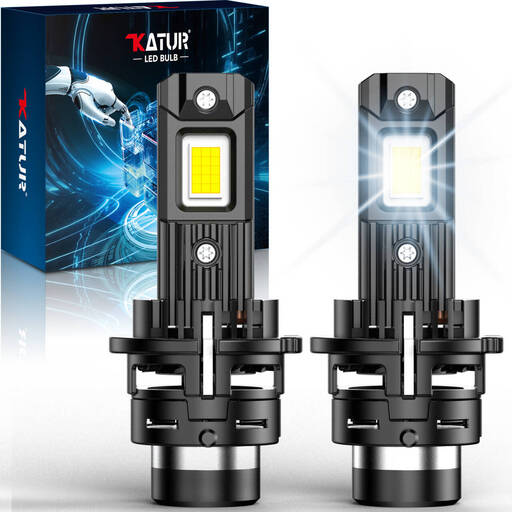
Why This Fits Their Persona: Designed for drivers replacing D2S HID bulbs who regularly travel on unlit roads and want an immediate-on LED alternative.
The product is specified for HID headlamp assemblies only, helping prevent an incorrect halogen-to-D2S assumption. Verify the original assembly before ordering.
1:1 size, stated 6500K colour, built-in 16,000RPM fan and D2S-specific replacement design.
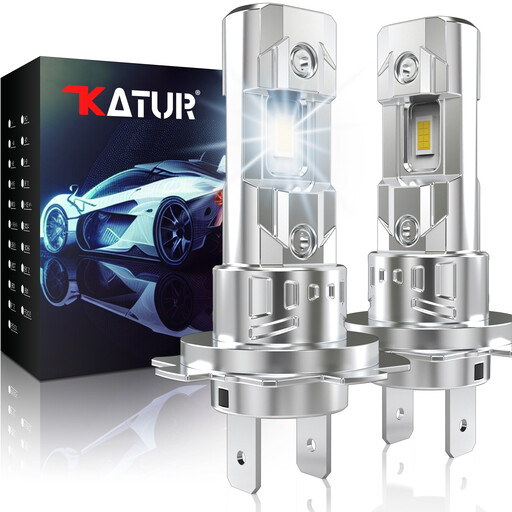
Why This Fits Their Persona: A practical match for regular commuters who prefer a quiet, compact bulb for an H7 socket.
The fanless construction avoids dependence on a moving cooling part, while the compact body helps with restricted housing space.
6000K white light, fanless design, waterproof specification and direct plug-and-play installation.
We have compiled a complete, real-time list of products that fully satisfy these strict selection criteria and UK safety regulations.
For a straightforward car headlight bulb replacement:
If the light pattern is scattered or other road users are dazzled, remove the bulb and reassess the fitment. A brighter-looking lamp is not useful if its beam is poorly controlled.
Legality can depend on the vehicle, headlamp approval, bulb design and intended use. Before fitting an aftermarket LED conversion, check current UK MOT guidance, the vehicle manufacturer’s information and your insurer’s requirements. Correct beam alignment and avoiding glare are essential.
Many listings state operating lives between 50,000 and 60,000 hours, but this is a manufacturer specification rather than a guarantee of actual service life. Heat, vibration, moisture, electrical conditions and cooling performance can all affect longevity.
They may use less power for a comparable lighting application, but the exact consumption varies by model. Check the stated wattage and confirm that the vehicle’s bulb-monitoring system is compatible. CANbus-ready designs may reduce warning messages, but some vehicles still need an additional decoder.