
24/7 Customer Support

Free returns

Same-day & Next-day Delivery

Quality Guaranteed

Unlock Your Welcome Offers: FREE Delivery | Up to 80% OFF | Free 30-day JoyPlus trial
Download the APP
Upgrading your car's lighting to modern LED headlight bulbs seems like a straightforward way to improve night-time visibility and give your vehicle a fresh, contemporary look. However, the market is filled with options that can lead to frustration, wasted money and even unsafe driving conditions. As a Joybuy Product Recommendation Officer, my role is to help you navigate past the marketing clutter and make an informed choice.
Before you buy, be aware of these common pitfalls that catch out many UK drivers:
To ensure you get a reliable and effective car light upgrade, focus on these core parameters rather than just the advertised brightness.
Based on these practical criteria, here are a few options tailored to different types of UK drivers.
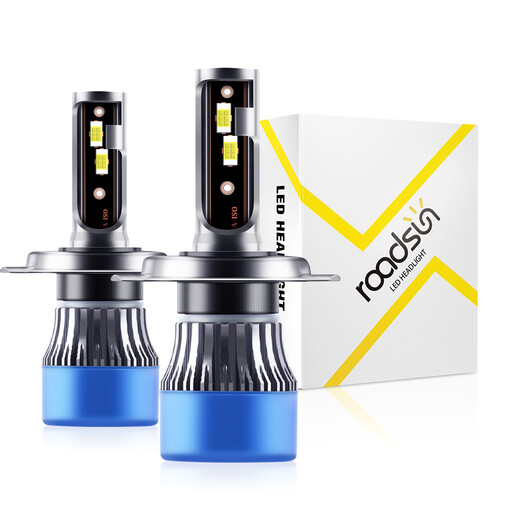
Why This Fits Their Persona: Ideal for owners of popular UK cars that use H4 bulbs for both high and low beams. This is a no-fuss, all-in-one upgrade that provides a noticeable improvement in visibility for daily driving without requiring any specialist knowledge or tools.
Its 5-minute plug-and-play design and standard H4 connector directly counter the "it doesn't fit" pitfall. The integrated high/low beam function simulates the original bulb, helping to avoid poor beam pattern issues.
Features an active cooling fan to maintain performance and longevity. The built-in smart decoding chip offers broad compatibility with most vehicle systems.
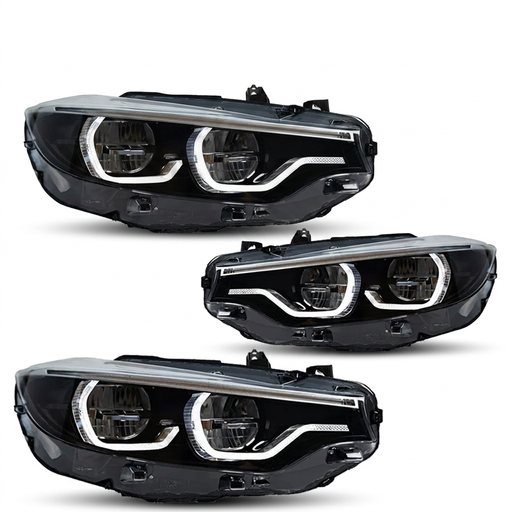
Why This Fits Their Persona: This is for the BMW owner who wants a complete aesthetic and performance transformation, not just a bulb swap. It provides a modern look with enhanced features like dynamic turn signals, matching the style of newer models.
As a complete BMW headlight assembly, it is engineered to integrate with the vehicle's systems. This bypasses the CANbus errors, beam pattern issues and fitment problems that often arise from retrofitting bulbs into a housing not designed for them.
Provides a factory-finish look and function. The integrated LED projector and dynamic signals offer a significant visual and safety upgrade over the stock units.
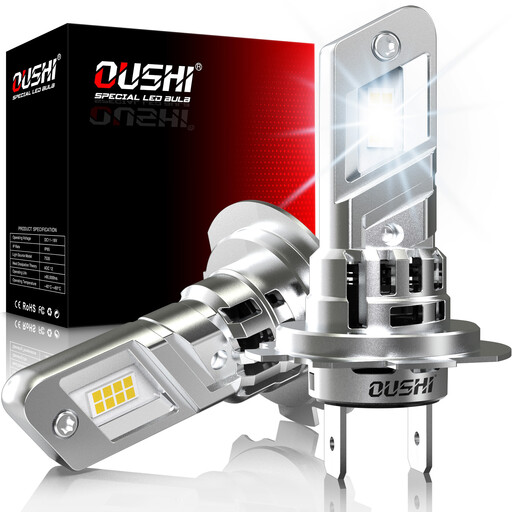
Why This Fits Their Persona: For the driver who frequently travels on unlit B-roads or motorways at night and prioritises maximum illumination above all else. This bulb is also suitable for use as **bright car fog lights** where permitted.
The 1:1 mini size ensures it avoids the physical fitment trap, while the high-speed turbo fan actively combats overheating, a common failure point for high-output bulbs. Its advanced CANbus system is designed for high compatibility.
Delivers a significant increase in brightness over halogen bulbs. The combination of a powerful output and an efficient cooling system aims for sustained, reliable performance.
We have compiled a complete, real-time list of products that fully satisfy these strict selection criteria and UK safety regulations.
The legal situation in the UK is specific. For a vehicle to be road legal and pass its MOT, any replacement headlight part, including the bulb, must be 'E' marked and approved for use with that specific headlight unit. Currently, retrofitting LED bulbs into headlight units originally designed for halogen bulbs is not officially permitted for road use. Many drivers use them for off-road purposes or accept the risk for on-road driving. You should always check the latest DVSA guidelines before fitting them to a road-going vehicle.
No, quite the opposite. LED bulbs are significantly more energy-efficient than their halogen counterparts. They produce much more light for the same amount of power, meaning they put less strain on your car's alternator and battery. This is one of their key advantages.
While many products advertise lifespans of 50,000 hours or more, this is a theoretical figure achieved under ideal laboratory conditions. In the real world, a bulb's lifespan is determined almost entirely by its heat management. A bulb with a high-quality, efficient cooling system (whether a fan or a large heat sink) will prevent the LED chips from overheating and could last for many years. A poorly cooled bulb, however, may fail in a matter of months, regardless of the advertised lifespan.