
24/7 Customer Support

Free returns

Same-day & Next-day Delivery

Quality Guaranteed

Unlock Your Welcome Offers: FREE Delivery | Up to 80% OFF | Free 30-day JoyPlus trial
Download the APP
Driving on unlit B-roads or navigating through a foggy morning commute with dim, yellowing halogen bulbs can be a frustrating and unnerving experience. Upgrading to modern LED headlight bulbs promises a leap forward in visibility and safety. However, the market is flooded with options, and it's easy to fall into common traps that lead to wasted money, poor performance and even MOT failures.
As a Joybuy Product Recommendation Officer, my role is to help you sidestep the marketing hype. Before you make a purchase, let's look at the most common pitfalls to avoid.
To ensure you get a reliable and effective upgrade, focus on these three non-negotiable factors.
This is the most critical first step. Headlight bulbs are not one-size-fits-all. They use a specific code to denote their base and design, such as H7 LED bulb, H4 LED bulb or 9006 LED bulb.
Your vehicle's owner's manual is the most reliable source for finding the correct fitment code. Alternatively, you can often find it printed on the base of your existing bulb. Ordering the wrong fitment will mean the bulb simply won't install in your headlight housing.
A proper beam pattern is essential for safety and legality. A good LED replacement should mimic the precise light distribution of the halogen replacement bulbs it's designed for. This ensures the light is focused down onto the road, illuminating your path without dazzling other road users. A sharp cut-off line on the dipped beam is a key indicator of a well-engineered bulb and is crucial for passing an MOT inspection.
For colour, 6000K cool white is a popular choice. This colour temperature is close to natural daylight, which can reduce eye strain and improve the visibility of road signs and hazards, providing the look of modern, bright car lights.
CANbus (Controller Area Network) is the internal computer system in most cars made since the mid-2000s. It monitors all electronic components, including the headlights. Because LEDs draw much less power than halogens, the CANbus system can mistakenly interpret this as a blown bulb, triggering a warning light on your dashboard.
To prevent this, look for bulbs described as CANbus error free LED or "CANbus ready." These have integrated circuitry (resistors or drivers) that communicates correctly with the vehicle's computer, ensuring a smooth, error-free operation.
Based on these practical criteria, here are a few options suited to different types of UK drivers.
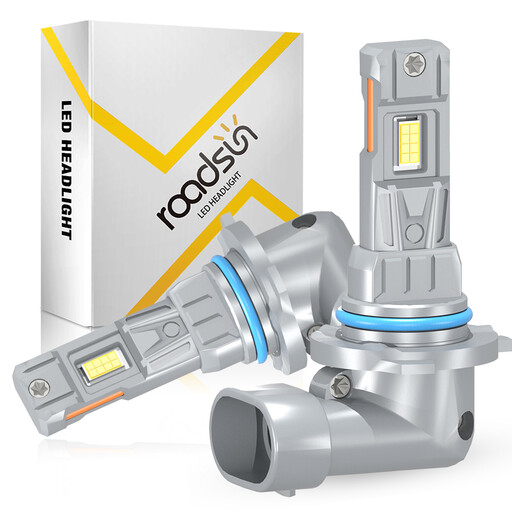
Why This Fits Their Persona: Ideal for the car owner who wants a simple, no-fuss upgrade. The focus on a 1:1 size match with the original halogen bulb means it's designed to fit directly into the existing housing without needing modifications or special adapters, making it a great first-time DIY project.
This bulb directly counters the "plug and play myth" by being engineered as a 1:1 mini-size replacement. This design prioritises a perfect fit in the factory housing, which is key to achieving the correct beam pattern and avoiding glare.
The main advantage is its true plug-and-play installation. The integrated heat dissipation system and aluminium alloy housing are designed for longevity, addressing the premature burnout flaw.
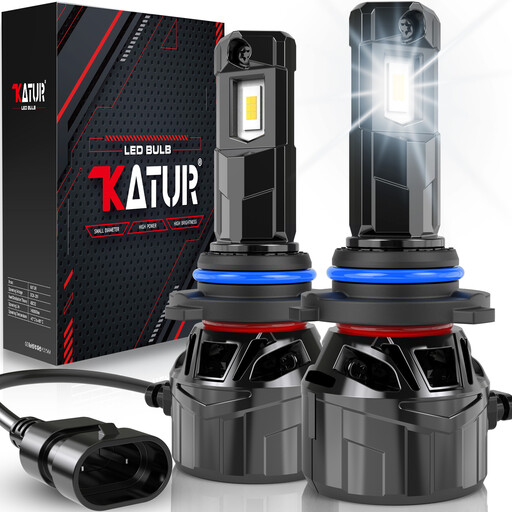
Why This Fits Their Persona: For the driver who prioritises maximum road illumination and long-term durability. This bulb is built with a more robust cooling system, including a high-speed fan and copper components, designed to sustain high-output performance over a long lifespan.
It tackles the premature burnout flaw head-on with a high-performance cooling system (16,000 RPM fan, copper tubes). It also addresses the CANbus trap with a built-in decoding system aimed at 99% vehicle compatibility.
The combination of high-intensity chips and an advanced cooling system provides powerful, sustained brightness. Its built-in CANbus compatibility makes it a suitable option for many modern cars prone to errors.
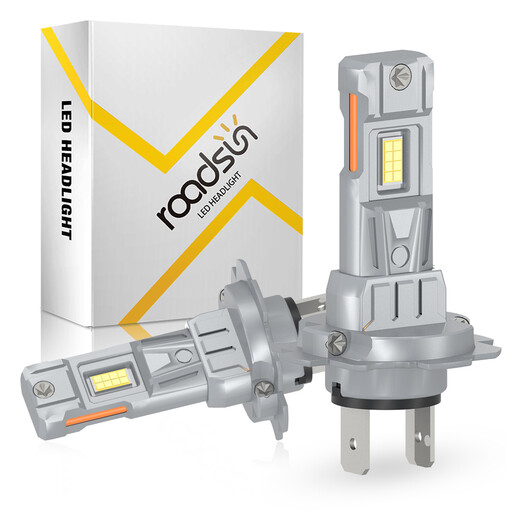
Why This Fits Their Persona: This is for the driver who faces challenging conditions daily—rain, fog and dark rural roads. Its durable build and wide operating temperature range (-40℃ to +80℃) are designed for reliability. It can also serve as a powerful upgrade for **fog light bulbs**.
This bulb avoids the "lumen lies" trap by focusing on real-world visibility. The description highlights its ability to cut through fog and provide a wider, clearer view, which is more valuable than a simple brightness number. Its stable output prevents flickering, a common issue with lesser bulbs.
Its all-weather reliability is the standout feature. The waterproof, dustproof and shockproof construction ensures it performs consistently whether you're on a motorway in the rain or a bumpy country lane.
We have compiled a complete, real-time list of products that fully satisfy these strict selection criteria and UK safety regulations.
The legality of aftermarket car headlight bulbs in the UK is a common concern. For a bulb to be road legal, it must be E-marked and fitted to a compatible headlight unit that maintains the original, correct beam pattern. As of now, fitting LED bulbs into headlight units designed for halogen bulbs is not officially permitted for MOT purposes. However, high-quality LEDs that accurately replicate the halogen beam pattern are less likely to cause issues with glare or MOT failure. It is always advisable to check the latest DVSA guidelines.
This is a possibility, especially in newer cars with sensitive CANbus systems. The car's computer may detect the lower power draw of the LED and register a fault. To avoid this, you should specifically choose CANbus error free LED bulbs. These have built-in resistors that mimic the power consumption of a halogen bulb, preventing error codes. For some highly sensitive vehicles, an additional CANbus decoder may still be required.
For many vehicles, the process is as simple as changing a standard bulb: open the bonnet, access the back of the headlight unit, twist and remove the old bulb and insert the new one. However, on some cars, the access space can be very tight or you may need to remove the entire headlight assembly to reach the bulbs. It's a good idea to search for a quick video tutorial for your specific car model before you begin to see what's involved.