
24/7 Customer Support

Free returns

Same-day & Next-day Delivery

Quality Guaranteed

Unlock Your Welcome Offers: FREE Delivery | Up to 80% OFF | Free 30-day JoyPlus trial
Download the APP
Replacing tired halogen bulbs with LED headlight bulbs can provide a whiter appearance, quicker illumination and a more modern lighting setup. However, the brightest-looking listing is not automatically the right choice for your car, SUV, truck, motorcycle or powersport vehicle.
The main risks are straightforward: ordering the wrong socket, choosing a bulb that cannot manage heat, or installing an LED that creates a poor beam pattern. Use the guide below to compare the important specifications before buying.
Large lumen numbers attract attention, but they do not describe beam focus, glare control or how well the bulb works inside your existing headlamp housing. A poorly positioned LED can produce scattered light and dazzle oncoming drivers, even if the advertised output looks impressive.
Look for a 1:1 halogen replacement bulb with correctly positioned LED chips and an adjustable base where appropriate. After installation, check the beam pattern against a wall and adjust the headlamp alignment if necessary.
H4, H7 and HB4/9006 are different bulb standards. Some vehicles also have limited space behind the headlamp, meaning a large heat sink, external driver or rear fan may not fit beneath the dust cap.
Always check your vehicle handbook, the marking on the removed bulb or a reliable parts catalogue. For example, 9003 HB2 bulbs generally refer to the same dual-filament size family as H4 bulbs, but the socket and retaining arrangement still need to match your vehicle.
CANbus-compatible LED bulbs are designed to reduce flickering, dashboard warnings and radio interference on vehicles with bulb-monitoring systems. They do not guarantee compatibility with every car. Some sensitive vehicles may still need an external decoder or load resistor.
A plug-and-play design can simplify fitting, but it does not remove the need to test low beam, high beam, indicators and warning lights after installation.
Do not choose a bulb solely because it fits physically. Confirm the connector, locking tabs, polarity and beam position.
Many replacement bulbs are listed as 6000K cool white bulbs, while some use 6500K. These shades appear whiter than traditional warm halogen light. Colour temperature does not, by itself, confirm brightness, beam quality or road legality.
For UK driving, the most important consideration is a controlled beam that does not dazzle other road users. Check that the LED chips face the correct direction inside the housing and that the headlamp lens and reflector are in good condition.
LED chips create heat at the rear of the bulb. Common designs include:
IP ratings such as IP65, IP67 and IP68 describe resistance to dust and water under specified test conditions. They do not mean the bulb can be fitted incorrectly or exposed to unlimited water pressure. Ensure the sealing ring is seated and the rear of the housing remains unobstructed.
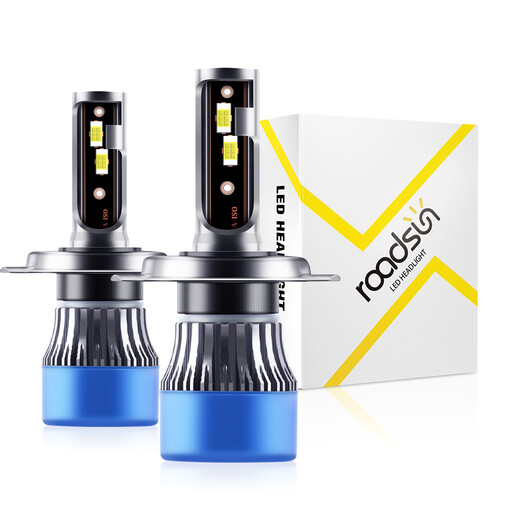
Why This Fits Their Persona: A practical option for drivers replacing standard H4 bulbs on cars, SUVs, trucks or motorcycles and looking for a straightforward dual-beam upgrade.
The listing identifies H4/9003/HB2 compatibility, a 1:1 design, plug-and-play fitting and a smart decoding chip. Compatibility should still be confirmed against the original bulb.
Integrated high and low beam function, 6000K colour temperature, cooling fan and IP67 protection listed by the seller.
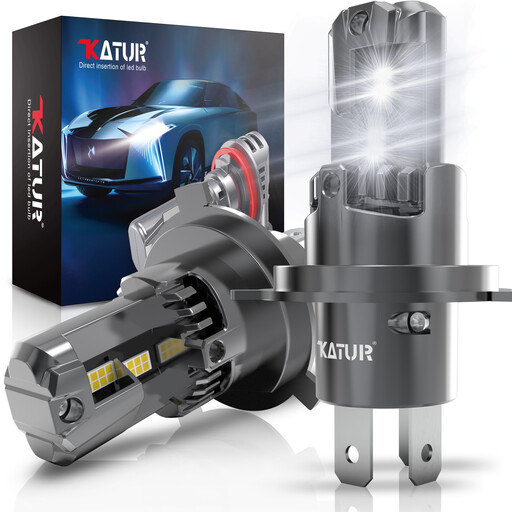
Why This Fits Their Persona: Suitable for owners who prioritise compact packaging and a defined feature set for regular night-time commuting.
Its listed 1:1 mini size can help with tight headlamp spaces, while the external driver and CANbus-ready design address common fitting and warning-light concerns.
The product listing specifies a 16,000 RPM fan, aviation aluminium housing, IP65 water resistance and 6000K light.
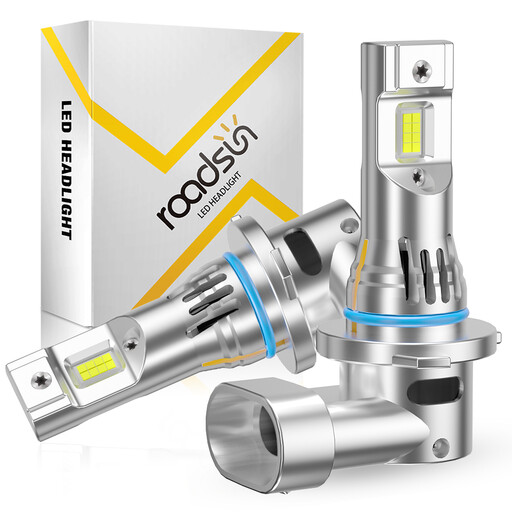
Why This Fits Their Persona: A focused choice for drivers, truck owners and powersport users seeking HB4/9006 bulbs for fog, driving or spot-light applications.
The listing clearly states the HB4/9006 application, 1:1 design and plug-and-play installation, reducing the risk of buying an incompatible fog-light bulb.
It lists CSP chips, a turbo fan, 6500K white light, IP protection and a stated 50,000-hour operating-life estimate.
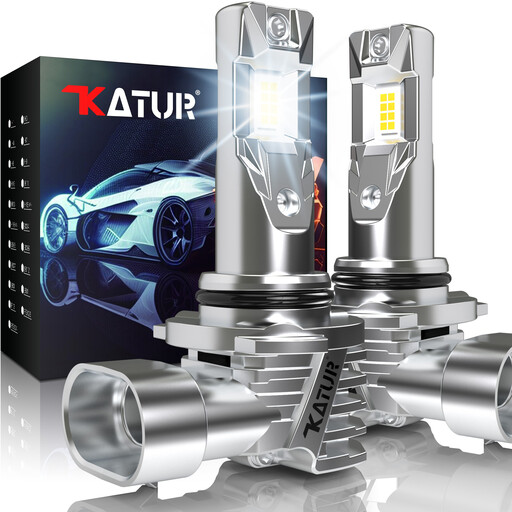
Why This Fits Their Persona: A sensible match for drivers who prefer a fanless design or have limited space behind the HB4/9006 headlamp.
Its fanless construction avoids dependence on a moving cooling fan and may simplify installation where rear clearance is restricted.
The listing specifies HB4/9006 compatibility, 6000K light, a 1:1 mini format and passive aluminium heat dissipation.
Before fitting, switch off the vehicle, remove the key and allow the original bulb to cool. Wear gloves, avoid touching the LED chips and keep fan blades clear. Make sure the bulb is locked firmly, the dust cap seals correctly and the beam sits in the correct position.
After fitting, test both beam settings and inspect the cutoff from a level surface. Incorrect alignment can cause glare. UK roadworthiness requirements and headlamp approval depend on the vehicle, lamp assembly and bulb arrangement, so check the manufacturer guidance, MOT requirements and your insurer if you are replacing halogen bulbs with LED units.
We have compiled a complete, real-time list of products that fully satisfy these strict selection criteria and UK safety regulations.
LEDs can use less electrical power for a comparable lighting application, but actual consumption depends on the bulb’s wattage and driver. Check the listed wattage rather than assuming every LED uses less power.
Listings commonly state operating-life estimates from 50,000 to 70,000 hours. These figures depend on temperature, voltage, vibration and usage, so treat them as product specifications rather than a guarantee. Effective cooling and correct installation are important.
Many plug-and-play car bulbs are designed for direct replacement. Nevertheless, professional fitting may be sensible if access is restricted, a CANbus decoder is required or the beam needs recalibration. Always verify compatibility before ordering.