
24/7 Customer Support

Free returns

Same-day & Next-day Delivery

Quality Guaranteed

Unlock Your Welcome Offers: FREE Delivery | Up to 80% OFF | Free 30-day JoyPlus trial
Download the APP
Driving on unlit B-roads or navigating through a rainy motorway at night can quickly remind any UK driver of the importance of good headlights. A car light upgrade to modern LED headlight bulbs is a popular choice for improving visibility and safety. However, the market is filled with confusing specifications and bold claims that can lead to a poor purchase.
As the Joybuy Product Recommendation Officer, my role is to help you see through the marketing jargon. Before you spend your money, be aware of these common pitfalls that catch out many UK car owners.
To make a smart choice, focus on the technical details that directly impact performance and legality on UK roads. Here are the three non-negotiable factors to check.
The single most important factor for a safe and effective car light upgrade is the beam pattern. A good LED bulb should replicate the precise light source position of the halogen bulb it is replacing.
Look for bulbs described as having a 1:1 halogen design or an ultra-thin chip layout. This ensures the light is projected correctly by your car's existing headlight housing, creating a sharp cut-off line for the dipped beam. This prevents dazzling other road users and concentrates the light where you need it: on the road. Always confirm your vehicle's specific fitment type (e.g., H7 LED bulb, H4 LED bulb, HIR2) by checking your owner's manual or the markings on your current bulbs.
If your car was manufactured in the last 15-20 years, it almost certainly uses a CANbus system to monitor its electronic components, including the headlamp bulbs. Standard halogen bulbs have a specific electrical resistance; LED bulbs use far less power and the car's computer can misinterpret this as a fault, like a blown bulb.
To avoid this, you need CANbus error free LED bulbs. These have built-in circuitry (a driver or resistor) that communicates correctly with the vehicle's computer, preventing dashboard warning lights and flickering. While many bulbs claim 99% compatibility, owners of some German or other European marques may occasionally need an additional decoder for a flawless plug and play LED headlights experience.
An LED chip's lifespan is directly tied to its operating temperature. A quality halogen replacement LED must have an efficient way to dissipate heat. There are two main approaches:
For most UK drivers, a bulb with a reliable, high-RPM fan and a quality metal construction offers a great balance of performance and longevity.
Instead of a one-size-fits-all approach, we've matched some options to the specific needs of different UK drivers.
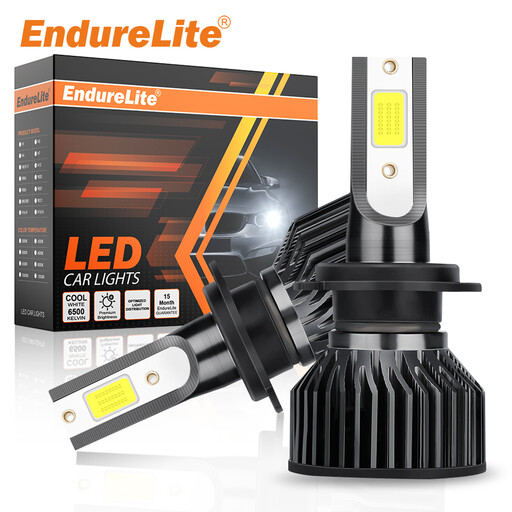
Why This Fits Their Persona: This is a practical, all-round upgrade for the everyday commuter. It offers a significant improvement in visibility for night-time driving on motorways and country lanes, without requiring a large budget or complex installation.
Its 1:1 size and beam pattern technology are designed to mimic the original halogen, directly addressing the glare trap by ensuring a focused beam that won't dazzle oncoming traffic.
A straightforward plug-and-play design and broad compatibility make this an accessible and effective first step into LED upgrades.
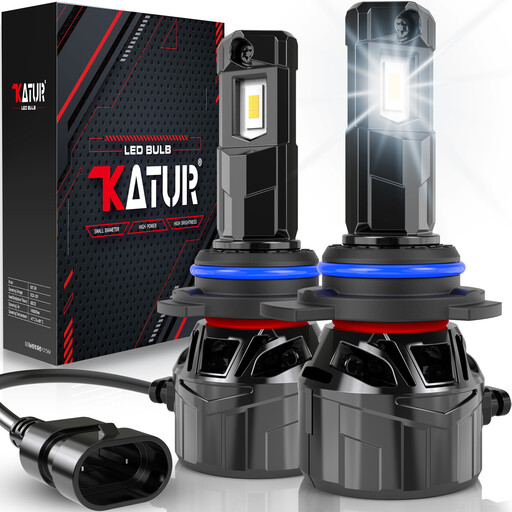
Why This Fits Their Persona: For the enthusiast who prioritises maximum illumination and a crisp, modern look. The high power and lumen output, combined with a 6000K white car bulbs colour, appeal to those wanting a noticeable performance upgrade.
It directly counters the premature burnout trap with a heavy-duty cooling system, featuring a 16,000 RPM fan, copper tubes and a hollow-carved heat sink to manage the heat from its high-power output.
Features a high-intensity light output paired with a robust, active cooling system designed for sustained performance and longevity.
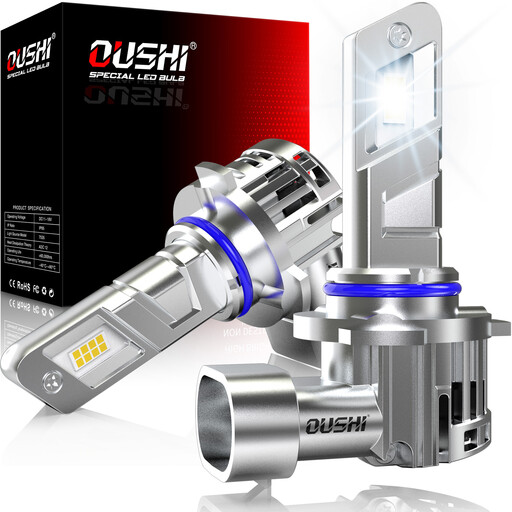
Why This Fits Their Persona: This bulb is aimed at owners of newer cars, especially European models, where CANbus compatibility is the biggest hurdle. Their primary goal is a seamless, error-free upgrade.
It tackles the "Universal Fit" myth head-on by incorporating what the manufacturer describes as the "latest generation CANBUS system," specifically designed to work with sensitive vehicle computers and avoid errors.
Features enhanced CANbus compatibility, making it a more reliable choice for preventing dashboard warnings or flickering on sophisticated vehicle electrical systems.
We have compiled a complete, real-time list of products that fully satisfy these strict selection criteria and UK safety regulations.
The legality of aftermarket LED headlight bulbs in the UK for road use is complex. For a vehicle to pass its MOT, the headlight beam pattern must be correct, avoid causing glare and the colour must be within the permissible white or yellow range. Many high-quality, 1:1 design LED bulbs can produce a compliant beam pattern when installed correctly in a suitable headlight unit. However, regulations can change and it is always the vehicle owner's responsibility to ensure their car is road legal. Some users choose to refit the original halogen bulbs for the MOT test.
Yes, generally. The legal requirement for headlight colour in the UK is white or yellow. Colour temperature is measured in Kelvin (K). Halogen bulbs are typically around 3200K (warm white), while 6000K white car bulbs produce a crisp, cool white light similar to daylight. This is well within the "white" spectrum and should not be a cause for an MOT failure on its own, provided the beam pattern is correct. Bulbs advertised with colours like blue or purple or those with a Kelvin rating above 8000K, would not be legal for road use.
Manufacturers often claim lifespans of 50,000 hours or more. While the LED chips themselves can last this long under ideal conditions, the real-world lifespan of the entire bulb assembly depends heavily on the effectiveness of its cooling system. A bulb with a robust fan and quality heat sink, operating within a well-ventilated headlight housing, can realistically last for many years, far outlasting a halogen bulb. Conversely, a poor-quality bulb in a hot, enclosed space may fail in under a year.