
24/7 Customer Support

Free returns

Same-day & Next-day Delivery

Quality Guaranteed

Unlock Your Welcome Offers: FREE Delivery | Up to 80% OFF | Free 30-day JoyPlus trial
Download the APP
Upgrading your car's standard halogen headlights to modern LED bulbs can feel like a simple way to improve night-time visibility and give your vehicle a fresh look. However, the market is filled with options that promise incredible brightness and effortless installation, but often lead to disappointment. Many UK drivers find themselves with bulbs that trigger dashboard errors, produce a dangerous and illegal beam pattern or simply don't fit.
As a Joybuy Product Recommendation Officer, my role is to help you navigate these choices. This guide cuts through the marketing jargon, focusing on the practical details that ensure you get a safe, effective and compatible upgrade. We will look at the common pitfalls to avoid and the key features that truly matter.
Before you purchase a car headlight conversion kit, be aware of these frequent issues that can turn a quick DIY project into a costly mistake:
To ensure you make a worthwhile purchase, focus on these three non-negotiable parameters.
First and foremost, you must identify the correct bulb fitment for your vehicle. This is usually printed on the base of your existing bulb or listed in your car's owner manual. Common types include the H7 LED bulb (often for single-beam headlights) and the H4 LED upgrade (which handles both high and low beams in one unit).
Beyond the fitment code, pay close attention to the bulb's physical dimensions. Look for models advertised with a 1:1 halogen bulb design. This ensures the LED bulb has the same length and diameter as the standard bulb, allowing it to fit directly into the housing and lock into place without needing adapters or modifications to the dust cover.
If your car was manufactured after the mid-2000s, it almost certainly has a CANbus (Controller Area Network) system. This system monitors the vehicle's electrical components, including the headlights. Because LEDs use less power than halogens, the CANbus system can mistakenly interpret this as a fault, triggering a "bulb out" warning.
To avoid this, look for bulbs that are explicitly described as CANbus ready headlights with a built-in intelligent driver or decoder. For particularly sensitive systems found in brands like Volkswagen, BMW or Mercedes-Benz, you may still need an additional external CANbus decoder, and some product descriptions will note this.
An effective headlight illuminates the road, not the sky. The quality of the beam pattern is determined by the placement and design of the LED chips. Good quality bulbs position their chips to mimic the filament of a halogen bulb, which allows your car's reflector or projector housing to create a sharp, focused cut-off line. This prevents glare for oncoming traffic and is a legal requirement for road use in the UK.
For colour, most drivers prefer 6000K xenon white bulbs. This colour temperature provides a crisp, modern look and is close to natural daylight, which can help in identifying road signs and hazards more clearly. While some bulbs go up to 6500K, anything higher can appear too blue and may reduce visibility in rain or fog.
Based on these practical criteria, we have matched several products to different types of UK drivers.

Why This Fits Their Persona: This is a practical choice for those who rely on their car for daily travel. The focus on high compatibility and a straightforward installation process means less time in the garage and more time on the road with improved visibility for night-time driving.
Its 1:1 mini size directly counters the "plug and play" deception, ensuring it fits into the factory socket without needing modifications to the housing or dust cover.
Features an integrated high-speed fan and aviation aluminium housing for efficient cooling, which is key to achieving a long operational lifespan and avoiding frequent replacements.
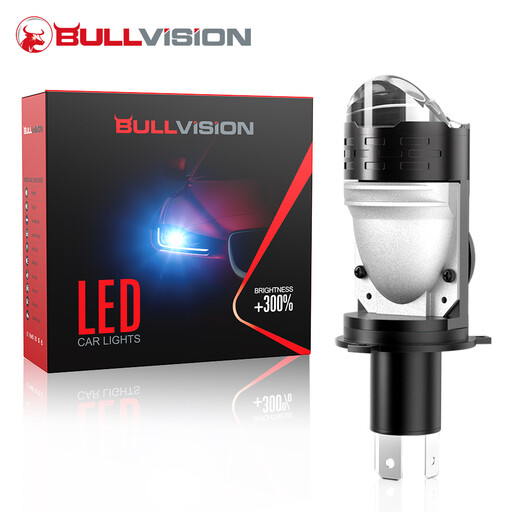
Why This Fits Their Persona: For the hands-on car owner who wants a noticeable upgrade without a large initial outlay. Being sold as a single unit is useful for replacing a single failed bulb or for those wanting to test the technology before committing to a full set.
This bulb is designed to simulate the original halogen beam pattern, which helps avoid the common pitfall of creating dangerous glare for other road users and ensures a focused, useful light output.
The combination of an IP68 waterproof rating and an integrated cooling fan provides durability and a long projected lifespan, offering good value over time.
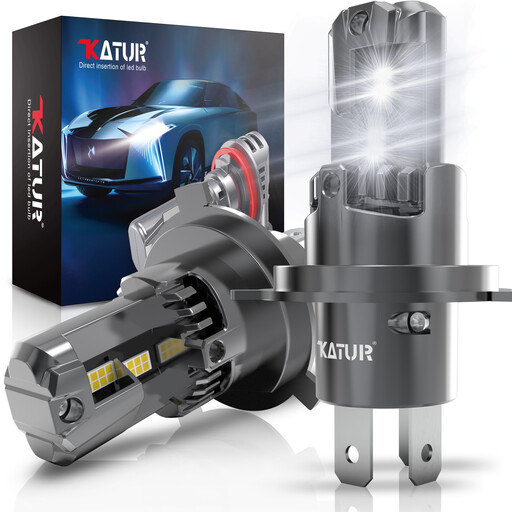
Why This Fits Their Persona: Owners of newer cars with sensitive electronics need a solution that prioritises compatibility. This kit is designed specifically to address CANbus issues, making it a more reliable choice for avoiding dashboard error messages.
It directly tackles the "error-free" myth by using a smart external driver. This component is specifically designed for anti-interference and decoding, providing a more robust solution for the 98% of vehicles it claims compatibility with.
The external driver not only helps with CANbus compatibility but also moves a heat-generating component away from the bulb itself, contributing to a more stable and potentially longer service life.
We have compiled a complete, real-time list of products that fully satisfy these strict selection criteria and UK safety regulations.
Yes, but with important conditions. As of 2021, MOT test guidelines state that converting halogen headlamp units to LED bulbs is permissible, but the upgrade must meet specific requirements. The key criteria are that the beam pattern must be correct (with a clear cut-off), it must not cause glare that would dazzle other road users and the light colour must be predominantly white or yellow. Choosing a quality bulb designed to replicate the original halogen beam pattern is essential for passing your MOT.
Most manufacturers claim lifespans of 30,000 to 60,000 hours, which is significantly longer than the 500-1,000 hours of a typical halogen bulb. The primary factor determining an LED's longevity is heat management. Bulbs with robust cooling systems—either a high-speed fan or a fanless design with a large heat sink made from materials like aviation-grade aluminium—are more likely to reach their projected lifespan. Poor cooling will cause the LED chips to degrade and lose brightness prematurely.
For most plug and play LED bulbs that feature a 1:1 design, you will not need any special tools. The installation process is typically the same as replacing a standard halogen bulb: access the back of the headlight unit, twist and remove the old bulb, insert the new LED bulb and reconnect the power socket. However, it is always a good idea to consult your vehicle's owner manual for specific instructions on accessing the headlight housing.