
24/7 Customer Support

Free returns

Same-day & Next-day Delivery

Quality Guaranteed

Unlock Your Welcome Offers: FREE Delivery | Up to 80% OFF | Free 30-day JoyPlus trial
Download the APP
Upgrading your car's headlights from dim, yellow halogens to crisp, bright white LED bulbs seems like a straightforward decision. It promises better night-time visibility, enhanced safety and a modern look. However, the market is flooded with options, and many drivers find themselves caught out by common purchasing pitfalls that lead to wasted money, MOT failures or even dangerous driving conditions.
As the Joybuy Product Recommendation Officer, my role is to help you navigate this landscape. This guide cuts through the marketing jargon to focus on what truly matters, ensuring your car headlight upgrade is a success.
Before you add any bulbs to your basket, be aware of these frequent issues that catch out UK buyers:
To make a smart choice, focus on these non-negotiable technical points. Getting them right is the key to a successful upgrade.
Your car's headlight housing is designed for a specific bulb type. This is identified by a code, such as H7, H4 or H1. An H4 LED bulb typically combines high and low beams in a single unit, whereas an H7 LED bulb is usually for a single beam (either low or high).
This is the most critical factor for road safety and legality in the UK. For a bulb to be considered MOT compliant LED headlights, it must project a clean, focused beam with a sharp cut-off line for the dipped beam. This prevents dazzling other road users.
The longevity of your LED bulbs is directly tied to their ability to manage heat.
We've matched some options to different types of UK drivers, focusing on how they address the common pitfalls.
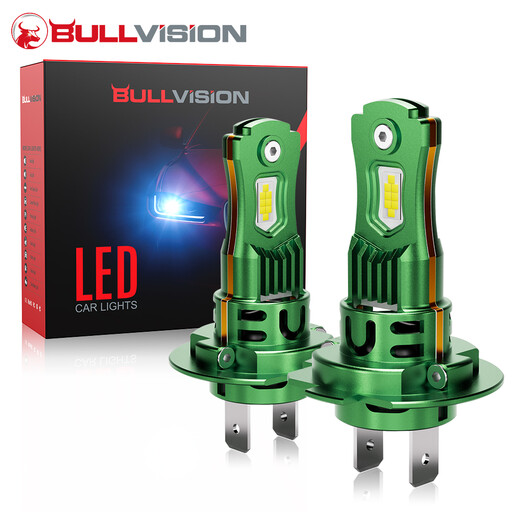
Why This Fits Their Persona: Ideal for drivers with slightly older cars (e.g., a Ford Fiesta, Vauxhall Corsa) who want a simple, effective car headlight upgrade without complexity. The focus is on easy installation and a noticeable improvement over stock halogens.
Its 1:1 size design directly mimics the original H7 halogen bulb, which is crucial for maintaining a correct beam pattern and avoiding the "brightness scatter" trap. It's a true plug-and-play solution.
Features an integrated cooling fan within its compact body to address the overheating issue. The built-in driver aims for broad compatibility with non-sensitive vehicle systems.

Why This Fits Their Persona: For the owner of a modern car, perhaps a VW Golf or BMW 3 Series, who wants a significant jump in brightness and a crisp 6500K white light. They prioritise error-free operation and long-term reliability.
It directly tackles the CANbus pitfall by incorporating an advanced system designed for higher compatibility with European vehicles. The high-speed turbo fan provides robust cooling to prevent premature failure.
Delivers a very high light output for wider and further visibility. The 1:1 mini size ensures it fits into the factory socket without modification, simplifying what can be a tricky installation on modern cars.
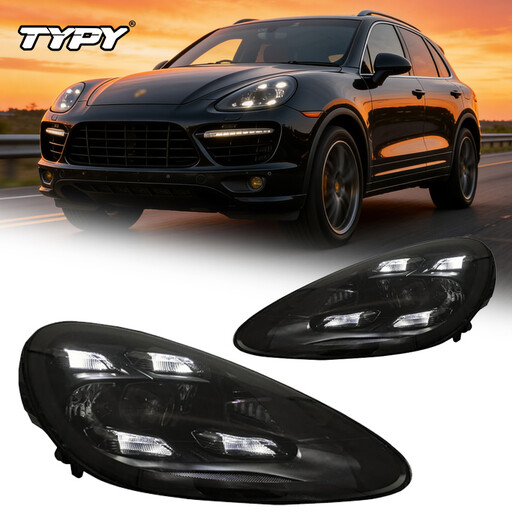
Why This Fits Their Persona: This isn't just a bulb; it's a complete headlight assembly for the owner of a specific premium model (Porsche Cayenne 958.1). Their goal is a total aesthetic and technological transformation to a modern LED Matrix style.
By replacing the entire unit, it completely bypasses all pitfalls associated with putting an LED bulb in a halogen housing. The beam pattern, cooling and electronics are all engineered to work together perfectly.
Provides a seamless, factory-level integration with a plug-and-play design for the specific vehicle model. It delivers superior illumination and a significant aesthetic upgrade that a simple bulb swap cannot match.
We have compiled a complete, real-time list of products that fully satisfy these strict selection criteria and UK safety regulations.
This is a common point of confusion. According to the latest DVSA guidelines for MOT testing, fitting LED bulbs into a headlight unit that was originally designed for halogen bulbs is technically a fault. For a fully legal conversion, the entire headlight unit should be replaced with one that is type-approved for LED sources. However, many high-quality aftermarket plug and play LED headlights are designed to so closely replicate the halogen beam pattern that they may not be flagged during an MOT. The key is ensuring the beam has the correct pattern and sharp cut-off to avoid dazzling others. Always check the latest government guidance.
It depends entirely on your vehicle. As a general rule, cars from German manufacturers (Volkswagen, BMW, Mercedes-Benz, Audi) and many other models built after 2010 have sensitive electrical systems. For these vehicles, a separate CANbus decoder is often required to prevent dashboard error messages or flickering, even if the bulb is advertised as "CANbus ready". For older cars or many Japanese models, you can often install the bulbs directly without issue.
While manufacturers often claim lifespans of 50,000 hours or more, the real-world longevity is determined by heat management. A bulb with a robust cooling system (a powerful fan or a large, well-designed heat sink) is far more likely to last for years. A cheap bulb with poor cooling may lose significant brightness or fail in under a year, regardless of the advertised lifespan. Investing in a bulb with a proven cooling design is crucial for long-term value.