
24/7 Customer Support

Free returns

Same-day & Next-day Delivery

Quality Guaranteed

Unlock Your Welcome Offers: FREE Delivery | Up to 80% OFF | Free 30-day JoyPlus trial
Download the APP
Driving on unlit British roads with standard halogen headlights can often feel like you are navigating by candlelight. A car headlight bulb upgrade to modern LEDs promises a brighter, safer journey. However, the market is flooded with options, and it is easy to fall into common traps that lead to wasted money, poor performance and even MOT failures.
As the Joybuy Product Recommendation Officer, my role is to help you see through the marketing clutter. This guide will walk you through the critical factors for selecting the right LED headlight bulbs, ensuring you get the enhanced visibility and modern look you are after, without the headache.
Before you add any bulbs to your basket, be aware of these widespread issues that catch out many UK drivers.
Many products boast enormous lumen ratings (e.g., 30,000LM), suggesting they are the brightest and therefore the superior choice. This is misleading. Raw brightness is useless without control. An improperly designed bulb, regardless of its lumen count, will scatter light everywhere. This not only fails to illuminate the road effectively but also creates dangerous glare, dazzling oncoming drivers. A focused beam pattern is far more important than a high lumen number.
The term plug and play headlights suggests a simple, five-minute job. While many are straightforward, two major compatibility issues often arise. Firstly, the physical size of the LED bulb, especially its cooling fan or heatsink, can be too large to fit inside the headlight housing or allow the dust cap to be refitted. Secondly, the electronics of modern cars can detect the lower power draw of LEDs and register a fault, leading to dashboard warning lights or flickering. A true plug-and-play solution must fit physically and work electronically.
LEDs generate significant heat. If this heat is not managed effectively, the LED chips will quickly degrade, causing the bulb to dim and fail prematurely. Some bulbs use small, low-quality fans that are prone to seizing up, while some fanless designs are installed in enclosed housings with no airflow, causing them to overheat. A reliable cooling system is essential for achieving the long lifespan that LEDs are known for.
To make a smart purchase, focus on these three non-negotiable parameters.
First and foremost, you must identify the correct fitment for your vehicle. This is usually printed on your old bulb or listed in your car's owner's manual. Common types include the H7 LED bulb (often for single dipped or main beams), the H4 LED bulb (which combines high and low beams in one unit) and the H11 LED bulb (frequently used for fog lights and dipped beams). Beyond the fitment code, check the bulb's dimensions. Models advertised with a "1:1 mini size" are designed to replicate the dimensions of a halogen replacement LED, making them much more likely to fit without modification.
A good LED bulb upgrade will replicate the precise beam pattern of the original halogen bulb. This ensures the light is focused down onto the road and to the side, with a sharp cut-off that prevents dazzling other road users. This is a critical safety and legal requirement in the UK. For colour, a 6000K white LED light is a popular choice. This colour temperature provides a crisp, modern look similar to daylight, which can help in identifying hazards more clearly than the yellowish hue of halogens.
Consider the cooling method in relation to your vehicle.
For cars made in the last 10-15 years, you will likely need Canbus error free bulbs. The Controller Area Network (CAN bus) is your car's internal computer system. Because LEDs use less power, the CAN bus may think a bulb has failed. Bulbs with built-in CAN bus decoders or external drivers prevent these false warnings.
To help you choose, we have matched some options to common driver profiles.
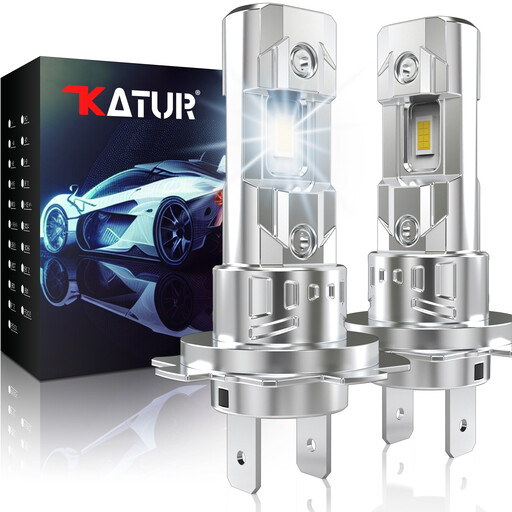
Why This Fits Their Persona: Ideal for the owner of a popular UK hatchback or family car who wants a simple, reliable upgrade. The fanless design means silent operation and no moving parts to fail, while the compact size makes installation straightforward even in tight headlight housings.
Its 1:1 mini halogen design directly counters the "Plug and Play" trap by ensuring it fits where bulkier bulbs will not. The fanless design avoids the trap of a cheap fan failing prematurely.
Completely silent operation and simplified installation with no external driver or wiring to worry about.
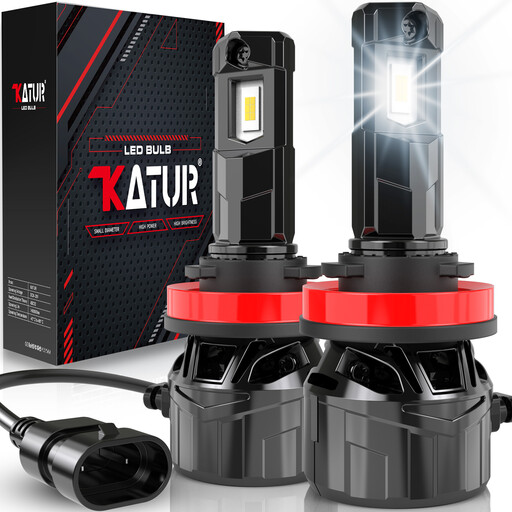
Why This Fits Their Persona: For the driver who frequently travels on dark B-roads and motorways at night. This bulb's high power output provides superior illumination distance and width, increasing reaction time and reducing driver fatigue.
It tackles the cooling trap head-on. The high-speed 16,000 RPM turbo fan and copper tube system are designed to manage the heat from a high-output bulb, preventing dimming and ensuring consistent performance.
Delivers very bright headlight bulbs performance with an active cooling system built to sustain it over long periods.
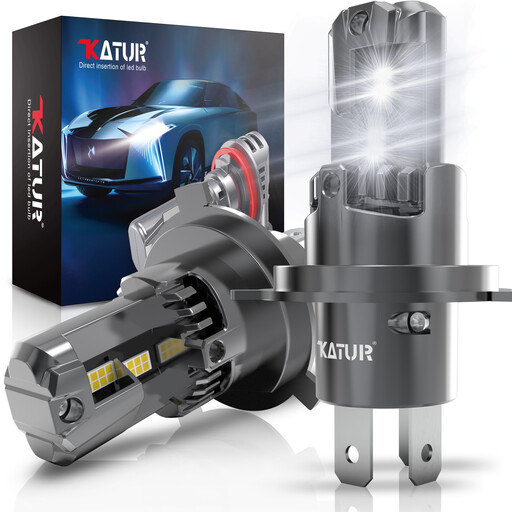
Why This Fits Their Persona: Perfect for drivers of modern cars with sensitive electronics. The H4 fitment provides both high and low beams and the inclusion of a smart external driver is specifically aimed at ensuring compatibility and preventing dashboard errors.
This bulb directly addresses the electronic compatibility aspect of the "Plug and Play" trap by including an external adapter designed for anti-interference and CAN bus decoding.
Features an all-in-one high/low beam function and is "Canbus ready" for high compatibility with newer vehicles.
We have compiled a complete, real-time list of products that fully satisfy these strict selection criteria and UK safety regulations.
As of 2026, the rules for retrofitting LED bulbs into headlight units designed for halogens are strict. For a vehicle to pass its MOT, the LED bulb must produce a correct and safe beam pattern that does not dazzle other road users and the light colour must be white or yellow. It is essential to choose high-quality bulbs that are designed to replicate the original halogen beam pattern. Always check the latest DVSA guidelines before making a purchase.
This depends on your vehicle. Many modern cars use a CAN bus system that monitors the electrical circuits. Since LEDs draw less power than halogens, the system might mistakenly report a "bulb out" error. To prevent this, you should choose bulbs that are advertised as Canbus error free or come with an external decoder or resistor.
Manufacturers often claim lifespans of up to 60,000 hours. While the LED chips themselves are very durable, the bulb's actual lifespan is determined by its heat management. A bulb with an efficient cooling system (whether fan-based or fanless) that is installed correctly will last significantly longer than one that is allowed to overheat. A well-cooled LED bulb can reasonably be expected to last for many years, far outlasting its halogen counterparts.