
24/7 Customer Support

Free returns

Same-day & Next-day Delivery

Quality Guaranteed

Unlock Your Welcome Offers: FREE Delivery | Up to 80% OFF | Free 30-day JoyPlus trial
Download the APP
Upgrading your car’s headlights from standard halogens to modern LEDs is one of the most impactful changes you can make for night-time driving. The promise of brighter, clearer light is appealing, but the market for LED headlight bulbs is filled with confusing claims and technical jargon. Many UK drivers invest in an upgrade only to be disappointed by a poor beam pattern, dashboard warning lights or bulbs that fail within months.
As the Joybuy Product Recommendation Officer, my role is to help you navigate these choices. This guide cuts through the marketing clutter, focusing on the practical details that ensure you get a safe, effective and long-lasting upgrade. We will look at the common pitfalls to avoid and the key specifications to check before you buy.
Before you add any bulbs to your basket, be aware of these common issues that can lead to wasted money and frustration.
To ensure you make a sound purchase, focus on these three non-negotiable factors.
Before looking at any other feature, you must identify the correct fitment for your vehicle. This code (e.g., H7, H4, H11) refers to the shape and size of the bulb's base. It is not interchangeable. Installing the wrong fitment is impossible without modification and will result in a dangerous beam pattern. You can find your car's required fitment type in your vehicle owner's manual or by checking the markings on your existing bulbs.
Colour temperature is measured in Kelvin (K) and describes the colour of the light produced. Standard halogen bulbs are typically around 3200K, giving off a yellowish light. Most aftermarket bright car headlights are in the 6000K to 6500K range.
The ideal car light bulb replacement is a simple, direct swap. Look for bulbs described as plug and play headlights or having a "1:1 mini size" design. This means they are built to the same dimensions as the original halogen bulb and require no extra adapters, wiring or modifications to the headlight's dust cover. This makes the installation a straightforward DIY job for most car owners. Bulbs with bulky external drivers or fans can be difficult or impossible to fit in tight headlight housings.
Based on these practical criteria, here are a few options matched to different driver profiles.
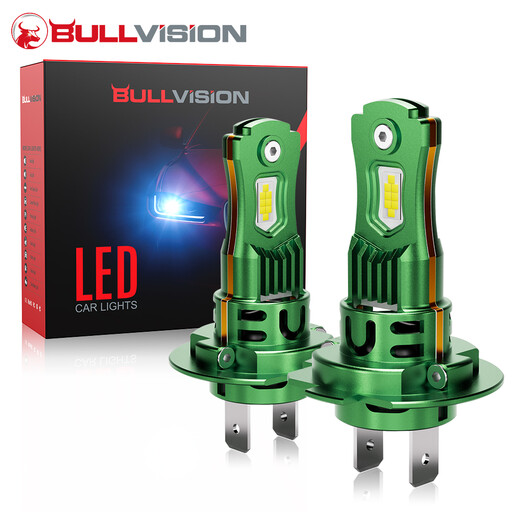
Why This Fits Their Persona: This user wants a noticeable and affordable improvement over dim halogen bulbs. They value a straightforward installation they can do themselves on a Saturday afternoon without needing special tools or adapters.
Its 1:1 mini size design aims to replicate the halogen filament position, helping to create a focused beam pattern and avoid scattering light. The "no adapter required" feature simplifies installation, avoiding a common frustration.
Features a built-in fan and aluminium body for heat dissipation. The 6000K white light provides a significant visual upgrade for safer night driving.

Why This Fits Their Persona: This driver owns a modern vehicle, possibly a German brand, and prioritises maximum safe visibility and longevity. They are wary of CANbus errors and want a high-performance bulb that justifies its price with reliability.
This bulb incorporates an updated CANbus system designed for higher compatibility with sensitive vehicles, directly addressing the dashboard error pitfall. The high-speed turbo fan provides active cooling to prevent heat-related dimming and failure.
Offers a very high light output for a wider and farther lighting range. The 1:1 halogen size ensures it fits directly into the factory socket without modification.
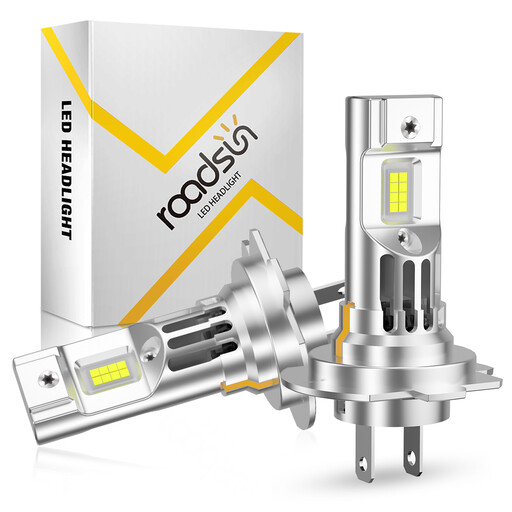
Why This Fits Their Persona: This user is looking for a versatile and durable bulb. They may want to upgrade their main headlights and their **LED fog lights** at the same time and need a product that is robust enough to handle the tougher conditions in a lower fog light housing.
Its IP68 waterproof and dustproof rating makes it suitable for exposed fog light positions. The true plug-and-play design without an adapter simplifies fitting, which is especially helpful when access to the fog light housing is awkward.
Dual-purpose design for use as either headlights or fog lights. The 6500K white light provides excellent clarity in poor weather conditions like fog and heavy rain.
We have compiled a complete, real-time list of products that fully satisfy these strict selection criteria and UK safety regulations.
As of 2021, regulations in the UK state that converting halogen headlamp units to LED bulbs is not permitted for an MOT test. However, this rule is primarily aimed at preventing the use of poor-quality bulbs that produce a dangerous beam pattern. High-quality LED bulbs designed to a 1:1 halogen standard with a correct beam pattern are less likely to be penalised, but it is important to be aware that it is a potential failure point. Always keep your original halogen bulbs to swap back in for the test if needed.
It depends entirely on your vehicle. Cars from brands like Volkswagen, Audi, BMW and Mercedes-Benz are known for having sensitive CANbus systems. Many other vehicles will have no issue. A good approach is to first install a bulb that is advertised as "CANbus ready". If you still experience flickering or dashboard errors, a separate, external CANbus decoder can then be added to resolve the issue.
For most vehicles and plug-and-play bulbs, it is a relatively simple task. It usually involves opening the bonnet, locating the back of the headlight unit, removing a dust cover and then twisting to release the old bulb. However, on some car models, access can be very tight, sometimes requiring the removal of other components. Always consult your car's owner manual first to see the recommended procedure.