
24/7 Customer Support

Free returns

Same-day & Next-day Delivery

Quality Guaranteed

Unlock Your Welcome Offers: FREE Delivery | Up to 80% OFF | Free 30-day JoyPlus trial
Download the APP
Replacing tired halogen or HID lighting can make a noticeable difference to the appearance of a car, but choosing LED headlight bulbs is not simply a case of selecting the highest lumen figure. Socket type, beam alignment, cooling, dashboard compatibility and UK road-use requirements all matter.
This guide explains the main buying pitfalls, the specifications worth checking and a selection of products for different UK driving needs.
Listings may advertise figures such as “300% brighter” or extremely high lumen outputs. These figures can be based on a pair of bulbs, theoretical chip output or conditions that do not reflect real road performance. A badly positioned LED chip can create dark patches or glare, even when the advertised number looks impressive.
Look for a 1:1 bulb design, accurate chip positioning and information about the beam pattern. After installation, the beam should be checked against a wall or by a qualified garage.
H7, H4, H11, H8, H9, HB3/9005, HB4/9006 and HIR2/9012 are different fittings. A bulb that physically appears similar may not lock into the correct socket or position its light source correctly.
Always check the original bulb marking, owner’s manual or vehicle parts information before ordering. For HID systems, D1S, D1R and D4S LED bulbs are intended for specific HID housings and are not interchangeable with halogen fittings.
CANbus error-free LED bulbs include electronics intended to reduce dashboard warnings, flickering or radio interference. However, vehicle electrical systems vary. Some sensitive cars may still need a decoder, resistor or another solution.
Check the product notes carefully, retain the original bulbs and test for warning messages before completing the installation.
The bulb must match both the socket and its purpose:
For vehicles with halogen housings, replacing the bulb does not automatically make the installation suitable for public-road use. Check the product’s approval markings, your vehicle requirements and current UK lighting rules. A correctly shaped beam is essential to avoid dazzling other road users.
6000K white headlight bulbs usually produce a cool white appearance, while 6500K xenon white bulbs appear bluer and more visibly different from standard halogen. A higher colour temperature does not automatically mean better illumination in rain, mist or snow.
Drivers who regularly use unlit rural roads should prioritise beam control and weather performance over colour alone. Fog light replacements also need careful consideration: excessively blue or high-intensity light may produce more reflection in poor weather.
LED chips produce heat at the rear of the bulb. Fan-cooled models may use an aluminium housing and high-speed fan, while fanless designs rely on passive heat dissipation. Check whether the dust cover leaves enough room for the bulb body and fan.
Features such as IP65 or IP68 water resistance, aluminium construction and thermal management can be useful for long-term use, but stated operating-life figures are manufacturer or listing estimates rather than a guarantee of service life. Never handle a hot bulb immediately after use, and switch off the vehicle before installation.
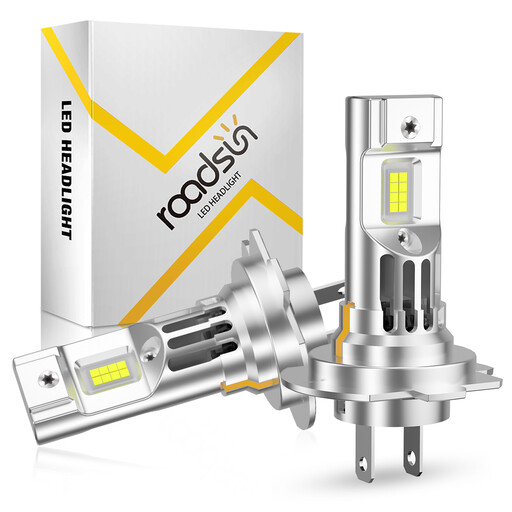
Why This Fits Their Persona: A straightforward option for drivers replacing standard H7 bulbs at home, including those wanting a plug-and-play car bulb without an additional adapter.
The listing identifies the H7 fitting, direct installation and built-in cooling, helping buyers check practical details instead of relying only on brightness wording.
6500K white output; built-in fan; stated IP68 protection; no additional adapter listed.

Why This Fits Their Persona: Suited to motorists seeking a compact H7 replacement with a stated CANbus-ready design and high-speed cooling fan for frequent night driving.
Its 1:1 mini-size description addresses clearance concerns, while the CANbus note sets realistic expectations that some sensitive vehicles may still need a decoder.
6500K colour temperature; 1:1 fit; built-in turbo fan; sold as a pair.
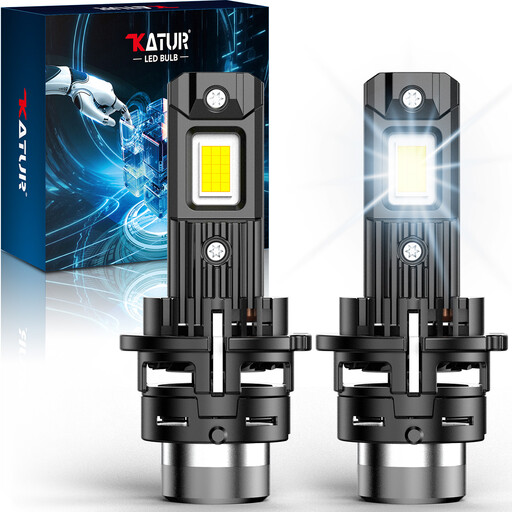
Why This Fits Their Persona: Designed for owners whose vehicles already use D4S HID headlamp assemblies and who want a direct-fit LED alternative.
The listing clearly states that it is for HID assemblies only, preventing the common mistake of fitting a D4S product to a halogen headlamp.
D4S-specific design; 6500K white output; aluminium cooling body; plug-and-play description.
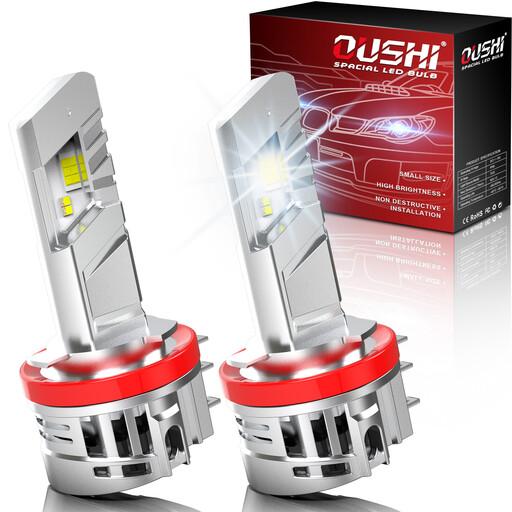
Why This Fits Their Persona: A practical match for vehicles using the H15 combination high-beam and daytime-running-light fitting, particularly for drivers covering regular night mileage.
The product description identifies the H15 application, compact 1:1 form and possible need for an additional decoder on sensitive vehicles.
6500K output; combined H15 function; integrated cooling; pair supplied.
Before fitting, switch off the ignition, allow the original bulb to cool and wear gloves. Avoid touching the LED chip or lens. Confirm that the sealing ring is correctly positioned and that a fan or heat sink does not obstruct the dust cover.
After installation:
The same principles apply to LED fog light bulbs, although fog lamps should not be used as a substitute for properly aimed headlamps. For reverse or auxiliary lighting, products such as W16W, 912 or 921 LED bulbs may be more suitable than headlight fittings.
We have compiled a complete, real-time list of products that fully satisfy these strict selection criteria and UK safety regulations.
LEDs may use less electrical power for a comparable lighting application, but the actual difference depends on the vehicle, bulb wattage and driving time. Purchase price, cooling components and replacement frequency also affect the overall cost.
Listings commonly state figures between 30,000 and 60,000 hours for long-life LED car bulbs. These are stated operating-life estimates. Heat, moisture, voltage fluctuations, fan wear and installation conditions can shorten practical service life.
No. The socket, headlamp housing, electrical system and road-use requirements must all be checked. Confirm the original bulb type first, then verify beam performance, compatibility and any applicable approval or MOT considerations before using the vehicle on public roads.