
24/7 Customer Support

Free returns

Same-day & Next-day Delivery

Quality Guaranteed

Unlock Your Welcome Offers: FREE Delivery | Up to 80% OFF | Free 30-day JoyPlus trial
Download the APP
When a light bulb fails, the simple task of buying a replacement can quickly become confusing. The shelves are filled with boxes covered in codes like E27, B22 and GU10, and terms like Lumens and Kelvins. It's easy to grab what looks right, only to get home and find it doesn't fit, the light is harsh and clinical or it starts flickering within weeks.
As the Joybuy Product Recommendation Officer, my role is to help you navigate these choices. We see many customers fall into a few common traps that lead to wasted money and frustration. Before you buy your next set of LED light bulbs, be aware of these pitfalls:
To ensure you get the right bulb first time, focus on three non-negotiable specifications. Getting these right will save you time, money and the hassle of returns.
The base of the bulb, or 'cap', must match your light fitting. In the UK, you will most commonly encounter four types:
The most accurate measure of a bulb's brightness is its Lumen (lm) rating. Wattage simply tells you how much energy the bulb consumes. While many packages show a "wattage equivalent" (e.g., 60W equivalent LED bulb), the lumen figure is the number to trust.
Here is a simple guide to help you translate:
The colour of the light a bulb produces is measured in Kelvins (K). This determines the atmosphere of your room.
Based on these practical criteria, we've matched some reliable options to common UK household needs.

Why This Fits Their Persona: This is for the practical homeowner who needs a reliable, no-fuss replacement for a standard ceiling light or lamp. The Energizer light bulbs multipack offers great value for money, allowing you to keep spares on hand.
It provides a clear 806 lumens, a true 60W equivalent, ensuring your room is properly lit. The 3000K Warm White colour creates a comfortable atmosphere, avoiding the "accidental clinic" look.
Features the common B22 bayonet cap for easy fitting in most UK homes. The frosted finish provides a soft, diffused light and the plastic construction is more durable than glass.
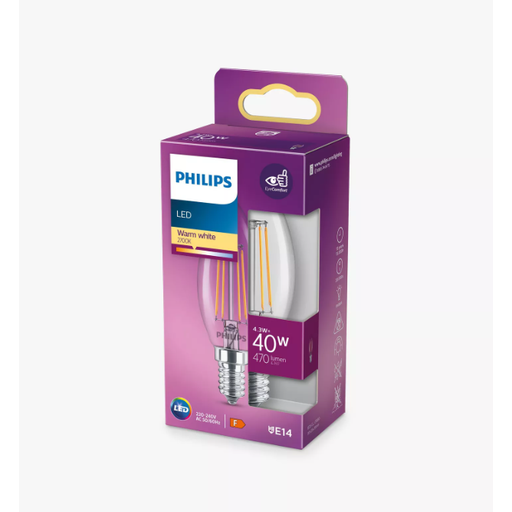
Why This Fits Their Persona: This bulb is for those who care about aesthetics. It's perfect for decorative fittings like chandeliers or wall lights where the bulb itself is part of the decor. The filament style adds a touch of vintage elegance.
The specific E14 candle bulb shape and warm white filament are chosen deliberately for style, preventing the mistake of using a standard frosted bulb in a fixture that demands more character.
Combines the classic look of a filament bulb with the efficiency of modern LED technology. The clear glass construction from a brand like Philips LED bulbs ensures a high-quality appearance.
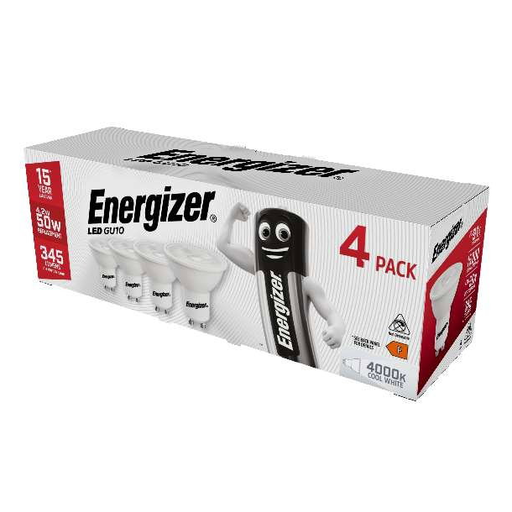
Why This Fits Their Persona: This is for anyone needing bright, clear light in functional areas. It's ideal for replacing old halogen spotlights in kitchens, bathrooms or home offices where visibility for tasks is the priority.
By selecting a specific GU10 spotlight with a 4000K Cool White temperature, you get functional brightness exactly where needed, avoiding the dim, yellowish light of a warm white bulb in a workspace.
Provides crisp, neutral light for task-oriented areas. The standard GU10 fitting makes it a simple "twist and lock" replacement for inefficient halogen spotlights, offering significant energy savings.
We have compiled a complete, real-time list of products that fully satisfy these strict selection criteria and UK safety regulations.
The savings are substantial. For example, replacing a single 60W incandescent bulb with an 8.5W LED equivalent, used for four hours a day, can save you over ?15 per year on your electricity bill (based on an average rate of 34p/kWh). When you multiply that across all the bulbs in your home, the annual savings add up quickly.
This almost always happens when a non-dimmable LED bulb is installed in a light fitting that is connected to a dimmer switch. The internal electronics of a non-dimmable bulb are not designed to handle the variable voltage from a dimmer, which causes the flickering or buzzing. This will eventually damage the bulb. Always check that your bulb is marked as "dimmable" if you intend to use it with a dimmer switch.
It's all about the base. A B22 bulb has a smooth metal base with two small pins on opposite sides; you fit it by pushing in and twisting. This is the traditional bayonet cap common in the UK. An E27 bulb has a larger, threaded metal base that you screw into the socket. They are not interchangeable, so it is essential to check which fitting you have before purchasing a replacement.