
24/7 Customer Support

Free returns

Same-day & Next-day Delivery

Quality Guaranteed

Unlock Your Welcome Offers: FREE Delivery | Up to 80% OFF | Free 30-day JoyPlus trial
Download the APP
Replacing a failed bulb should be straightforward, yet many UK households buy the wrong LED light bulbs because the packaging focuses on wattage, colour effects or energy claims rather than compatibility. A bulb can look suitable online but still fail to fit, produce the wrong atmosphere or work poorly with an existing dimmer.
Three common buying traps are worth avoiding:
Start by removing the existing bulb and checking its base. The most common options for UK homes include:
Also measure the available space. Globe-shaped bulbs may be wider than standard A-shaped bulbs, while decorative filament designs can be longer. Check the fitting’s shade clearance and whether it is suitable for enclosed use or damp locations.
For general guidance, a traditional 40W incandescent bulb is often replaced by an LED bulb producing roughly 400–500 lumens, while a 60W equivalent may provide around 700–800 lumens. These are practical comparisons rather than guarantees, so always check the stated lumen figure.
For spotlights, beam angle matters as well as brightness. A narrow beam can highlight a worktop, artwork or display area, while a wider beam spreads light more evenly across a room. The listed GU10 examples provide 345 lumens, with one 4.2W model described as a 50W replacement.
Do not select a bulb solely because it uses very little electricity. Compare lumens per watt, the energy label and the intended use. Energy-saving LED bulbs generally consume less electricity than older halogen or incandescent alternatives, but the correct brightness still depends on the room and fitting.
Colour temperature is measured in kelvins:
For flexible lighting, colour-changing smart bulbs can offer millions of colours and adjustable warm-to-cool white settings. Check whether the bulb connects directly to Wi-Fi or requires a separate hub. The WiZ smart products listed below are described as connecting through the app without additional hub hardware.
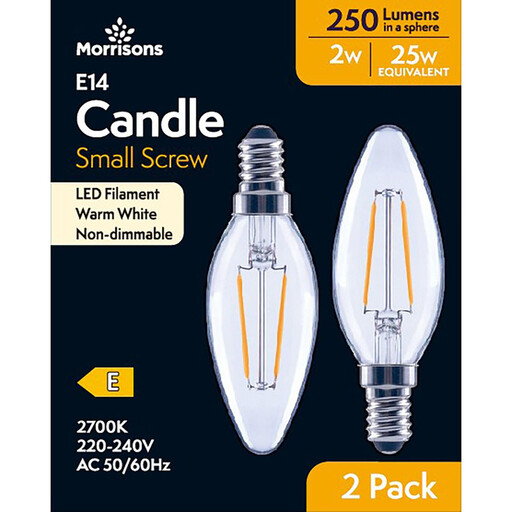
Why This Fits Their Persona: A practical two-pack for tenants, first-time replacements and decorative fittings using a small E14 screw base.
The listing states the fitting, 250-lumen output, 2W consumption and non-dimmable operation, reducing guesswork when replacing a 25W incandescent-style bulb.
Warm white 2,700K light; clear filament-style glass design; supplied as a 2-pack.
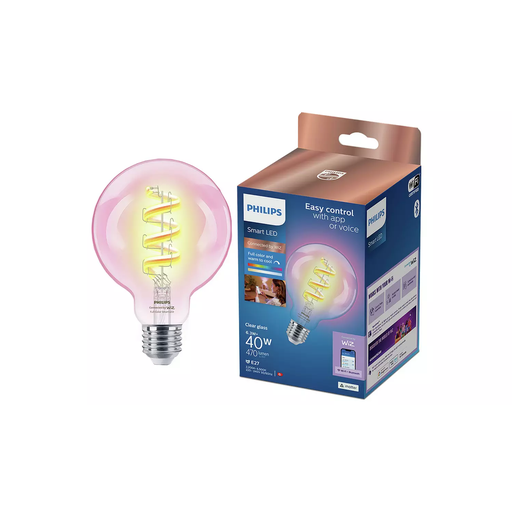
Why This Fits Their Persona: Suitable for households wanting decorative E27 lighting with app control, schedules and adjustable colour settings.
It identifies the E27 screw fitting and app-based control rather than implying that a decorative globe is compatible with every lamp.
Wi-Fi control through the WiZ app; schedules and dynamic modes; full-colour and warm-to-cool white spectrum.
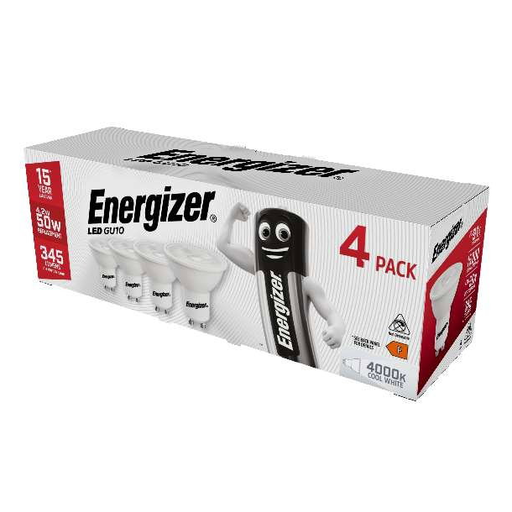
Why This Fits Their Persona: A four-pack is convenient for replacing several recessed downlights in kitchens, bathrooms, utility rooms or home offices.
The specifications state 345 lumens, 4,000K colour temperature, GU10 twist-and-lock fitting and non-dimmable operation.
4.2W consumption with a stated 50W replacement comparison; frosted lens; instant light output.
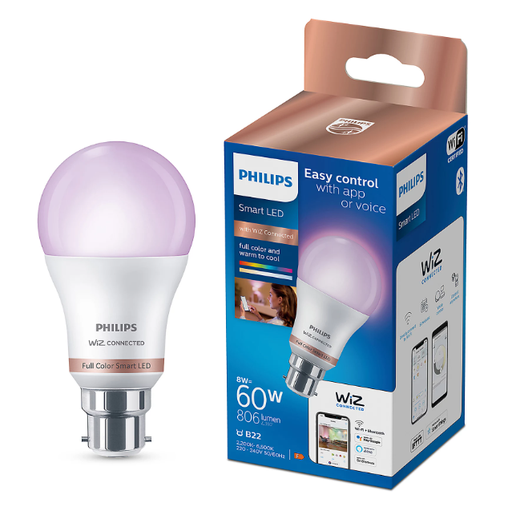
Why This Fits Their Persona: A suitable direction for UK homes with B22 ceiling fittings that need remote control, routines and adjustable everyday lighting.
The product information specifies a B22 bayonet fitting, indoor-use precautions, Wi-Fi app control and no separate hub requirement.
Full-colour lighting; adjustable warm-to-cool white spectrum; scheduling through the WiZ app; two-year manufacturer guarantee stated in the listing.
We have compiled a complete, real-time list of products that fully satisfy these strict selection criteria and UK safety regulations.
Before replacing a bulb, switch off the power and allow the old lamp to cool. Confirm the new bulb’s voltage, fitting and maximum permitted size. For bathrooms, outdoor areas or enclosed fittings, check the luminaire’s IP rating and the bulb’s suitability. If the product instructions require installation by a qualified electrician or competent person, follow that guidance.
To estimate running cost, use:
Wattage ÷ 1,000 × hours used × electricity price per kWh
For example, a 4.2W LED bulb used for five hours consumes 0.021kWh per day. Multiply that figure by your tariff and the number of days used. A multipack can reduce the price per bulb, but only buy an LED bulbs multipack when every bulb has the same fitting, colour and control requirements.
They generally use less electricity for a comparable stated light output. Compare the LED wattage with the product’s lumen figure and equivalent-wattage information rather than relying on the bulb’s appearance alone.
No. Choose a bulb specifically marked dimmable if the fitting has a dimmer. A non-dimmable model may flicker, buzz or fail to operate correctly.
Service life varies by product, operating temperature, usage and fitting design. Check the manufacturer’s stated lifetime and guarantee, and avoid using bulbs in enclosed or damp fittings unless the product information confirms suitability. Dispose of used bulbs through appropriate electrical-waste or local recycling channels rather than general household waste.