
24/7 Customer Support

Free returns

Same-day & Next-day Delivery

Quality Guaranteed

Unlock Your Welcome Offers: FREE Delivery | Up to 80% OFF | Free 30-day JoyPlus trial
Download the APP
Replacing a household bulb should be straightforward, yet the wrong choice can leave you with a fitting that will not connect, a room that feels harsh or a dimmer switch that causes flickering. Marketing labels such as “equivalent wattage”, “smart” and “daylight” can also make products appear more alike than they are.
For UK homes, the safest approach is to check the fitting, lumens, colour temperature and dimmability before comparing brands or pack prices. This guide explains the key details and highlights a selection of LED light bulbs suited to different household needs.
A bulb described as a 60W replacement does not necessarily consume 60 watts. In many cases, this refers to the approximate brightness of an older incandescent bulb. The actual LED power consumption may be much lower.
More importantly, a bulb must physically match the lamp or ceiling fitting. Common UK fittings include:
Always remove the existing bulb, check its base and compare the replacement’s dimensions. A bulb that technically has the correct cap may still be too wide or too long for an enclosed shade.
Lumens measure visible light output, while watts measure energy consumption. For a direct comparison, look for the lumen figure on the product listing or packaging.
For example, the Energizer GU10 daylight spotlight produces 345 lumens while using 4.9W, and the G9 capsule produces 470 lumens from 4.2W. These figures are more useful than relying on a traditional wattage comparison alone.
Also consider the beam pattern. A GU10 spotlight directs light into a narrower area, whereas an A60 globe bulb is intended to provide broader room illumination.
Many affordable household bulbs are non-dimmable LED bulbs. Connecting one to a conventional dimmer may cause flickering, buzzing or premature failure. The Energizer GU10 spotlights, Philips warm white GU10 bulbs and several Philips standard bulbs listed below are marked non-dimmable.
If you need adjustable brightness, check that both the bulb and the dimmer switch are LED-compatible. Compatibility can vary between products, so retain the packaging details and follow the manufacturer’s instructions.
Check the cap type first, then compare the listed height and diameter with the light fitting. This is especially important for small E14 shades, recessed GU10 downlights and compact G9 fixtures.
For example, the Philips Smart E14 globe measures approximately 101mm high and 45mm wide, while the Philips Smart E27 globe measures approximately 122mm high and 60mm wide. Shape also matters: a globe, candle, filament or spotlight may sit differently inside the same shade.
Colour temperature is measured in kelvin (K):
Colour-changing light bulbs and tunable smart LED light bulbs offer more flexibility, but they usually require app setup and a reliable Wi-Fi connection.
A basic non-dimmable bulb is often suitable for landlords, renters and rooms where simple on-off operation is all that is required. Smart bulbs can add app control, schedules and colour adjustment, but check the fitting, Wi-Fi requirements and whether the bulb is intended for a dry indoor environment.
For safety, switch off the power before replacing a bulb. Use products only in compatible luminaires and follow any restrictions regarding enclosed fittings, moisture and ventilation. Dispose of used bulbs through suitable electrical or WEEE recycling arrangements rather than general household waste.
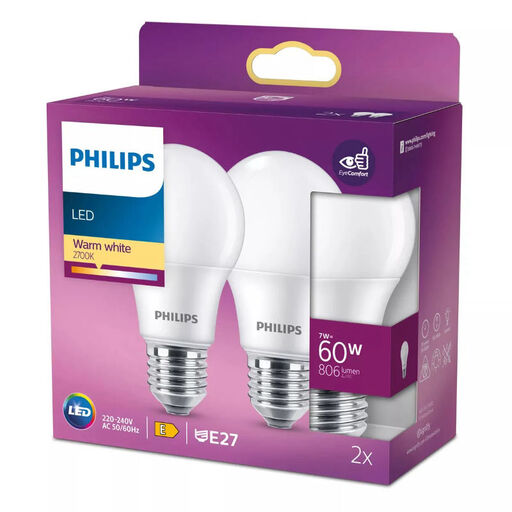
Why This Fits Their Persona: A practical two-pack for renters, first homes and standard lamps using an E27 screw fitting.
The E27 fitting and warm white colour are clearly specified, while the non-dimmable status avoids unclear dimmer compatibility.
A60 globe shape, frosted finish and two-bulb pack for general household lighting.
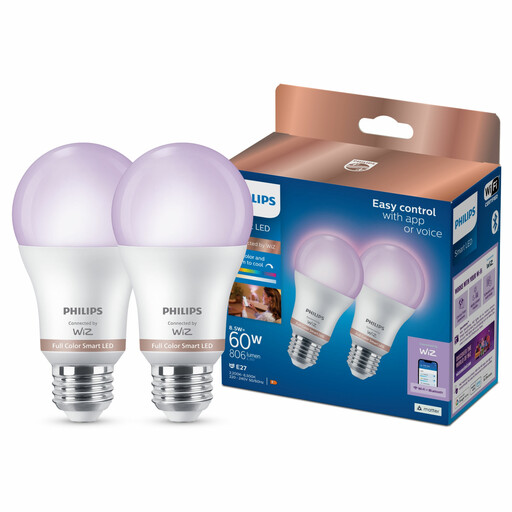
Why This Fits Their Persona: Suitable for homeowners who want app-based control, adjustable white light and colour options from a familiar E27 fitting.
The product description identifies the E27 base, app control and Wi-Fi connection without requiring an additional hub.
Offers full-colour modes, warm-to-cool white adjustment, schedules and remote smartphone control.
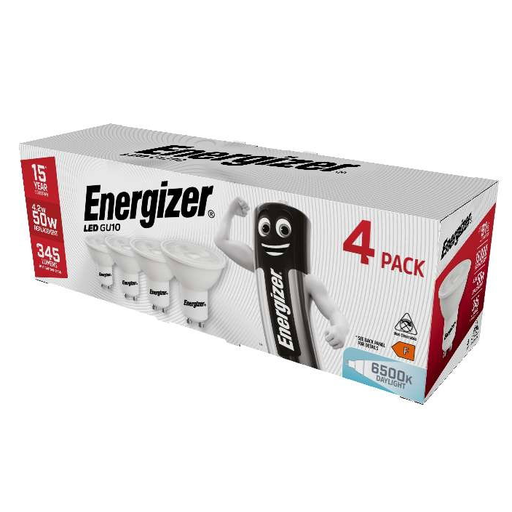
Why This Fits Their Persona: A four-pack for kitchens, bathrooms, recessed downlights or homes replacing several halogen spotlights at once.
It states the GU10 twist-and-lock base, 345-lumen output, 6,500K daylight temperature and non-dimmable operation.
Uses 4.9W per bulb and provides instant light with a frosted lens for a smooth beam.
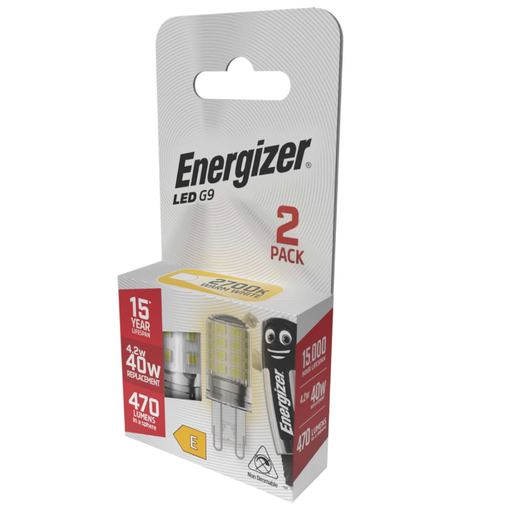
Why This Fits Their Persona: Designed for compact chandeliers, wall lights, under-cabinet fittings and other fixtures using G9 bi-pin capsules.
The G9 base, approximate compact dimensions, 2,700K warm white output and non-dimmable specification are stated clearly.
Produces 470 lumens from 4.2W and uses a push-in bi-pin installation.
We have compiled a complete, real-time list of products that fully satisfy these strict selection criteria and UK safety regulations.
LED bulbs generally use less electricity for a comparable light output, but the actual running cost depends on wattage, usage time and your electricity tariff. Compare the bulb’s actual wattage rather than its equivalent incandescent wattage.
No. Use a bulb specifically marked dimmable with an LED-compatible dimmer. A non-dimmable bulb may flicker, buzz or fail to operate correctly when connected to a dimming circuit.
Lifespan varies by product, operating temperature, fitting and usage. Check the manufacturer’s stated lifespan and guarantee information, and avoid enclosed or damp fittings unless the bulb is specifically approved for that application.