
24/7 Customer Support

Free returns

Same-day & Next-day Delivery

Quality Guaranteed

Unlock Your Welcome Offers: FREE Delivery | Up to 80% OFF | Free 30-day JoyPlus trial
Download the APP
Navigating the world of LED light bulbs can feel unnecessarily complicated. You are looking for a simple replacement, but you are met with a wall of codes, technical terms and marketing promises. Many UK households end up with bulbs that flicker, cast an unflattering light or fail long before expected. This often comes down to a few common but costly purchasing pitfalls.
As the Joybuy Product Recommendation Officer, my role is to help you sidestep these issues. Before you buy, be aware of these frequent traps:
To ensure you get the right bulb first time, focus on three key specifications. Getting these right will save you time, money and the frustration of another trip to the shop.
This is the most critical first step. An LED bulb is useless if it does not fit. UK homes primarily use four types of fittings:
Always check your existing fixture before purchasing. Taking a quick photo of the old bulb on your phone is a simple way to remember what you need.
To avoid the "equivalent wattage" trap, look for the lumen (lm) value. Lumens measure the actual brightness of a bulb. Watts simply tell you how much energy it consumes. For energy saving light bulbs, you want high lumens and low watts.
Here is a simple guide to replace old incandescent bulbs:
This ensures you get the brightness you expect, making it a true like-for-like replacement.
The colour of the light is measured in Kelvins (K). This determines the atmosphere of your space.
Based on these practical criteria, we have identified several options that align with the needs of different UK households.
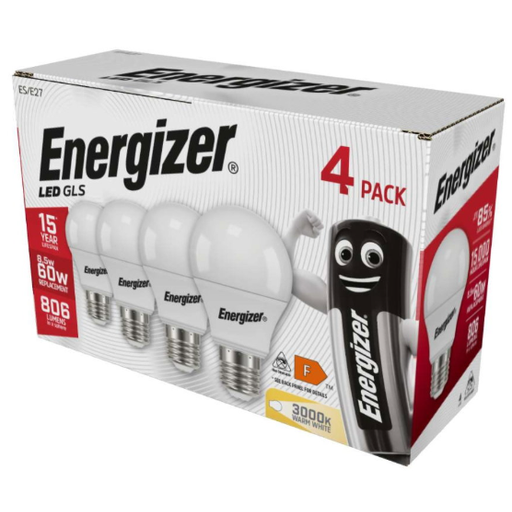
Why This Fits Their Persona: This cost-effective multipack is ideal for general household replacements. The standard E27 LED bulb fitting and warm white colour are perfect for creating a comfortable atmosphere in living rooms and bedrooms across the UK.
It clearly states the brightness is 806 lumens, a genuine 60W equivalent LED and specifies a 3000K colour temperature, removing guesswork about brightness and ambience.
Excellent value from a 4-pack. The 8.5W consumption offers significant energy savings over a 60W incandescent bulb. The frosted finish provides even, glare-free light.
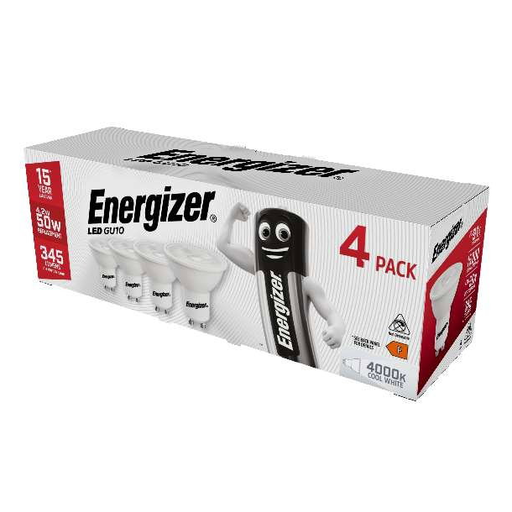
Why This Fits Their Persona: Perfect for kitchens, home offices or bathrooms where clear, bright light is essential. The GU10 spotlight fitting is standard for modern recessed downlights, and the cool white colour is ideal for task-oriented spaces.
It is clearly labelled as Cool White (4000K) and Non-Dimmable, preventing accidental use in cosy living areas or with incompatible dimmer switches, thus avoiding flickering.
A highly efficient 4.2W bulb that replaces a power-hungry 50W halogen spotlight, offering instant brightness and significant long-term energy savings.
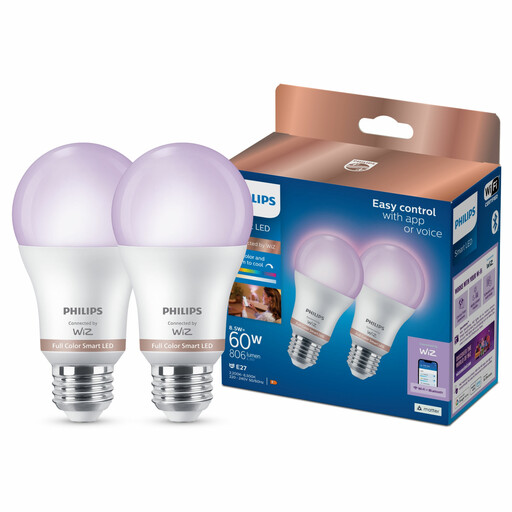
Why This Fits Their Persona: For those who love home automation, this Philips smart bulb offers complete control. It allows you to change colours, adjust warmth and set schedules from a smartphone, transforming any room's mood instantly.
It completely eliminates the "colour temperature catastrophe." Instead of being locked into one shade of white, you have millions of colours and a full warm-to-cool spectrum at your fingertips.
These smart light bulbs connect directly to your Wi-Fi without needing an extra hub. The app allows for remote control and automation, adding convenience and a high-tech feel to your home.
We have compiled a complete, real-time list of products that fully satisfy these strict selection criteria and UK safety regulations.
The running cost is significantly lower than for traditional bulbs. For example, a 60W equivalent LED bulb using 8.5W of power, run for 5 hours a day, would cost approximately ?1.55 per year (based on an electricity rate of 28p per kWh). A traditional 60W incandescent bulb doing the same job would cost around ?10.95 per year. This makes energy saving light bulbs a very sound investment.
Not always. Some LED bulbs require airflow to dissipate heat and can overheat in fully enclosed fixtures like sealed glass domes or outdoor lanterns. This can shorten their lifespan. Always check the product packaging or description for a statement like "suitable for enclosed fixtures" to be safe.
The most common reason is an incompatibility between the bulb and the switch. This usually happens when a non-dimmable LED bulb is installed on a circuit with a dimmer switch. The switch's technology interferes with the bulb's internal driver, causing the flicker. Always ensure you buy dimmable LEDs if you have dimmer switches.