Colour-conscious stationery sellers
If you photograph paper, inks, stickers or pastel sets for listings, changing window light makes adjustable fill and a consistent white-balance routine particularly relevant.


For gentle fill beside a window, choose a dimmable, bi-colour LED panel whose colour-rendering specification is stated for the exact model. A larger panel may suit wider arrangements or frequent shoots, while a directional COB light may suit a need to confine the added light; compare output at the stated measurement distance and check the power accessories included.
If you photograph paper, inks, stickers or pastel sets for listings, changing window light makes adjustable fill and a consistent white-balance routine particularly relevant.
If your arrangements sit close to a window, you may want broad, gentle fill that reaches the darker side without making the added light dominate the scene.
If you move between shooting locations or put the setup away afterwards, battery power, storage space and a suitable mount may matter more than a larger lighting kit.
For stationery photographed beside a window, decide whether colour consistency, soft fill, control over deep shadows or portability is your main concern. Adobe Lightroom notes that mixing interior light with window daylight can affect colour and tonality; a light’s settings help you manage that mixture, but do not replace a consistent white-balance workflow.
| Concern | What to check | Who this matters to |
|---|---|---|
| Colour consistency | Check adjustable colour temperature, dimming and the exact model’s stated CRI or TLCI. Use a neutral reference and consistent white balance. | If paper whites, inks and pastels need to look consistent across listing photos, matching the added light to changing daylight comes first; around 33% of consumers put colour consistency ahead of their other lighting needs. |
| Soft, even fill | Check the size of the emitting surface, whether diffusion is included and how the light can be positioned. | For a small flat-lay with dark corners or reflections on packaging, a gentler spread of light matters more than a narrow beam; roughly 27% of consumers prioritise soft, even fill. |
| Output and direction | Compare lux figures only at comparable stated distances, and decide whether you need broad fill or a beam you can confine. | When the side away from a bright window stays too dark, I need usable light at my working distance without lighting the whole background; around 27% of consumers put output and directional control first. |
| Portable setup | Check battery type, charging requirements, weight and compatibility with your intended mount. | If the light has to be packed away or moved between tables, I would rather manage a compact setup than a stand-mounted kit; approximately 13% of consumers make portability their primary concern. |
Mixed window and artificial light can leave different parts of white paper or coloured stationery with different casts. Adobe Lightroom identifies colour and tonality as challenges in mixed lighting.
Adjust the panel’s colour temperature where possible, keep a clear dominant light direction and check a neutral sheet or reference card in the shooting position.
NEEWER UK quotes 2,400 lux at 0.5 m for the NL-192B and 3,300 lux at 1 m for the NL660. Those figures do not establish which light delivers more useful fill at the same working distance.
Note the measurement distance and conditions before comparing output, then consider whether the arrangement needs a broad source or more tightly directed light.
Battery and mains arrangements differ by model. NEEWER’s NL-192B has built-in batteries, while its NL660 kit can use compatible NP-F batteries that are not included.
Check the exact package contents for batteries, a suitable plug, stands and diffusion before choosing a setup.
A kit that needs separately obtained batteries or mounting equipment may also take more preparation before a shoot.
GOV.UK’s electrical-equipment marking guidance distinguishes between Great Britain and Northern Ireland, so the intended delivery market matters.
Confirm the destination and ask the seller about the marking and documentation for the specific product version.
Its NL-192B and NL660 illustrate two different setups: a compact rechargeable panel and a larger stand-mounted kit.
The P260C Pro is a broad-panel option to examine if a wider adjustable colour-temperature range is important for repeated still-life shoots.
The RC 30B is a directional COB alternative to consider when confining or shaping supplementary light matters more than using a conventional broad panel.
These compact camera lights are options to examine for movable fill beside a window. Check diffusion and usable output at your working distance if a broad, soft panel is central to your setup.
 No image available
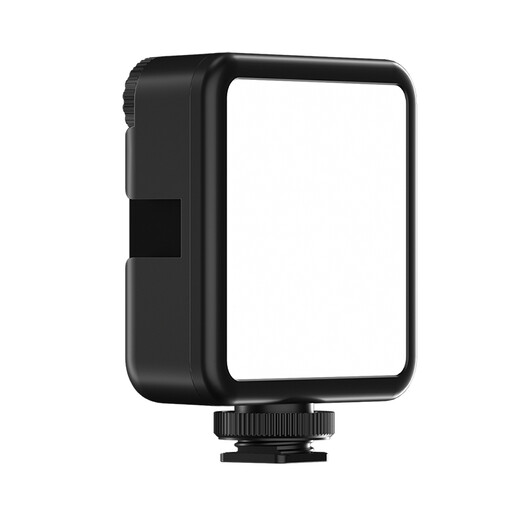
Consider this compact light when you need to reposition supplementary light without a mains lead. Its stated features include an integrated 3100 mAh battery, a 2500–9000 K colour-temperature range and CRI ≥95; check dimming, diffusion and output at your working distance if gentle fill is the priority.
 No image available
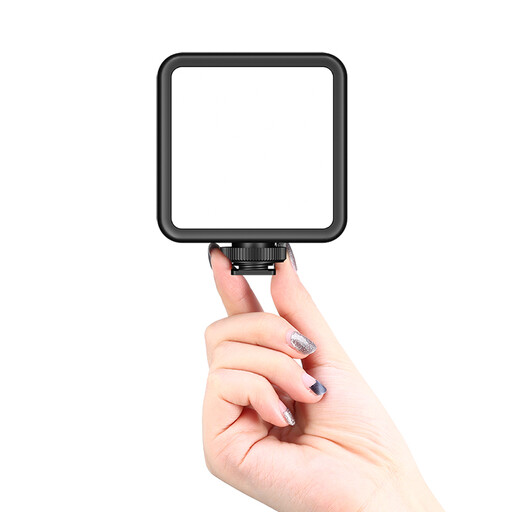
This portable light suits a setup where adjustable colour temperature and brightness are useful alongside window light. The listing describes a rechargeable 3000 mAh battery, cold-shoe mount and diffused lighting effect; check its numerical colour range, colour-rendering specification and output if those determine your choice.
 No image available
For occasional shoots that call for a compact light, the VL49 offers a stated 2500K–9500K adjustable range and dimmable brightness. Its title also identifies a built-in 2000 mAh battery and magnetic back; check colour-rendering figures, diffusion and output at the intended distance for colour-sensitive or broad-fill work.
A bi-colour light is useful if daylight changes during a shoot and you need to adjust the added light rather than work with one fixed colour temperature. Adobe Lightroom notes that mixed window and interior lighting can affect colour and tonality; keep white balance consistent and check how both sources fall across the stationery.
Not unless the measurement distances and conditions are comparable. NEEWER UK specifies 2,400 lux at 0.5 m for the NL-192B and 3,300 lux at 1 m for the NL660, so those numbers alone do not show how the lights compare at your desk.
Consider a larger panel when you regularly photograph wider arrangements and want a stand-mounted source with diffusion and spill control. A compact rechargeable light may be easier to place and store for small, occasional shoots; check output at your working distance rather than assuming either size will suit every window position.
Check the exact listing for its plug, adapter, batteries, charging method and mounting equipment. NEEWER UK says the NL660 kit includes mains adapters and UK power cables but not compatible NP-F batteries, whereas the NL-192B has built-in rechargeable batteries; contents should not be assumed to carry across models.
Yes. GOV.UK guidance dated March 2026 lists UKCA or CE marking for electrical equipment placed on the Great Britain market, and CE or, where applicable, CE together with UKNI for Northern Ireland. Confirm the delivery destination and the marking and documentation for the particular product version rather than treating a generic UK statement as confirmation for it.