For small wooden toys on a tabletop, start with a dimmable, colour-adjustable LED panel if you want a broad source that is straightforward to position and soften. Consider an RGBWW panel when deliberate colour effects matter, or a directional COB light with separate diffusion when you need more control over where light falls; in either case, check the space, power and accessories the setup requires.
Who is this lighting for?
Tabletop toy sellers concerned with wood colour
If photographs of different woods, stains and painted details need to look consistent across listings, look for adjustable colour temperature and dimming on the exact light you choose. Manufacturer-stated colour-rendering ratings can help you shortlist models, but a repeatable camera white balance and a test photograph of your own toys still matter.
Makers working in a small home studio
When the light must fit beside a small tabletop and be moved between shots, consider the space taken by its stand as well as the light itself. Check whether the exact model can use a suitable battery or USB-C power source if a mains-only arrangement would restrict placement.
Creators who also need shaped light
If you photograph wooden toys alongside larger or more directional scenes, a variable-beam COB light offers another way to control where light falls. SmallRig describes beam adjustment on its RC 30B; for a soft tabletop result, plan for compatible diffusion and the space to position it.
What matters when choosing a light?
Choose the type of source before comparing individual specifications: a diffused panel suits a compact tabletop arrangement, while colour effects or tighter beam control call for different equipment and checks.
Bi-colour diffused panel
Choose it when: You mainly need adjustable warm-to-cool illumination for small toys rather than coloured effects.
Allow for: Its brightness and spread still have to work at your shooting distance; a built-in diffuser does not determine every reflection on a toy.
RGBWW panel
Choose it when: You also want controlled colour accents or need to adjust the light around mixed artificial lighting.
Allow for: Full-colour controls may add little to straightforward photographs intended to show natural wood tones.
COB light with diffusion
Choose it when: Directing the beam or controlling spill is more important than starting with a broad panel.
Allow for: Soft tabletop lighting generally calls for a compatible modifier and enough room to position it.
| Concern |
What to check |
Who this matters to |
| Wood and paint colour |
Check the exact model’s stated colour-rendering ratings, adjustable colour-temperature range and dimming controls. Test it with a repeatable camera white balance. |
If I photograph several woods and painted finishes, I need their colours to remain distinguishable from one session to the next. Around 36% of consumers put colour consistency first. |
| Soft light and reflections |
Check the diffusion method and whether the stand allows placement above or beside the toy, particularly for varnished surfaces. |
Glossy paint or varnish can produce distracting bright spots in my photographs, so I want control over the source and its position. Reflection control is the primary concern for around 29% of consumers. |
| Compact setup and power |
Confirm the supported power source, required accessories and mounting method for the exact light and retail bundle. |
With little room around my tabletop, I need to place and power the light without making each shoot awkward to set up. Around 21% of consumers chiefly prioritise a compact, workable setup. |
| Directional control |
Check beam adjustment, compatible modifiers and the space needed for the stand and diffusion. |
If I also arrange larger scenes or want to keep light off the background, I need more control over where the beam falls. For around 14% of consumers, directional control is the main priority. |
Common buying mistakes
-
Comparing lux figures measured under different conditions
Amaran quotes output for the P60c at a stated distance and colour temperature, while SmallRig’s RC 30B figure uses a narrow beam condition. Those figures do not establish which setup will illuminate your tabletop more usefully.
Compare output only where distance, colour temperature, beam angle and modifier conditions are comparable. Also consider whether you can soften and position the source at your working distance.
-
Treating a colour-rendering rating as a guarantee
Manufacturer-stated CRI and TLCI ratings describe the specified light, not the final appearance of every wood, lacquer or paint finish in a photograph. Camera white balance and the rest of the lighting setup affect the result too.
Use ratings to compare exact models, then photograph a familiar wood sample or colour reference with your intended camera and editing settings before using one setup across a full set of product images.
-
Planning for the light but not the complete setup
A battery-capable panel and a COB light with a modifier call for different power, mounting and positioning arrangements. The capabilities described by amaran, Godox and SmallRig do not establish what every retail bundle contains.
Before ordering, confirm the exact bundle’s power supply, compatible batteries or charger, stand mount and any diffuser or reflector you intend to use.
Separate batteries, a compatible power supply, a stand or a light-shaping accessory may be needed for the arrangement you have planned.
-
Overlooking the exact light’s operating instructions
Godox’s LEDP260C manual includes cautions about heat, humidity and battery handling. Operating instructions are model-specific, so do not assume another light has identical requirements.
Place the light on a stable support, keep it dry and ventilated, and follow the manual for the exact model and its compatible power equipment.
Relevant brands to consider
Godox
A reference point for conventional LED panels used in tabletop and product lighting.
- Godox lists a 2800K–6500K range, CRI/TLCI averages of at least 98 and a side-emitting diffuser for its P260C Pro. These are manufacturer specifications for that model.
- Confirm the P260C Pro bundle’s power accessories and mounting arrangement; its stated colour-rendering ratings alone cannot establish how a particular toy finish will photograph.
amaran
Relevant when a compact panel needs full-colour control as well as adjustable colour temperature.
- Amaran specifies its P60c as a 60W RGBWW panel with a 2500K–7500K adjustment range and HSI colour controls.
- Consider whether those colour controls serve your photographs of wooden toys; amaran’s output figures apply to stated measurement conditions, not every colour or modifier setting.
SmallRig
An alternative to a flat panel when directional light and beam shaping matter to the wider setup.
- SmallRig lists a 15°–60° adjustable beam and a 2700K–6500K range for its RC 30B COB light.
- The RC 30B is not a flat panel. Plan a compatible modifier if you want soft light on a tabletop, and allow room for that setup.
Joybuy lights for compact setups
These ULANZI lights are options for compact wooden-toy photography setups where adjustable lighting or portable positioning matters. Check their controls, diffusion and mounting against the tabletop arrangement you intend to use.
 No image available
ULANZI VL120 RGB video light, 3100 mAh battery
Consider this compact RGB light if you want adjustable colour for small-subject photographs. Its listing states a 2500–9000 K range, 360° RGB control, 20 lighting effects, an integrated 3100 mAh battery and CRI ≥ 95; the CRI figure is a stated specification, not a guarantee of photographed wood colour.
For a tabletop setup, confirm brightness control, diffusion, mounting and included accessories before ordering. The listing also calls for ventilation, keeping the light dry and using a certified 5V/1–2A USB-C charger.
View on Joybuy
 No image available
ULANZI VL81 camera light, 3000 mAh battery
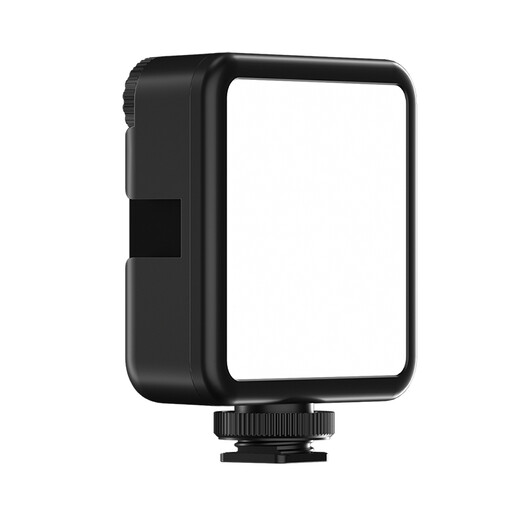
Consider the VL81 if a rechargeable light with adjustable brightness is more useful to your setup than RGB effects. Its listing identifies a 3000 mAh battery and cold-shoe mounting, and describes the lighting effect as softer.
Check the colour-temperature range and colour-rendering specifications if consistent wood and paint colour is a priority. Confirm how the softer effect is produced, what accessories are included and whether the mount fits your support.
View on Joybuy
Questions about wooden-toy lighting
Should I choose a bi-colour or RGB panel for wooden toys?
Choose a bi-colour panel if you mainly need repeatable warm-to-cool lighting without coloured effects. An RGBWW panel makes more sense if you also want deliberate colour accents or controls for working around mixed artificial light; whichever you choose, test your actual wood and painted finishes with a consistent camera white balance.
Can one LED panel light a small wooden toy?
One panel can serve a simple tabletop shot when you can position it close to the toy and control the surrounding light. A white card or reflector may help fill the unlit side; consider another light when the background or several sides of a larger arrangement need separate control.
Which power and mounting details should I check?
Check the exact light’s supported power sources, supplied adapter and plug, battery or charging requirements, and stand mount. For example, amaran describes mains or two NP-F-style batteries for the P60c, while Godox describes USB-C-compatible power input for the P260C Pro; neither description establishes what is included in a particular retail bundle.
Does CE marking alone settle whether a light is suitable for sale in Great Britain?
No. GOV.UK guidance dated 25 March 2025 describes indefinite recognition in Great Britain for certain goods meeting EU requirements, including CE marking, but that is not a blanket conclusion for every mains-powered LED light. Check the requirements applicable to the exact item, its documentation and its plug and power arrangement; Northern Ireland has separate arrangements.


