
24/7 Customer Support

Free returns

Same-day & Next-day Delivery

Quality Guaranteed

Unlock Your Welcome Offers: FREE Delivery | Up to 80% OFF | Free 30-day JoyPlus trial
Download the APP
An LED outdoor floodlight can improve visibility around a driveway, garage, garden or entrance, but the wrong model may create glare, leave dark areas or fail prematurely in exposed weather. UK buyers also need to compare more than wattage and headline brightness.
The most common purchasing pitfalls are:
For an outdoor LED security light, compare lumens first, then wattage. As a general guide:
A 20W LED floodlight can provide either moderate or strong output depending on its design. For example, available models range from 650 lumens to 1,500 lumens. A 30W LED floodlight in this selection provides up to 2,400 lumens.
Colour temperature also affects appearance. Around 4000K produces a neutral white light suitable for general outdoor use. 5000K–6400K appears cooler and can provide a sharper visual impression for security or task lighting. Very cool light may look stark near living areas, so consider the surroundings as well as brightness.
The IP rating describes protection against solids and water. An IP44 floodlight is protected against splashing water and is generally more suitable for sheltered or typical domestic positions. An IP65 floodlight offers dust-tight protection and protection against water jets, making it more appropriate for exposed walls, open gardens and carports.
IP65 does not mean the fitting can be submerged, and the rating applies when the product is installed correctly. Check cable entries, seals and mounting instructions before installation. For mains-powered wall lights, electrical connections should be completed safely and, where appropriate, by a qualified electrician.
A narrow beam concentrates light in one area, while a wide beam covers more ground. The 30W models listed below include a 110° beam angle, which can help illuminate a broad driveway or building frontage. Adjustable twin-head designs allow the light direction to be refined, potentially reducing unwanted glare.
A motion sensor solar floodlight avoids mains wiring and can be useful for sheds, garden paths and areas where installing a cable would be inconvenient. Solar performance depends on daylight, panel positioning, battery capacity and winter conditions. Install the panel where it receives as much direct sunlight as possible and keep it clean.
Mains-powered fittings generally offer more predictable output, while solar models can simplify installation. Select according to the location rather than choosing solely on convenience.
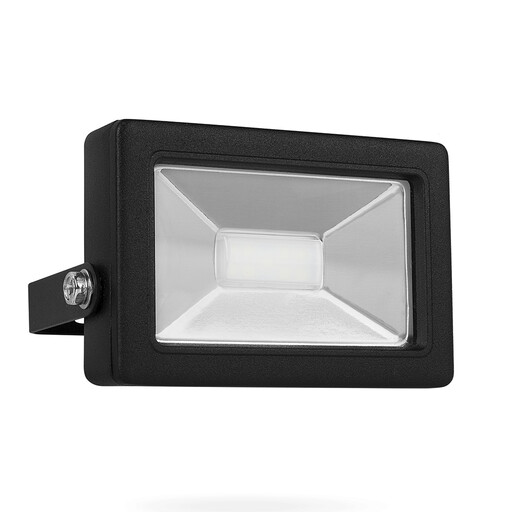
Why This Fits Their Persona: A practical option for a back door, garage, patio or driveway where dependable mains-powered lighting is needed without selecting a larger fitting than necessary. It produces 1,300 lumens of 4000K natural white light.
The 1,300-lumen specification gives a clearer basis for comparison than wattage alone, while its IP65 rating is suited to exposed outdoor mounting.
20W integrated LED, 1,300 lumens, A energy label and IP65 protection.
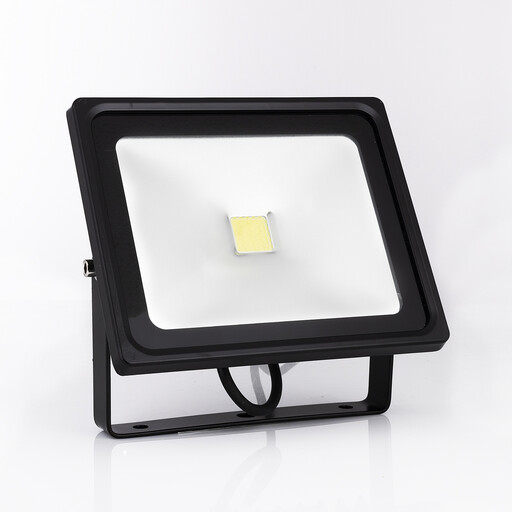
Why This Fits Their Persona: Suitable for buyers who need a well-defined coverage specification for a wide driveway, parking area, garden or building perimeter.
The stated 110° beam angle makes coverage easier to assess, and IP65 protection is specified for rain, dust and exposed outdoor conditions.
2,400 lumens, 110° beam angle, integrated LED and included mounting hardware.

Why This Fits Their Persona: A suitable choice for larger gardens, garages and driveways where mains wiring is inconvenient and motion-activated illumination is useful.
Its specifications state a 60-foot detection distance, 180° sensor angle, three lighting modes and IP65 protection, rather than relying only on a brightness headline.
Solar operation, 3,000-lumen stated output, three adjustable heads and a two-year warranty.
We have compiled a complete, real-time list of products that fully satisfy these strict selection criteria and UK safety regulations.
Position a wall-mounted outdoor light high enough to cover the intended area, but angle it away from neighbours’ windows and roads where possible. Check the fixing surface, cable route and manufacturer’s instructions before drilling. Mains-powered installations should comply with applicable UK electrical requirements; use a qualified electrician where wiring work is beyond your competence.
LED fittings generally use less electricity than comparable halogen lighting, but actual running cost depends on wattage and operating time. The calculation is:
Power in kilowatts × hours used × electricity tariff = running cost
For example, a 30W fitting uses 0.03kWh for each hour it operates. A motion sensor or timer can reduce unnecessary operation, provided the light still meets your visibility requirements.
An IP65 floodlight is designed to resist dust and water jets, so it is generally suitable for exposed outdoor positions when installed correctly. It should not be submerged, and seals, cable entries and mounting instructions still matter.
A compact driveway may work with around 650–1,300 lumens, while a wide driveway or parking area may need around 1,500–2,400 lumens. Beam angle and mounting height affect coverage, so lumens should not be considered alone.