Who is this for?

Colour-conscious knitwear sellers

If your listings need to show yarn shades alongside stitch and finish details, look for adjustable white light and a setup you can repeat across a collection. Adobe UK identifies clarity and colour accuracy as important to product photography, but a light’s stated colour specifications still need to work with your camera settings.

Makers working in small home spaces

If hard shadows obscure ribbing, cables or pom-poms, consider a manageable light with a diffuser or compatible modifier and a secure mount. Softer light can reduce distracting shadows; its position still matters when you want the stitches to show depth.

Creators making listings and styled images

If you switch between neutral product images and coloured or mixed-light scenes, adjustable colour temperature and RGBWW controls may give you useful options. Choose those controls for work you expect to do, rather than assuming colour effects will improve a plain listing image.

What matters when choosing?

For knitted hats photographed indoors, settle on a repeatable colour and light-placement setup before deciding whether you need creative colour controls.

Concern What to check Who this matters to
Yarn colour and white balance Compare the exact model’s colour-temperature range and stated CRI and TLCI; plan a fixed camera white-balance workflow. If I need a collection of hats to show consistent yarn shades, changing light or camera settings between shots makes the images harder to match. Around 42% of consumers put colour control first.
Soft light with visible stitch detail Check diffuser or softbox options and whether the mount lets you position the light slightly off-axis. When I photograph ribbing or cables in a small space, I want to soften hard shadows without losing the shape of the stitches. For around 33% of consumers, that balance is the primary concern.
Changing scenes and mixed light Check whether the exact light offers RGBWW or green–magenta adjustment, and which power accessories the kit includes. If I alternate between neutral listings and styled scenes, I need controls that make those changes practical. Flexible lighting is the first priority for roughly 25% of consumers.

Buying pitfalls

  • Choosing by CRI alone

    A stated CRI or TLCI figure describes the light under specified conditions; it does not keep camera white balance, backgrounds or editing consistent between hat photographs.

    Compare figures for the exact model, then photograph representative yarn shades with fixed camera and editing settings before shooting a full collection.

  • Expecting a bare panel to handle every texture shot

    Diffusion can soften distracting shadows, while light placed too directly in front of a hat can make raised stitches look flatter. Canon Europe describes light tents as a way to make shadowless product images; that look may not suit every texture detail.

    Check the included modifiers and mounting options, then try a softened light slightly to one side and keep its position repeatable.

  • Comparing brightness figures without their conditions

    Manufacturer illuminance figures depend on distance and settings. Amaran specifies 5,900 lux for the P60c at 1 m and 5600 K, while Aputure lists 9,000 lux for the Nova P300c at 1 m and 5500 K; those figures alone do not establish which setup will light your hat more suitably.

    Check the measurement distance, colour temperature and modifier conditions, then assess the light at the distance you intend to use after diffusion.

  • Overlooking the exact power kit

    A battery-capable light need not arrive with a battery. Godox describes optional battery power for the LDX range, and Nanlite documents several power options for the PavoSlim 60C.

    Before ordering, check the precise model and kit for its supplied mains lead, compatible batteries, charger and mounting parts.

Brands to consider

amaran

The compact P60c RGBWW panel is relevant to small product sets that also need adjustable colour.

  • Amaran specifies a 2500–7500 K range, CRI 95+, TLCI 96+ and green–magenta adjustment for the P60c.
  • Those model specifications do not ensure that yarn shades will match across different camera and editing settings.

Godox

The LDX50Bi is a bi-colour panel to consider when adjustable white light and a detachable diffuser suit a neutral hat-photography setup.

  • Godox specifies 2800–6500 K, 0–100% dimming and average CRI and TLCI figures of at least 96 for the LDX50Bi.
  • Battery power is optional for the cited LDX models; check the exact kit if you intend to shoot away from a mains socket.

Nanlite

The PavoSlim 60C is a slim RGBWW-panel option for setups that will use adjustable white and colour modes.

  • Nanlite’s PavoSlim 60C manual describes a 2700–7500 K range, green–magenta adjustment and AC, NP-F and V-mount power options.
  • Confirm the exact kit contents and suitable mains accessories before relying on a particular power arrangement.

Aputure

The Nova P300c is a larger RGBWW-panel option for buyers planning a more substantial shooting setup.

  • Aputure specifies 9,000 lux at 1 m and 5500 K, a 2000–10000 K range and CRI and TLCI figures of at least 95 for the Nova P300c.
  • Its specified 12.6 kg fixture weight and up-to-360 W input need consideration in a small tabletop workspace.

Joybuy lights for knitted-hat photography

These compact ULANZI lights are options for a portable knitted-hat photography setup. The VL120 is described as an LED panel; check the VL81’s lighting area and both lights’ output and diffusion options for your intended hat-to-light distance.

ULANZI VL120 RGB video light

ULANZI VL120 RGB video light, 3100 mAh battery

The compact VL120 suits a portable setup when you also want adjustable colour for styled hat images.

Its product name specifies a 2500–9000 K range, CRI of at least 95, 20 lighting effects and an integrated 3100 mAh battery.

Check its light coverage and diffusion options at your planned shooting distance; a stated CRI figure does not replace a consistent white-balance workflow.

View on Joybuy
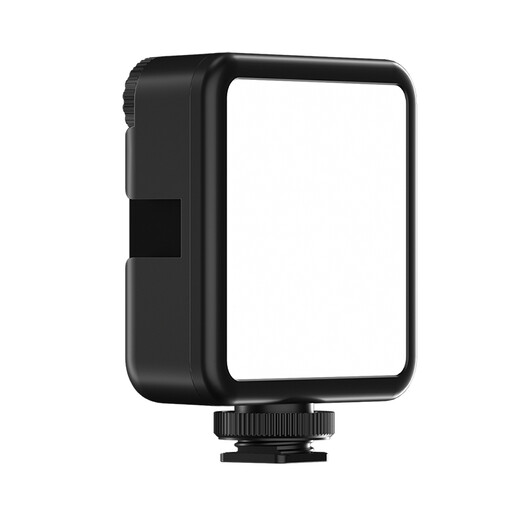
ULANZI VL81 camera light

ULANZI VL81 camera light, 3000 mAh battery

The VL81 is an option for a small, rechargeable camera-light setup when a cold-shoe mount suits your positioning.

Its product name specifies adjustable brightness and a 3000 mAh battery.

If repeatable yarn colour or softened stitch lighting is important, check the exact colour-temperature and colour-rendering figures and what diffusion equipment comes with the kit.

View on Joybuy

Common questions

Do I need RGBWW light to photograph knitted hats?

Not for neutral catalogue images: a bi-colour panel with dimming and diffusion gives you the principal white-light controls for that setup. RGBWW is worth considering if you also make coloured or styled images, while green–magenta adjustment is useful when you can identify a tint mismatch; neither removes the need for consistent camera settings.

Will diffusion hide the texture of a knitted hat?

Diffusion can soften hard shadows without necessarily hiding stitch detail, but the result depends on where you place the light. If the knit looks flat, try moving the softened light slightly to one side and test the arrangement on a representative hat.

Which panel-light specifications should I compare?

Compare the exact model’s colour-temperature range, stated CRI and TLCI, dimming, modifier compatibility and power options. For brightness, check the stated distance and setting: amaran’s P60c figure is 5,900 lux at 1 m and 5600 K, while Aputure’s Nova P300c figure is 9,000 lux at 1 m and 5500 K.

Does a portable panel light come with a battery?

Battery capability does not establish what is included in the box. Godox describes optional batteries for cited LDX models, while Nanlite documents AC and battery power options for the PavoSlim 60C; check the exact kit for its battery, charger and mains accessories before buying.