Colour-conscious candle sellers
If dyed wax and printed labels need to look consistent across listings, check the exact light’s published colour-rendering rating and whether you can keep its colour temperature fixed between shots.


For consistent photographs of dyed wax and labels, start with a light that publishes its colour-rendering rating and lets you control colour temperature, rather than choosing by wattage alone. A compact light suits close tabletop work; a larger diffused panel may suit a wider arrangement, while greater documented output matters when the light must sit farther away. Check the power accessories, mounting and measurements for the exact model before buying.
If dyed wax and printed labels need to look consistent across listings, check the exact light’s published colour-rendering rating and whether you can keep its colour temperature fixed between shots.
For individual jars, melts or pillar candles photographed at a desk, a compact light is easier to position close to the subject. Leave room for a secure mount and any diffusion you plan to use.
If you photograph several products or make both stills and video, consider how much of the set the light must cover, its working distance and where a stable stand and power source will go.
Decide how faithfully the light needs to show candle colours, then consider the size of the set, the look of its shadows and where you can place the light.
| Concern | What to check | Who this matters to |
|---|---|---|
| Wax and label colour | Look for a published CRI rating and, if available, TLCI; check that colour temperature can be set consistently. | If my listings show dyed wax and printed labels, I want their colours to stay consistent between shoots. Around 36% of consumers would put colour fidelity first. |
| Shadows and reflections | Check the panel’s size, diffusion and mounting options; placement matters when photographing glossy jars. | For reflective glass and textured wax, I want softer shadows without losing every hint of surface detail. Soft-shadow control is the main concern for around 29% of consumers. |
| Changing scenes | Check the colour-temperature range and read any lux figure alongside its measurement distance and settings. | If I switch between warm styling, daylight-looking scenes and wider arrangements, I need a light I can adjust and position effectively. Around 21% of consumers would prioritise that flexibility. |
| Portable power | Confirm the power method, compatible battery and what mounting or power accessories come with the exact package. | When I move my setup between workspaces, I need a light and power arrangement I can carry and set up securely. Portability would come first for around 14% of consumers. |
Wattage does not tell you how a light renders coloured wax or labels. A published CRI rating addresses colour rendering, while a lux figure needs its measurement distance and settings to be useful.
Check the exact model’s CRI or TLCI, colour-temperature range and illuminance conditions before treating power as a deciding factor.
A compatible port describes a power option, not the contents of the package. The Godox LEDP260C manual, for example, specifies that its NP-F970 batteries are purchased separately.
Read the in-the-box list for the exact light and check its battery, charging and mains-power requirements.
Depending on the model and package, a usable portable setup may also require a compatible battery, charger or power source.
Backdrops, fabric, cables and stands can end up close to the flame. London Fire Brigade advises keeping candles away from materials that can catch fire and never leaving them unattended.
Use a heat-resistant holder on a stable surface, keep combustible props clear, secure the light and cables, and extinguish the candle before leaving the set.
SmallRig specifies 2000 lux at 0.3 m for the P200, while the amaran P60x manual states up to 5070 lux at 1 m. Those figures do not provide a like-for-like output comparison.
Compare illuminance only when the measurement distance and other stated conditions match; otherwise assess whether each light can be positioned appropriately for your set.
The P200 is a compact panel that SmallRig lists for still-life photography and portable close-up setups.
Godox positions the P260C Pro as a larger bi-colour panel for photography and content creation.
The P60x is a 60 W bi-colour panel to consider when planning a fixed set or a longer working distance.
These compact camera and video lights are options for close tabletop candle photos and portable setups. Check their lighting characteristics against your set before relying on either for a wider arrangement or consistent colour across a catalogue.
 No image available
Consider this compact light when you need to reposition a light around a small candle setup. Its listed features include an integrated 3100 mAh battery, CRI ≥95 and a 2500–9000 K colour-temperature range. If the working distance or softness of reflections matters, check the illuminance, dimming and diffusion details for the exact listing, along with its mounting accessories.
 No image available
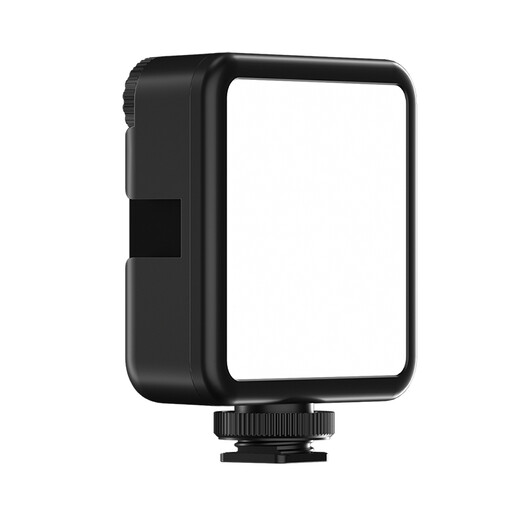
This portable camera light is worth considering if a cold-shoe mount suits your close-up setup. The title lists adjustable brightness and colour temperature and a rechargeable 3000 mAh battery. For candle listings where colour consistency is important, check the exact colour-temperature range and CRI or TLCI rating; also confirm how you will mount it beside the set.
Look for a published CRI rating for the exact light, with TLCI as another useful specification where supplied. Redgrasscreative describes CRI values of 95 or above as strong colour-rendering figures, but a rating alone will not keep successive photographs consistent: set the light’s colour temperature and your camera’s white balance deliberately.
A diffused or side-emitting source can be a useful starting point for controlling harsh shadows and reflections on jars. Godox describes the P260C Pro as side-emitting with a diffuser; whether you need more diffusion depends on the size and position of the light and how much wax texture you want to show.
Yes, provided you treat the flame as an open-fire risk throughout the shoot. London Fire Brigade advises using a heat-resistant holder on a stable surface, keeping candles away from flammable materials and never leaving them unattended. Keep the backdrop, diffuser, stand and cables clear of the flame, and extinguish the candle when you leave.
Some models offer battery power, but compatibility does not mean a battery comes in the box. SmallRig specifies an NP-F battery port and USB-C input for the P200; Godox lists battery, DC and USB-C options for the P260C Pro. Check the exact listing for compatible batteries and included power accessories.
Check the power requirements, supplied accessories and safety documentation for the exact light and its power supply. The Office for Product Safety and Standards states that the Electrical Equipment (Safety) Regulations 2016 set requirements before electrical equipment is placed on the Great Britain market. Northern Ireland has separate applicable provisions, so do not assume guidance specific to Great Britain covers a purchase there.