Repeat book-listing sellers
If you photograph one book after another, a light position you can reproduce and controls for brightness and colour temperature help you keep covers, spines and pages looking consistent across listings.


For repeat photographs of second-hand books on a small table, start with a dimmable bi-colour panel that you can mount securely and use with diffusion. A pocket light takes less room and suits close placement or mobile sessions; a larger panel makes more sense when you need greater working distance or plan to expand the setup, provided you have room for its stand and power equipment.
If you photograph one book after another, a light position you can reproduce and controls for brightness and colour temperature help you keep covers, spines and pages looking consistent across listings.
When there is little clear space beside the book, consider the light and its mount together. A compact panel may be easier to place close by; a larger panel needs a stable position that does not obstruct your camera or handling space.
If you photograph a few books at a time or change locations, a rechargeable light can simplify placement away from a socket. Check its mounting arrangement and stated runtime against the length of your sessions.
For a small-table book setup, decide where the light can stand and how close it can sit before choosing a larger panel for its stated output.
Consider it when: Space is tight, the light can sit close to the book, or you photograph listings away from a socket.
Allow for: Close placement and a limited battery session. SmallRig warns that its P96 Neo body may become hot during prolonged operation.
Consider it when: You have a fixed listing station and can position one adjustable light above and to the side of the book.
Allow for: A separate mount. NEEWER states that its NL480 needs a light or desk stand, which is not included.
Consider it when: Your planned working distance or a future multi-light arrangement calls for a larger setup.
Allow for: More stand clearance and power equipment. Godox lists several outputs in its LP Bi-colour range, but a higher wattage alone does not establish a better result on a small table.
| Concern | What to check | Who this matters to |
|---|---|---|
| Readable colour and condition | Look for dimming and bi-colour adjustment; photograph a book with light-coloured pages using consistent camera white balance. Treat a manufacturer's colour-rendering rating as a specification, not a guarantee for every book or camera. | If cover colour, spine lettering and signs of wear must be clear in each listing, I would put controllable light ahead of decorative effects. Around 33% of consumers put readable colour and condition detail first. |
| Soft, even light | Check whether diffusion is supplied and whether the panel can tilt. Diffusion can soften shadows, but you may need to adjust the light's position or brightness. | Glossy jackets and open pages can show distracting glare or shadows, so I need room to change the light's angle. For around 27% of consumers, shadow control is the primary concern. |
| Space and mounting | Measure the clear space beside and above the table. Confirm the required stand or clamp and what comes in the box. | With a cramped work surface, I cannot give a stand space that I need for the camera and books; around 20% of consumers prioritise a workable physical setup. |
| Portable power and setup | Confirm the power source, compatible accessories and stated runtime at a relevant brightness setting. Check that your chosen mount is practical to move. | If I photograph books in different places, I need to set up without depending on the same nearby socket each time. Portability is the leading need for around 20% of consumers. |
A panel needs a stable position to light a cover or open pages from the side or above. NEEWER specifies that its NL480 requires a light or desk stand, neither of which is included.
Measure the space around the table and check the panel's mounting arrangement and package contents before choosing a stand or clamp.
For the NL480, a suitable stand or clamp is additional equipment; compatible NP-F batteries are also separate if you choose battery operation.
Godox lists different outputs across its LP Bi-colour range, but wattage by itself does not show how a book will look at your intended light position, with your chosen diffusion and surrounding daylight.
Set out the book, camera and possible light position first. Choose a panel for the working distance and coverage you need rather than selecting the highest stated output.
Damaged leads and overloaded extension equipment create avoidable electrical risks around a small work area. Electrical Safety First advises against overloading or daisy-chaining extension leads.
Use appropriate equipment, inspect plugs and leads before use, and keep cables clear of the area where you handle books and move the camera.
Safety alerts and recalls may arise after a light is purchased. The UK Office for Product Safety and Standards publishes product safety alerts, reports and recalls.
Keep the model details and purchase record, and consult the product safety alerts and recalls service if a concern arises.
These product lines illustrate different lighting formats; the brand examples do not establish that a particular light fits every book-photography setup.
The NL480 is an example of a bi-colour panel for a fixed tabletop arrangement.
The LP Bi-colour range is relevant if you are considering different panel sizes or a setup that may grow beyond one light.
The P96 Neo illustrates a compact, rechargeable approach to close tabletop lighting.
These compact, rechargeable camera lights are options to consider when space around the book is limited or the setup moves between locations. Check each light's mounting and lighting controls against your table before choosing it for repeat listings.
 No image available
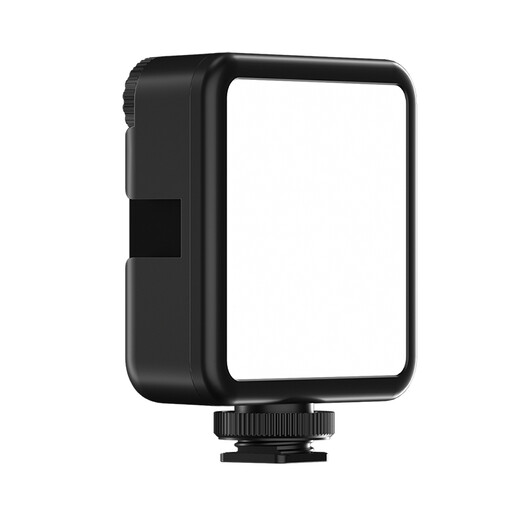
Consider this light when a compact, rechargeable source can be positioned close to the book. Its listed features include adjustable brightness, colour-temperature adjustment, a cold-shoe mount and a 3000mAh battery.
Confirm how you will mount it beside or above the table, along with its colour-temperature range, charging accessories and runtime for your planned sessions.
 No image available
This rechargeable light may suit a movable book-photography setup where colour-temperature adjustment matters. The product title states a 2500–9000 K range, an integrated 3100 mAh battery and a manufacturer-rated CRI of at least 95.
Before using it for repeat listings, check its brightness controls, mounting compatibility and whether you need separate diffusion or charging equipment. The CRI rating alone cannot establish how your camera will reproduce every cover or paper colour.
One controllable panel is a sensible starting point for a small table, especially when you can adjust its position and diffuse the light. Take test photographs of a cover, spine and open pages; consider a second light only if repositioning the first still leaves important details too dark.
Not necessarily: NEEWER states that its NL480 requires a light or desk stand that is not included. Check the contents and mount of the exact light you choose, then make sure the stand or clamp will fit securely beside your table.
Only when the combined load stays within the extension lead's marked rating. Electrical Safety First advises against overloading or daisy-chaining extension leads and says cable reels must be fully unwound to achieve their current rating.