Catalogue-style camera collectors
If you document paint, chrome, leatherette and lens markings, consistent white balance and controlled highlights matter more than coloured effects.


For neutral photographs of vintage cameras, start with a bi-colour LED panel whose light you can soften and direct, then check that its colour-temperature range and mounting arrangement suit your setup. Consider RGBWW controls if you also want coloured backgrounds or need to match ambient light; they do not replace diffusion when chrome and glass create distracting reflections.
If you document paint, chrome, leatherette and lens markings, consistent white balance and controlled highlights matter more than coloured effects.
If your tabletop is close to walls or other objects, look for a light and compatible modifiers that you can position and direct within the available space.
If your vintage cameras are subjects for decorative photographs as well as records, adjustable white light and RGBWW controls give you different ways to light the subject and background.
Choose it when: You mainly want neutral, repeatable photographs of camera bodies and lenses.
Trade-off: A bi-colour light does not offer the coloured background and gel-style controls of an RGBWW model.
Choose it when: The same light must serve both catalogue photographs and styled shots with coloured accents or matched ambient light.
Trade-off: Full-colour controls add complexity that plain white-background documentation may not need; check the exact bundle for compatible light-shaping accessories.
| Concern | What to check | Who this matters to |
|---|---|---|
| Reflections | Check softbox compatibility and size, plus whether a grid is included or available for the exact light. | Chrome trim or lens glass can dominate my photograph if the light creates a hard hotspot; roughly 31% of consumers put reflection control first. |
| Colour consistency | Compare the model’s stated colour-temperature range and colour-rendering figures; plan how you will set white balance. | When documenting finishes across several sessions, I want the photographs to look consistent; around 31% of consumers prioritise colour and white-balance control. |
| Space and spill | Check the fixture and modifier dimensions, mounting method and room needed for a stand. | With little space around my tabletop, I need to position the light without illuminating everything nearby; roughly 23% of consumers put workspace fit first. |
| Power and repeatability | Confirm the supplied power arrangement, battery requirements and whether the light can save settings. | If the useful lighting position is away from a socket, or I regularly rebuild the set, flexible power and repeat settings matter most; about 15% of consumers make that their primary concern. |
A bright, tightly focused light can leave distracting highlights on chrome and lens glass. Diffusion changes the light reaching the subject, so a bare-light output figure does not describe the finished setup.
Check which softbox or diffusion fits the fixture and assess output under the conditions in which you intend to use it.
A stand, flags or compatible modifier may also be needed to shape the light around the camera.
CRI and TLCI figures describe a manufacturer’s stated light characteristics, not how black paint, chrome and leatherette will appear after camera settings and editing.
Set a repeatable white balance and make a test photograph of the surfaces you expect to document.
amaran specifies battery operation for the P60c but states that the cited NP-F970 batteries are not included.
Check the exact bundle for the required battery type, charging arrangement and supplied mains accessories before planning a cordless setup.
Compatible batteries and a charger may require separate purchases, depending on the bundle.
A light sold with a power supply intended for another market may not have the plug or voltage arrangement you need at home.
For a mains-powered light, check the exact bundle’s supplied plug, rated input voltage and conformity information for your delivery location.
The Godox P260C Pro is a slim bi-colour option for photographers concentrating on white-light product photographs.
The amaran P60c is a compact RGBWW panel for a setup that alternates between neutral records and styled still-life photographs.
The Nanlite PavoSlim 60B is a slim bi-colour alternative for photographers who mainly need adjustable white light.
These camera lights offer options for positioning light around a small photographic set. If a dedicated LED panel and compatible softbox or grid are central to your plan, confirm each light’s form and accessory compatibility before choosing it for reflective vintage cameras.
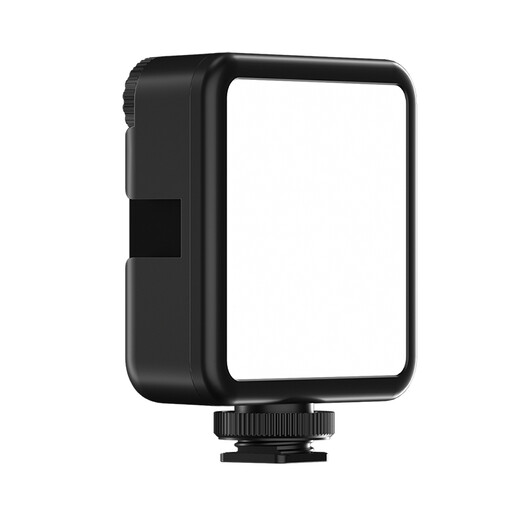 No image available
Consider this light if you want a rechargeable camera-mounted option for a compact set. Its title states adjustable brightness, a cold-shoe mount and a 3000mAh battery; check the light’s shape and modifier compatibility if controlling reflections is your priority.
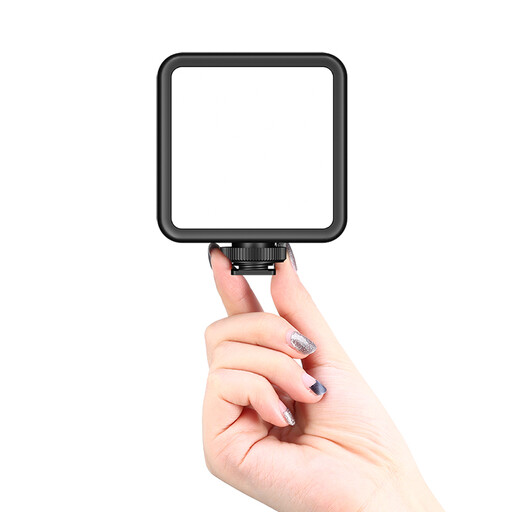 No image available
Consider this compact light when adjustable white light and repositioning around a tabletop matter. Its title specifies a 2500K–9500K range, dimmable brightness, a magnetic back and a 2000 mAh battery; confirm its shape and diffusion options before using it to light chrome or glass.
No: an adjustable bi-colour panel can suit neutral catalogue photographs when you set a consistent white balance. RGBWW controls become more relevant if you also want coloured accents or need to match ambient light; manufacturer CRI and TLCI figures alone cannot guarantee the appearance of your final images.
A compatible softbox can make the light source appear larger and soften reflections, while a grid helps restrict spill onto nearby surfaces. Check fit and bundle contents for the exact panel; Aputure describes the softening effect for its own panel softbox, not every modifier or fixture.
Not necessarily: compatibility does not establish what comes in the box. amaran states that the P60c can run on NP-F-style batteries but that the cited NP-F970 batteries are not included, so check the exact listing for batteries, charging accessories and mains power arrangements.
Check the supplied plug, rated input voltage and conformity information for the exact product and your delivery location. The Office for Product Safety and Standards sets out Great Britain requirements under the Electrical Equipment (Safety) Regulations 2016; do not assume that Great Britain guidance applies unchanged in Northern Ireland or that a bundle intended for another market suits your setup.