What matters when choosing a light?
For vintage cameras under artificial light, decide how you will control reflections before weighing colour adjustment against the space and output your setup needs.
| Concern | What to check | Who this matters to |
|---|
| Reflections and shadows |
Check the exact kit for compatible diffusion and consider how a stand will let you change the light’s angle. |
If chrome or glossy paint shows a small hotspot, I need a broader, positionable source so the camera’s condition remains visible; roughly 42% of consumers would make reflection control their primary concern. |
| Colour and white balance |
Check the model’s bi-colour range and stated CRI and TLCI ratings; plan for a repeatable custom white balance. |
When photographing painted finishes and leatherette for condition records, I want the lighting and camera settings to stay consistent; around 33% of consumers would put colour control first. |
| Space and output |
Check fixture size, power and mounting options, plus illuminance at a stated distance with the intended modifier. |
If I work at a small desk or move between locations, the fixture must fit my setup while providing enough light at my working distance; about 25% of consumers would prioritise this practical fit. |
Joybuy lights for compact camera setups
These ULANZI choices are compact lights for portable camera setups. For reflective tabletop subjects, check how each light can be positioned and diffused rather than assuming it will behave like a larger panel.
 No image available
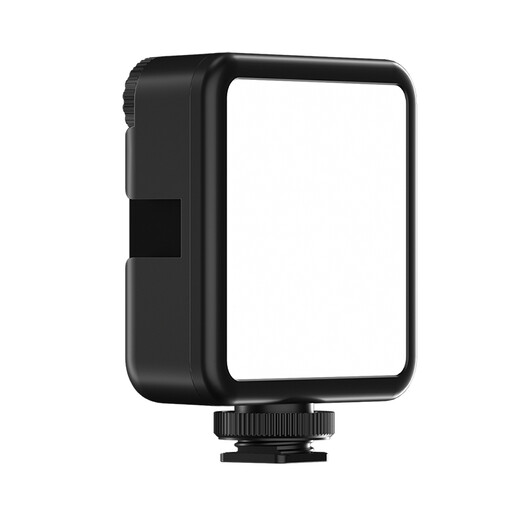
ULANZI VL81 LED Camera Light, Cold-Shoe Mount
A compact, camera-mounted option for photographing individual objects where portability matters.
The product name specifies adjustable brightness and a rechargeable 3000 mAh battery. If consistent colour documentation or softened reflections matter, check the colour-temperature range and what diffusion equipment the exact kit includes.
View on Joybuy
 No image available
ULANZI VL120 RGB Compact LED Panel, 3100 mAh
A portable panel to consider when adjustable colour is useful in a small camera-photography setup.
The product name states a 2500–9000 K range, CRI ≥ 95 and an integrated 3100 mAh battery. Check how the exact kit mounts and diffuses the light, as well as its output at your intended working distance.
View on Joybuy
Questions about lighting vintage cameras
Do I need a bi-colour panel to photograph vintage cameras?
A bi-colour panel is useful if you need to adjust the light to suit changing ambient conditions or repeat a chosen colour-temperature setting. A fixed-colour light can work in a controlled setup; for condition photographs, use a consistent white-balance method either way.
Will a diffuser remove reflections from chrome and lens glass?
No. Diffusion changes the apparent light source and can soften harsh highlights, but reflective surfaces still show what they face. Adjust the source’s size, angle and distance, and keep distracting objects out of the reflection path.
Can I compare lux figures from different lights directly?
Only when the measurement conditions are comparable. amaran states 5,070+ lux at 1 m for the P60x, while SmallRig states 52,800 lux at 1 m for the RC 120B with its reflector attached; the reflector figure does not describe a diffused panel setup.
Does CE or UKCA marking matter for a light used in Great Britain?
Check the marking applicable to the exact light and its power equipment. GOV.UK guidance dated 21 August 2026 says Great Britain continues to recognise CE marking alongside UKCA where the relevant product rules permit it; Northern Ireland has different provisions under the Windsor Framework.
What should I do with an LED light at the end of its life?
Check electrical-equipment collection and take-back options rather than treating the light as ordinary waste. GOV.UK explains that the waste electrical and electronic equipment framework supports recovery, reuse and recycling; local-authority and retailer arrangements can tell you where to take the item.


