
24/7 Customer Support

Free returns

Same-day & Next-day Delivery

Quality Guaranteed

Unlock Your Welcome Offers: FREE Delivery | Up to 80% OFF | Free 30-day JoyPlus trial
Download the APP
Replacing vehicle lighting is not simply a matter of choosing the brightest bulb or the most attractive light signature. LED replacement car lights must match your vehicle’s wiring, mounting points, beam pattern and legal requirements. A poor match can create dashboard warnings, failed functions, water ingress or an incorrectly aimed beam.
This guide helps UK car owners, auto electricians, towing professionals and caravan users avoid common purchasing mistakes while comparing vehicle-specific lighting assemblies and trailer lighting kits.
A vehicle may have different headlight systems within the same generation. For example, a BMW E90 may use original halogen, Xenon or adaptive headlights. A replacement designed for one system may not connect correctly to another.
Check:
A listing that says “fits BMW” is not enough information on its own.
Some assemblies are direct replacements, while others need wiring for DRL headlights or dynamic turn signal lights. BMW LED headlights and Porsche Cayenne LED headlights may also require the transfer of modules, ballast resistors or cornering-light components.
Coding may be needed to disable cold- or warm-bulb monitoring. Without it, the car can display errors or cause turn signals to flash incorrectly. If bumper removal or wiring modifications are involved, allow for professional fitting rather than relying solely on a short product description.
Angel eye headlights, projector headlamp assemblies and sequential LED tail lights can change the appearance of a vehicle, but styling should not replace checks for correct illumination. After installation, the beam must be aligned properly and all functions should be checked before driving on public roads.
For UK use, confirm that the lighting configuration, markings, colour and installation comply with applicable road traffic requirements. An E-mark or similar marking is useful evidence of regulatory approval, but it does not automatically confirm that every installation is legal on every vehicle.
Compare the product listing with your vehicle documents and the label on the existing lamp. A BMW F32 full LED assembly, for instance, may be listed for compatible F36, F80 and F33 variants but still require confirmation of the exact connector and factory equipment.
For a Porsche Cayenne, distinguish the 957 generation from the 955 and 958 generations. The supplied Porsche-compatible assembly is intended for the 957 platform and may not fit other generations without modification.
Identify exactly which features are included:
Dynamic turn signal lights usually need a dedicated connection to the vehicle’s indicator circuit. Sequential LED tail lights may require coding through tools such as BimmerCode or E-Sys on compatible BMW applications. Porsche installations may require a compatible diagnostic tool.
For towing equipment, look for practical protection and connection details rather than vague durability language. Wireless magnetic trailer lights listed with an IP65 waterproof rating are protected against dust and water jets, but they should still be fitted securely and stored dry after use.
A rechargeable trailer lights kit should also specify battery capacity, charging time and pairing procedure. Traditional caravan rear lights and a 7-pin trailer light board may be preferable where a wired connection is required for frequent or extended towing. Confirm whether the kit provides tail, brake, indicator and number-plate functions, and inspect the cable length for your trailer or caravan.
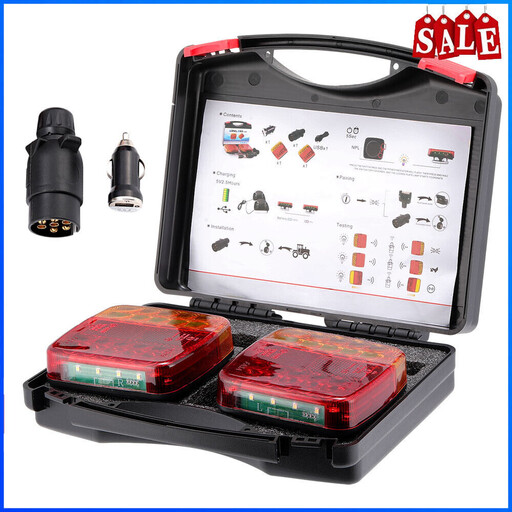
Why This Fits Their Persona: A practical option for occasional towing, farm work or users who move one lighting kit between trailers, vehicles and machinery.
The kit states its IP65 rating, wireless pairing method and five functions, helping buyers check practical details before ordering.
USB rechargeable 2,000 mAh batteries, rubber-coated magnetic bases and a 7-pin transmitter.
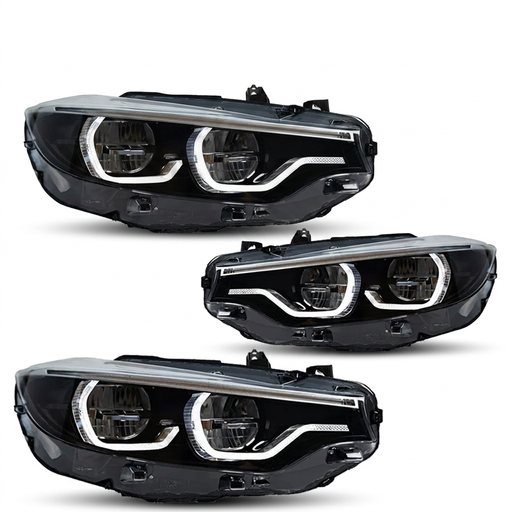
Why This Fits Their Persona: Suits BMW owners seeking a complete front-light assembly with integrated projection, daytime running and indicator functions.
The listed fitment and functions are specific, reducing the risk of buying a generic lamp that lacks the required DRL or indicator connections.
Full LED assembly with projector headlamp design, DRL headlights and dynamic turn signals.
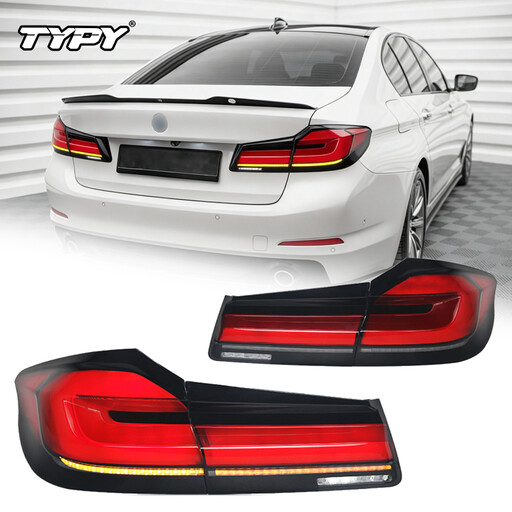
Why This Fits Their Persona: Designed for BMW owners who specifically want sequential rear indicators and are comfortable checking wiring and coding requirements.
The fitment notes identify G30 and F90 applications and warn that original harness compatibility and bulb-check coding must be confirmed.
Set of two rear assemblies with sequential LED indicators; suitable for LHD and RHD listings, subject to vehicle checks.
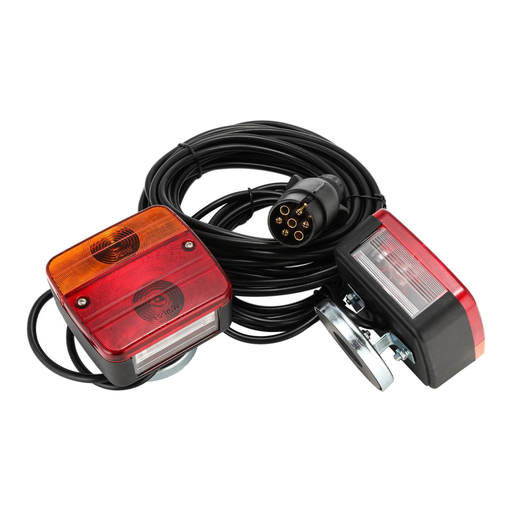
Why This Fits Their Persona: A wired solution for regular towing, horseboxes, caravans, farm vehicles and trailers where a longer cable and conventional connection are useful.
The specification identifies a 7-pin plug, 7.5-metre cable, 12V operation and stated lamp functions instead of relying on unspecified wireless range.
Magnetic fitting, pre-wired lamps and tail, brake, indicator and registration illumination functions.
Before fitting any LED replacement car lights:
LED lighting may use less power than some older systems, but running costs still depend on battery charging, operating time and vehicle wiring. Rechargeable trailer lights also need to be charged before use and paired correctly with the transmitter.
Legality depends on the complete lamp, its markings, beam pattern, colour, position and compatibility with the vehicle. Check the product markings and current UK requirements, then confirm correct alignment after installation. An auto electrician or MOT station can help identify potential issues, but an MOT check is not a substitute for verifying the fitting before purchase.
Some do. Coding may be required to prevent bulb-monitoring errors or to configure DRL and indicator functions. The requirement varies according to the BMW chassis, original lighting system and replacement assembly. Confirm this before ordering and budget for diagnostic coding if necessary.
The listed wireless kit specifies a battery life of up to 100 hours and a charging time of approximately two to two and a half hours. Actual operating time depends on how often the lamps are used, battery condition, temperature and storage. Charge and test the lights before every important journey.