
24/7 Customer Support

Free returns

Same-day & Next-day Delivery

Quality Guaranteed

Unlock Your Welcome Offers: FREE Delivery | Up to 80% OFF | Free 30-day JoyPlus trial
Download the APP
LED spotlights can improve visibility, highlight features and reduce electricity use compared with older halogen fittings. However, the wrong bulb or fitting can create glare, poor colour, compatibility problems or unnecessary installation costs.
This guide helps UK homeowners, tenants, landlords and DIY shoppers compare LED spotlights, GU10 LED bulbs, indoor fittings and outdoor security options without relying on vague marketing claims.
A traditional 50W halogen bulb and a modern 4.2W LED bulb do not use the same amount of electricity, but they may be marketed as equivalent in output. Lumens, rather than wattage, indicate the visible light produced.
For example, the Energizer GU10 options listed here provide 345 lumens while using 4.2W or 4.9W. Check the lumen figure when comparing replacement bulbs, particularly if you are replacing several ceiling spots in a kitchen or hallway.
Colour temperature is measured in kelvins (K):
The most suitable option depends on the room, surface colours and the atmosphere you want. A high kelvin rating is not automatically more useful.
A non-dimmable LED bulb should not be used with a dimmer switch. It may flicker, fail to operate correctly or potentially damage the bulb or fitting. If you want adjustable brightness, check both the product specification and the compatibility of the installed dimmer.
Integrated fittings can also be described as dimmable, but this may require a suitable trailing-edge or LED-compatible dimmer. Confirm the installation instructions before purchase.
GU10 LED bulbs use a two-pin twist-and-lock fitting. Measure the existing bulb and check the fitting’s clearance before ordering. A standard GU10 spotlight is often approximately 50mm in diameter and 54–55mm high, but recessed fittings can have limited space.
For tenants replacing bulbs rather than fittings, GU10 spotlights are usually a straightforward option. Always switch off the power and allow a recently used bulb to cool before removal.
Lumens indicate total light output, while the beam angle affects how widely that light spreads. Narrow-beam LED spotlights can highlight artwork, shelving or work surfaces. Wider beams are more suitable for general room lighting.
For larger rooms, a bar or multi-head fitting may distribute light more effectively than a single spotlight. Adjustable heads are useful when furniture layouts change, but check that the joint remains secure and does not droop.
Indoor LED ceiling spotlights and LED wall spotlights should only be installed in suitable dry locations unless the fitting has an appropriate IP rating. Bathrooms, covered porches and outdoor areas require extra care.
For gardens, driveways and entrances, look for:
Outdoor LED floodlights may require hardwiring to a junction box and installation by a qualified electrician. Follow UK wiring requirements and the manufacturer’s instructions rather than treating a fixed fitting like a plug-in lamp.
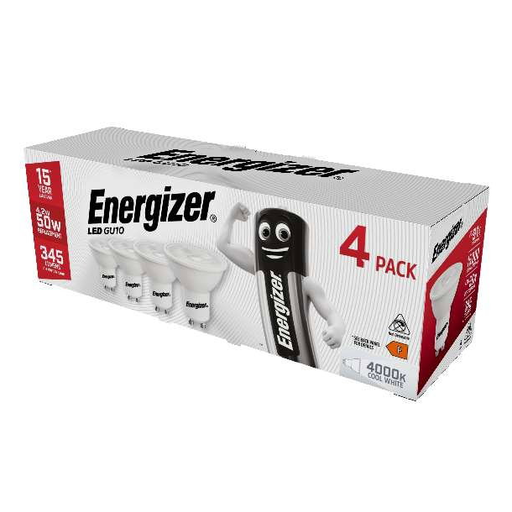
Why This Fits Their Persona: A practical replacement pack for households refreshing several existing GU10 fittings in offices, bathrooms or utility rooms.
The listing clearly states 345 lumens, 4,000K cool white light and non-dimmable operation, making compatibility easier to check before purchase.
4.2W LED input, 50W halogen replacement reference and standard GU10 twist-and-lock base.
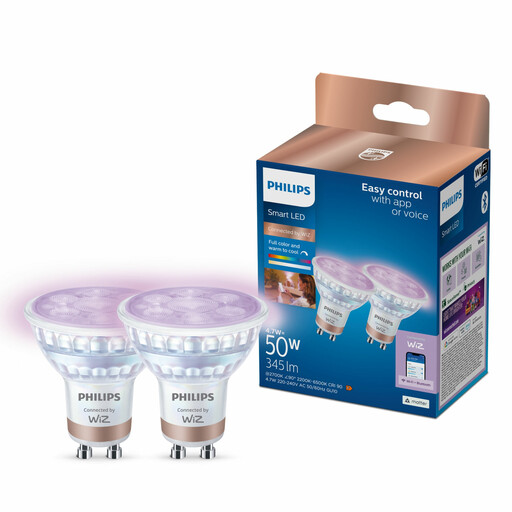
Why This Fits Their Persona: Suits connected homes where app control, scheduled lighting and colour adjustment are more useful than a basic replacement bulb.
It is identified as a Wi-Fi smart bulb with app scheduling, reducing the risk of buying a bulb that only offers manual on-off control.
GU10 base, smartphone control through the WiZ app, colour selection and routine scheduling without an additional hub.
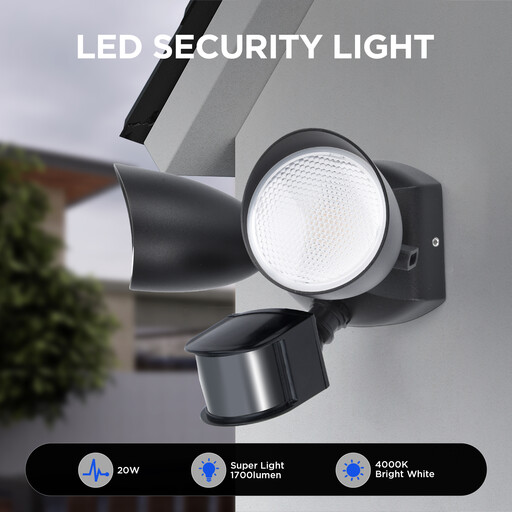
Why This Fits Their Persona: A suitable direction for property managers and security-conscious households needing strong illumination for a driveway, garden or entrance.
The specification gives a 1,700-lumen output, 4,000K colour temperature and sensor operation, rather than relying only on broad “security” wording.
Twin-head outdoor design, integrated LED lighting and stated 20W power consumption.
For a softer room design, a Philips GU10 warm white six-pack provides 2,700K light and non-dimmable operation. For adjustable indoor illumination, the Philips Star three-light and four-light LED ceiling spotlights offer warm white dimmable lighting and adjustable heads, but fixed installation should be completed by a qualified electrician.
For off-grid garden lighting, solar security lights can avoid mains cabling, although output and operating time depend on daylight, panel placement and battery capacity. Check the stated IP rating and install the panel where it receives suitable sunlight. Outdoor LED floodlights with cameras may add motion alerts, app access and recording, but consider Wi-Fi coverage, storage arrangements and ongoing service terms.
We have compiled a complete real-time list of products that fully satisfy these strict selection criteria and UK safety regulations.
Generally, a lower-wattage LED uses less electricity to produce a comparable amount of light. Compare the actual wattage and lumens, then multiply wattage by hours used and your electricity tariff. Your total cost also depends on the number of bulbs and daily operating time.
Many GU10 LED bulbs are designed for compatible GU10 fittings, but check the bulb dimensions, transformer requirements and dimmer compatibility first. Switch off the mains before replacement. If the fitting is hardwired, inaccessible or requires electrical alteration, use a qualified electrician.
Lifespan varies by product, heat management, usage and installation conditions. Check the manufacturer’s stated lifespan and warranty rather than assuming every LED has the same rating. Keep enclosed fittings within their permitted operating conditions and dispose of failed bulbs through appropriate electrical-waste or WEEE recycling routes.