
24/7 Customer Support

Free returns

Same-day & Next-day Delivery

Quality Guaranteed

Unlock Your Welcome Offers: FREE Delivery | Up to 80% OFF | Free 30-day JoyPlus trial
Download the APP
A torch is easy to buy, but selecting the right one takes more than comparing a few lumen figures. UK shoppers often discover that a torch is too bulky for a pocket, runs flat during a power cut or offers impressive brightness only for a short period.
Whether you need an LED torch for everyday carry, a rechargeable torch for camping, a mini torch for children or a high-lumen torch for outdoor work, these are the main buying traps to avoid.
A high lumen number describes the potential light output, but not how long the torch can sustain it. A 10,000-lumen torch may step down from its highest setting to manage heat and battery use. For routine jobs, a lower setting with a longer runtime can be more practical than maximum output.
Also check the beam distance, beam pattern and lighting modes. A wide flood beam helps illuminate a garden path or campsite, while a focused spotlight is more useful for viewing distant objects.
Water resistance ratings have specific meanings. IPX7 generally indicates protection during temporary immersion under stated test conditions, while IPX8 refers to deeper or longer immersion according to the manufacturer’s specified conditions. Neither rating means a torch should be used carelessly underwater, and charging-port covers must be closed correctly.
If you need a waterproof torch for hiking, cycling or outdoor work, check the exact IP rating rather than relying on general wording such as “weatherproof”.
A rechargeable torch can be convenient, but it depends on access to a suitable charging cable and a charged battery. Battery-powered LED torches are useful for emergency kits because spare batteries can be stored separately, although batteries may leak if left inside for long periods.
Check whether batteries or a charging cable are included, how the torch is charged and whether it has a lockout function to prevent accidental activation in a bag.
Lumens indicate the total visible light output. As a broad guide:
A torch with several brightness levels gives you more control over battery consumption. Red light can be useful for preserving night vision, while a side light may help with hands-free work.
A mini torch, pocket torch, keyring torch or EDC torch should be compact enough to carry regularly. Consider the battery weight as well as the torch body. Larger D-cell models may offer extended runtime but can be less convenient for everyday carry.
Clips, lanyards and magnetic bases can be useful additions for work, repairs or camping. A bicycle strap may also be more practical than holding a torch while cycling, although local road safety requirements should always be followed.
Aluminium bodies are commonly chosen for their low weight and firm grip. A textured or knurled surface can be easier to hold in wet conditions than a smooth finish. Look for clear information about drop resistance, charging-port protection and cleaning instructions.
For children, simple controls, low weight and moderate output are more important than tactical styling or extreme brightness. Do not allow children to stare into any LED beam or use high-intensity torches without suitable supervision.
The following options suit different shopping priorities rather than one universal use case.
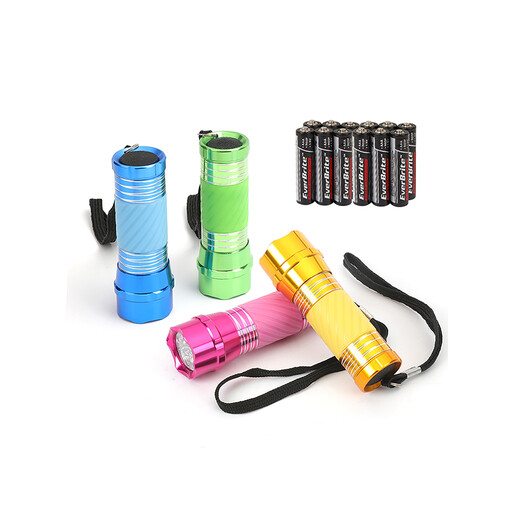
Why This Fits Their Persona: Four compact torches are practical for keeping one in a kitchen drawer, car, coat pocket and emergency kit. Each measures 90mm and the assorted colours make them easy to identify in a household.
The stated output is 50 lumens rather than an inflated high-lumen figure, and 12 AAA batteries are included. The one-way button keeps operation straightforward.
Polished aluminium casing; four-colour pack; batteries included; suitable for camping, household use and emergency storage.
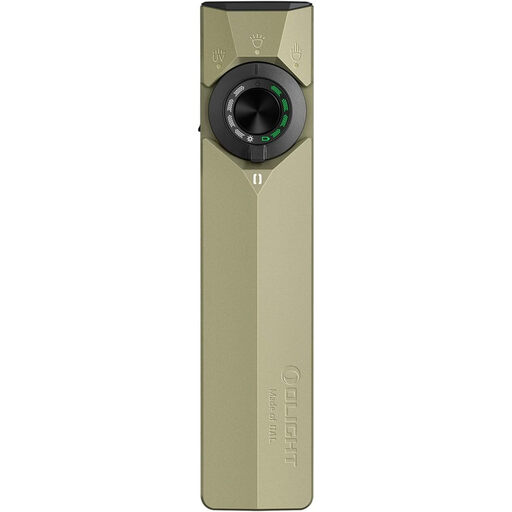
Why This Fits Their Persona: Its slim 124mm profile and 120g weight suit commuters, tradespeople and walkers who want a capable EDC torch without a conventional wide barrel.
The specifications distinguish between a 1,700-lumen floodlight and an 800-lumen spotlight, while the IPX7 rating states its water-resistance level.
Built-in rechargeable battery; USB-C and magnetic charging; UV light and green beam options; 205m stated maximum throw distance.
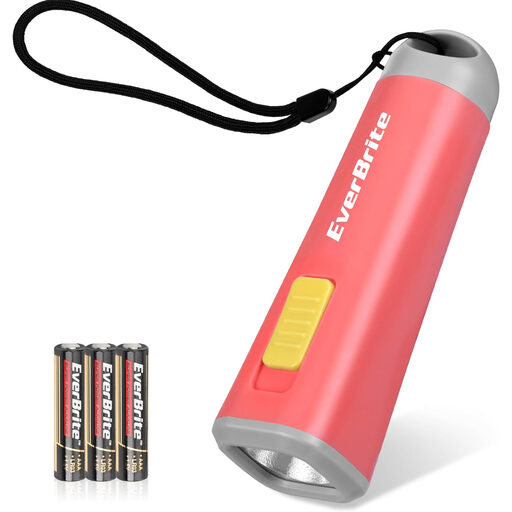
Why This Fits Their Persona: At 46g for the torch body, it is suited to reading, family camping and supervised emergency practice where a child may struggle with a larger metal torch.
The listed 25–30-lumen output is designed for close-range use rather than unnecessary high intensity. The body has a matte, non-slip finish and uses a simple battery setup.
Soft yellow LED light; three AAA batteries included; lightweight plastic construction; available in several colours.
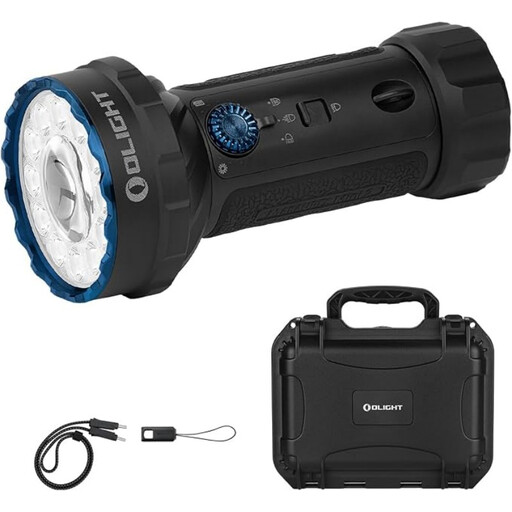
Why This Fits Their Persona: Campers, inspectors and users preparing for vehicle or home emergencies may value its combination of wide-area lighting, long-range output and multiple controls.
The product information separates its 10,000-lumen floodlight from its 750m spotlight and provides a stated IPX8 rating and 1m drop resistance.
Five lighting configurations; 7,500mAh lithium-polymer battery; USB-C and magnetic charging; red and side-light modes.
We have compiled a complete, real-time list of products that fully satisfy these strict selection criteria and UK safety regulations.
They can reduce the need to buy disposable batteries over time, but the total cost depends on purchase price, charging frequency and battery lifespan. A battery-powered torch may be more convenient for emergency storage if spare batteries are already available.
The LED component can operate for a long period, but overall service life depends on battery condition, charging cycles, impacts, moisture and switch wear. Following the care instructions and removing batteries during prolonged storage can help avoid common faults.
Around 25–100 lumens is generally adequate for navigating rooms, locating a fuse box or handling basic tasks. A higher-output torch may be useful outdoors, but it can consume more energy and may produce more heat. A model with adjustable brightness offers greater flexibility.