
24/7 Customer Support

Free returns

Same-day & Next-day Delivery

Quality Guaranteed

Unlock Your Welcome Offers: FREE Delivery | Up to 80% OFF | Free 30-day JoyPlus trial
Download the APP
A torch is easy to buy until you need it in heavy rain, during a power cut or on an unlit path. Many LED torches look similar online, but differences in brightness, power source, construction and controls can significantly affect day-to-day usefulness.
The main buying traps are often simple:
The right choice depends on where and how you plan to use it. Below are the key specifications to check before comparing LED torches.
Lumens indicate the amount of visible light produced, but they do not describe how far or evenly that light travels. For example:
Also check beam distance. A 30-lumen mini torch with an approximately 20-metre beam can be useful for nearby navigation, while a powerful LED torch with a stated 750-metre spotlight is designed for very different conditions.
A torch with both a floodlight and spotlight gives greater flexibility. Red light can also be useful for preserving night vision, although you should follow the manufacturer’s instructions and avoid shining any high-intensity beam at people or animals.
Battery-powered models are convenient for emergency kits because torches with batteries included can be ready immediately. However, check how many batteries each unit needs and whether replacements are easy to find. Remove disposable batteries before long-term storage if the manufacturer advises it, as leakage can damage the torch.
Rechargeable torches reduce the need to keep spare cells, particularly when used frequently. USB-C charging is convenient in homes, cars and travel bags, while magnetic charging can be useful when the charging port needs to remain covered.
Runtime figures normally vary by brightness setting. A torch may run for many days on moonlight mode but considerably less time at maximum output. For emergencies, consider keeping a separate spare light rather than relying on one torch at its highest setting.
Aluminium bodies are generally associated with a firm, lightweight feel, while plastic and rubber designs can be easier for children to hold. A non-slip grip, lanyard or pocket clip helps prevent drops during walks, cycling or outdoor work.
For wet British weather, look for a stated IP rating:
An IP rating does not mean a torch is suitable for every situation. Keep charging covers closed, inspect seals and follow the supplied care instructions. For children’s torches, remember that batteries and detachable small parts can present a swallowing risk.
The following options match different requirements rather than applying one standard to every shopper.

Why This Fits Their Persona: Six assorted mini LED torches provide practical lighting for homes, evening walks, camping trips and group activities without requiring a single expensive torch.
The stated 20-lumen output and 15-metre range set realistic expectations instead of implying long-distance performance.
Six torches, 18 AAA batteries and a lanyard are included; each torch has a simple one-button operation.

Why This Fits Their Persona: Its slim profile, built-in rechargeable battery and multiple light sources suit commuters, campers and everyday-carry users who want more control than a basic pocket torch.
The listed output, 205-metre beam distance and IPX7 rating provide clearer information than a vague “professional” label.
It offers USB-C and magnetic charging, a magnetic base, floodlight and spotlight modes, plus a stated 115g weight.
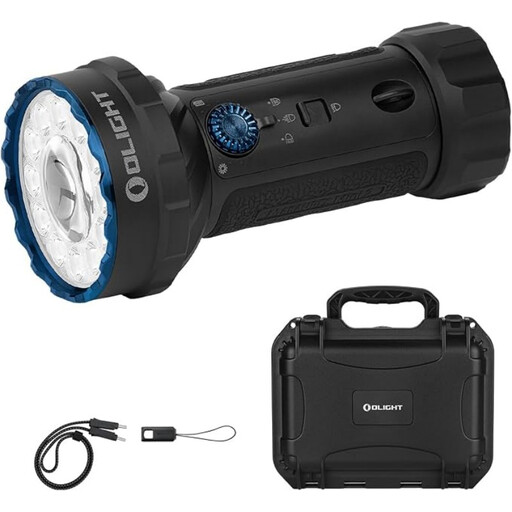
Why This Fits Their Persona: Campers, outdoor workers and emergency-kit users may value a broad floodlight alongside a long-range spotlight for different environments.
The product specifies separate flood, spot, combined, red and side-light modes rather than relying only on a headline lumen number.
The specifications list up to 10,000 lumens, a 750-metre spotlight, a 7,500mAh battery and IPX8 water resistance.

Why This Fits Their Persona: A large multipack works for school activities, party bags, family camping and shared emergency storage across several rooms or bags.
Its compact 30g design and push-button tail switch keep the format simple, while the stated 20-metre beam avoids overstating its range.
The pack contains 18 torches in assorted colours, 54 pre-installed AAA batteries and 18 lanyards.
We have compiled a complete, real-time list of products that fully satisfy these strict selection criteria and UK safety regulations.
They can be convenient for frequent use because you do not need to replace disposable batteries as often. However, running cost depends on charging frequency, battery capacity, electricity use and the torch’s lifespan. Battery-powered models may be more suitable for rarely used emergency kits if stored correctly.
LEDs typically have a long service life, but the torch as a whole also depends on the battery, switch, seals, charging port and casing. Avoid excessive heat, moisture outside the stated IP rating and impacts beyond the product specification. Following the manufacturer’s storage and cleaning guidance can help maintain performance.
Choose a model with a straightforward switch, a dependable power source and enough brightness for moving around your home. Keep spare batteries for battery-powered models, or check the charge of rechargeable torches regularly. A compact backup, such as a keyring torch, can be useful if the main light is misplaced.