Solo soup regulars
You usually make leek soup or similar vegetable soups for yourself and would rather size the cooker for one or two portions than for a family batch.


For leek soup usually made in one or two portions, start by considering a 1.5L dedicated slow cooker: Quest, Morphy Richards and Swan position their cited models for that amount. A 1.8L cooker offers a little more capacity, while a larger cooker or multi-cooker makes more sense if you intend to make batches or use other cooking functions. Whichever size you choose, check its fill guidance against your usual recipe.
You usually make leek soup or similar vegetable soups for yourself and would rather size the cooker for one or two portions than for a family batch.
You want straightforward controls and less washing-up after soup. Removable, dishwasher-safe parts matter if the exact model includes them.
You cook for one now but may also make soup for storage or use pressure-cook and sauté functions for other meals.
Consider it when: Leek soup is normally a one- or two-portion meal; the cited Quest, Morphy Richards and Swan models are positioned for that use.
Trade-off: This capacity leaves less room for a larger batch, and a dedicated slow cooker does not offer the multi-cooker functions discussed below.
Consider it when: You want a modest capacity increase while keeping a dedicated slow cooker; Crock-Pot lists a 1.8L model.
Trade-off: Check that model’s controls, fill guidance and cleaning instructions rather than assuming they match a 1.5L cooker.
Consider it when: You would use functions beyond slow cooking. The Instant Pot Classic Mini includes slow-cook, pressure-cook and sauté programmes.
Trade-off: Its 3.8L capacity is more than the cited 1.5L options, so check whether your usual one-person quantity meets its fill guidance.
| Concern | What to check | Who this matters to |
|---|---|---|
| Portion fit | Compare capacity and the manual’s fill guidance with your usual recipe yield; treat stated serving counts as guidance. | I usually want one bowl of soup and would rather not make far more than I can use. Around 46% of consumers put portion fit first. |
| Controls and cleaning | Check the exact model’s heat settings and which removable parts, if any, are dishwasher-safe. | When I make soup regularly, simple controls and manageable washing-up matter most. Roughly 36% of consumers prioritise ease of use and cleaning. |
| Batches and other functions | Check capacity, the presence of a slow-cook programme and whether you would use any additional functions. | I may cook extra soup to store or want the appliance for other meals as well. Around 18% of consumers make batch size and versatility their main concern. |
A larger appliance may suit batches, but extra functions do not establish that your usual single portion is an appropriate quantity for its slow-cook programme.
Start with the amount of soup you normally make. Consider a multi-cooker if you would also use its other functions, and check its fill guidance.
Cleaning instructions differ by model and component, even among compact slow cookers.
Check the exact pot and lid instructions before buying; do not transfer a feature listed for Quest, Morphy Richards or Swan to another model.
Extra capacity is useful only if you can store and use the soup you make.
Choose a batch size you can manage, and cool and store leftovers appropriately. The NHS gives covered chilling and freezing guidance for its harvest vegetable soup recipe.
Instant Pot’s faster-cooking claim concerns pressure cooking; it does not establish a shorter slow-cook time for leek soup.
Choose a multi-cooker for functions you expect to use, and follow the slow-cook instructions for the recipe and appliance.
Its 1.5L conventional slow cooker, model 460300, is positioned by Morphy Richards for one or two people.
The 1.5L Quest 35269 is a cooker for one or two people.
Swan positions its 1.5L SF17010N manual slow cooker for up to two servings.
Crock-Pot lists a 1.8L dedicated slow cooker alongside larger models in its UK range.
The Classic Mini is a 3.8L multi-cooker rather than a dedicated small slow cooker.
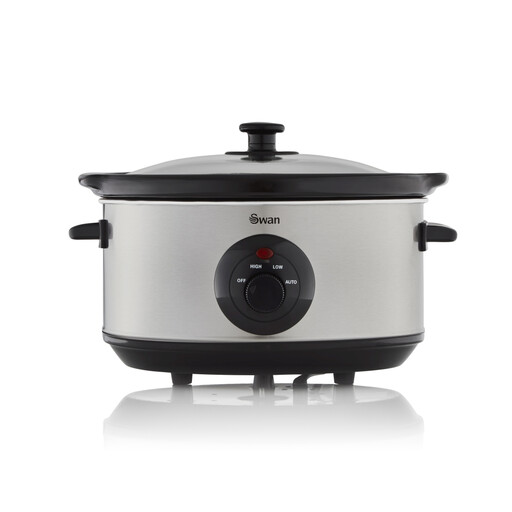
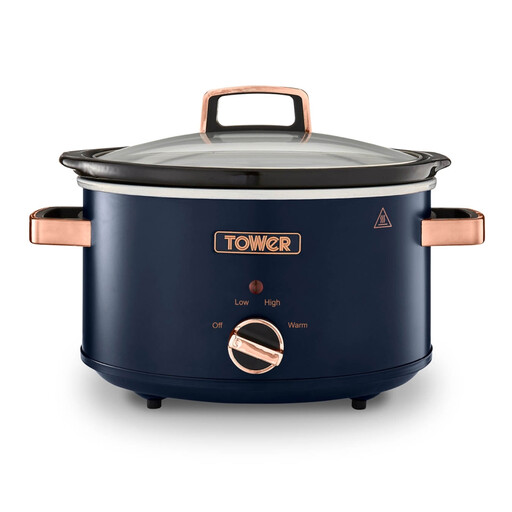
These 3.5L dedicated slow cookers are options to consider if you also make larger batches of leek soup. For your usual one-person quantity, check the exact model’s minimum-fill guidance before choosing either.
 No image available
Consider this dedicated cooker if you intend to make more than one portion of soup; check the minimum-fill guidance against your usual batch.
The listed variant is 200W and has three cooking settings.
 No image available
Consider this dedicated cooker for a larger soup batch, provided its minimum-fill guidance also accommodates the quantity you normally make.
The Midnight Blue and Rose Gold variant lists three heat settings, a removable pot and cool-touch handles.
A 1.5L dedicated cooker is a sensible starting point for one or two portions: Quest, Morphy Richards and Swan position their cited models for that use. Which? suggests roughly one litre of capacity per serving as a sizing rule of thumb, but your recipe yield and the exact cooker’s fill guidance should decide the fit.
Not necessarily. Morphy Richards says those settings on its traditional slow cookers determine how quickly the cooker reaches its final temperature. Follow the instructions for the model you choose rather than assuming every cooker’s controls work identically.
Yes, if you cool and store it appropriately. For its harvest vegetable soup recipe, the NHS advises a covered container for up to three days in the fridge or freezing for up to three months; plan your batch around the storage guidance appropriate to your soup.
Follow the exact appliance manual and check its placement and lid instructions before use. Morphy Richards advises a flat, heat-resistant surface and a properly seated lid for its slow cookers; also check the appliance and cable for damage before switching it on.