
24/7 Customer Support

Free returns

Same-day & Next-day Delivery

Quality Guaranteed

Unlock Your Welcome Offers: FREE Delivery | Up to 80% OFF | Free 30-day JoyPlus trial
Download the APP
LEGO 3-in-1 building sets can offer several building challenges and play scenarios in one box, but not every set suits every child. A toddler needs large, easy-to-grasp pieces, while an older child may prefer hundreds of smaller elements, poseable models and a more demanding build.
The main buying risk is choosing by theme alone. A dinosaur, castle or race track may look appealing on the box, yet the set can be unsuitable if the age range, piece size or finished model does not match the child’s abilities and available play space.
In many LEGO Creator 3-in-1 sets, the same bricks are reused for each design. This means the models cannot normally be built simultaneously unless you purchase additional pieces. The value comes from rebuilding and changing the play theme, rather than owning three complete models at once.
LEGO DUPLO 3-in-1 sets use larger pieces for younger children, whereas LEGO Creator models contain smaller elements and more complex instructions. Always check the stated age range and the small-parts warning before buying, particularly when younger siblings may share a play area.
A large castle, family house or race track needs more room than a compact animal model. Check both the packaging size and assembled dimensions where available. Rebuilding also means that loose pieces need a practical storage box or dedicated play surface.
For children from 18 months, sets such as LEGO DUPLO My First 3 in 1 Creative Cute Pets use 24 larger bricks designed for small hands. DUPLO models are generally more suitable for early construction and supervised pretend play than standard LEGO bricks.
For older builders, check the exact recommendation rather than relying on the word “children”. The Tropical Toucan is suitable from age 7 and contains 225 pieces, while the Medieval Horse Knight Castle is suitable from age 9 and contains 1,371 pieces. A higher piece count usually means a longer or more involved build, but it is not automatically a better match.
Look for movable parts that create meaningful play after construction. Examples include opening doors, rolling wheels, adjustable wings, moving fins, poseable animals and working ramps. These features can help a model transition from a one-off building activity into imaginative play.
Also confirm how many models are offered. Some sets provide three distinct builds, while others offer several animal combinations from the same bricks. This distinction matters when comparing LEGO animal sets, LEGO dinosaur sets, construction vehicles and family role-play toys.
Follow the manufacturer’s age guidance and warnings. Sets with small parts should be kept away from children below the stated age, and adult supervision is recommended where indicated. Remove all packaging before giving a toy to a child.
For UK households, also consider whether the box includes batteries. The listed products below require no batteries, reducing ongoing running costs. However, parents should still allow for storage, cleaning and the possibility of lost pieces.
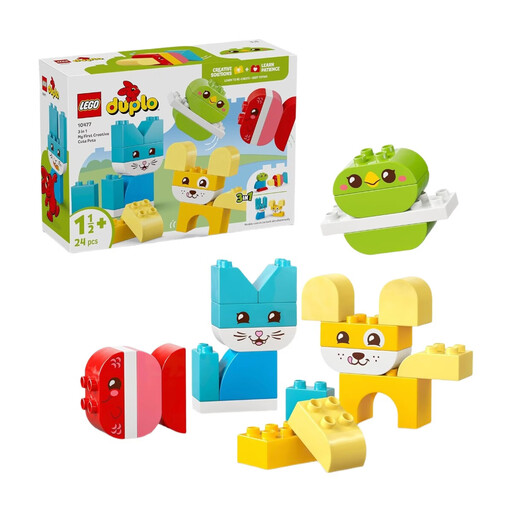
Why This Fits Their Persona: A compact starting point for toddlers aged 18 months and over, with 24 larger bricks and several familiar animal combinations.
The age guidance and larger DUPLO pieces make it easier to avoid buying a standard LEGO set that is too demanding for an early builder.
24 easy-to-handle bricks; no batteries required; supports colour matching and simple animal-building play.
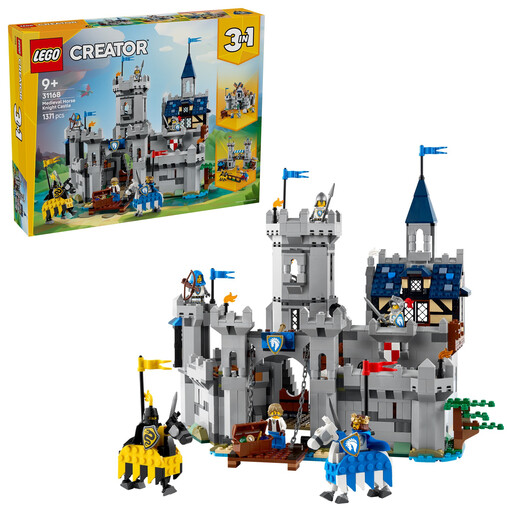
Why This Fits Their Persona: Suits an older child who enjoys an extended building project, medieval storytelling and a substantial display model.
Its 1,371-piece specification makes the intended commitment clear, while the three layouts explain the rebuilding value.
Castle, jousting arena and medieval town options; six minifigures and two poseable horses; Builder app support.
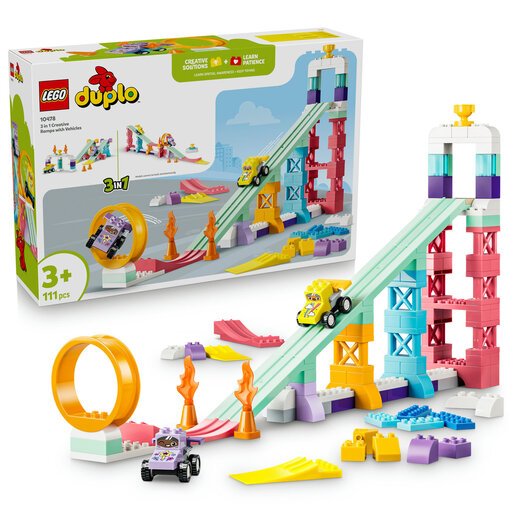
Why This Fits Their Persona: Designed for children aged 3 and over who repeatedly return to vehicle play, racing challenges and family interaction.
The three ramp configurations provide a clear reason to rebuild, rather than offering only cosmetic changes between models.
Includes two race cars and 111 pieces; tallest ramp measures over 48 cm high and 99 cm wide; no batteries required.
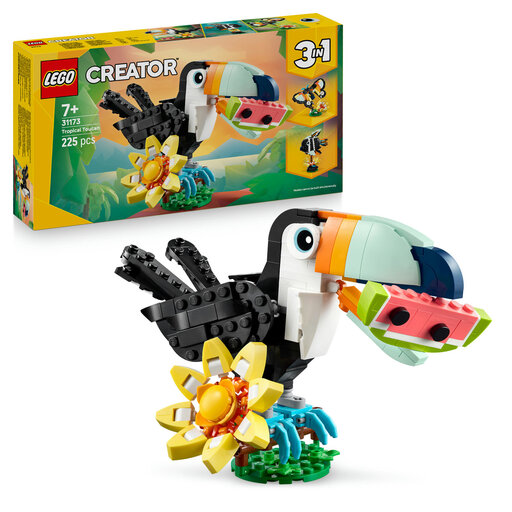
Why This Fits Their Persona: A suitable option for a child aged 7 or over who prefers compact animal models with display and storytelling potential.
The product listing states the piece count, age guidance and model limitation clearly, helping buyers set realistic expectations.
225 pieces; toucan, butterfly and fish builds; movable wings, beak, tail, fins and themed display stands.
The range also includes LEGO dinosaur sets such as the 283-piece Fierce Dinosaur, which rebuilds into a Velociraptor, Stegosaurus or Pterosaur. For younger children, LEGO DUPLO Town Construction Vehicles offers bulldozer, dump truck and cement mixer play using larger pieces.
A family-house design can suit children who enjoy role-play, while LEGO City vehicle sets may appeal to those interested in airport, service and rescue scenarios. Compare the age guidance, piece count, moving functions and footprint before focusing on the theme printed on the box.
We have compiled a complete, real-time list of products that fully satisfy these strict selection criteria and UK safety regulations.
Choose LEGO DUPLO 3-in-1 sets where the product is specifically marked for toddlers. The My First Creative Cute Pets set is suitable from 18 months, while the listed construction and ramp sets are aimed at children aged 2 or 3 and over. Standard LEGO Creator sets with small parts are intended for older children.
Usually, no. The same pieces are reused to build one of three suggested models, so the models cannot generally be built at the same time. Check the product description for the exact rebuilding options and whether accessories or figures are included.
The products featured here require no batteries. Their main practical costs are the original purchase price, storage and possible replacement of lost pieces. A larger piece count may provide a longer building activity, but it also requires more sorting space.