
24/7 Customer Support

Free returns

Same-day & Next-day Delivery

Quality Guaranteed

Unlock Your Welcome Offers: FREE Delivery | Up to 80% OFF | Free 30-day JoyPlus trial
Download the APP
Formula 1 building sets appeal to children, collectors and committed motorsport fans, but the product descriptions can make very different sets appear similar. A small LEGO F1 car designed for play is not interchangeable with a large Technic model built for display, and an attractive helmet may offer little racing play once assembled.
Before buying, focus on age suitability, build complexity, intended use and display space. These checks help UK shoppers avoid paying for features they will not use.
Many Formula 1 LEGO sets are designed primarily for display. Helmets, Icons models and larger Technic builds may include steering, suspension or engine details, but they are not intended for rough play. Conversely, a compact Speed Champions model is easier to move around and race, but may not provide the mechanical complexity an adult collector wants.
Check whether the description focuses on play functions, collectable display features or both.
A higher piece count does not automatically make a set suitable for a younger builder. Small parts can present a choking hazard, while complex gearboxes and suspension systems may be frustrating for children. Always follow the stated age guidance and supervise younger children where the packaging advises it.
For children aged six and over, LEGO City F1 sets with minifigures and play functions are generally easier to approach than large adult-focused kits. Speed Champions models are typically aimed at builders aged 10 and above, while many helmets and advanced Technic sets are intended for teenagers or adults.
A product box may look compact, yet the completed model can require considerable shelf or desk space. Large LEGO F1 cars can extend beyond 50cm, and a helmet may need enough depth to sit securely without being knocked over.
Measure the intended display area before ordering, particularly if the set is a gift for a child with limited bedroom or desk space.
The age recommendation is one of the most useful buying filters. Sets for younger children usually prioritise straightforward construction and imaginative play. More advanced F1 LEGO building sets often contain hundreds or thousands of small components, making them better suited to patient builders with an appropriate workspace.
For UK households, remove packaging before giving the set to a child and keep loose pieces away from children below the stated age. The product warnings should take priority over assumptions based on a child’s previous building experience.
Piece count gives a rough indication of the time and concentration required, but it should not be treated as a complete difficulty rating. A 200-piece LEGO Speed Champions F1 model is compact and relatively focused, whereas a 1,000-plus-piece Technic car may involve several mechanical stages.
Look for features such as:
For regular play, movable wheels, a cockpit and minifigures add practical value. For a collector, accurate livery, driver details and a stable display base may matter more than rolling action.
Remember that stickers, printed details and delicate aerodynamic parts may need careful handling. Store unused pieces in labelled containers, especially when several LEGO F1 cars are being built together.
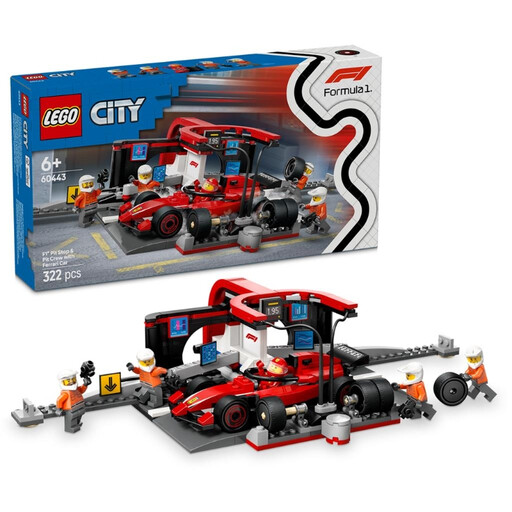
Why This Fits Their Persona: A practical starting point for children aged six and over who want an F1 scene rather than a shelf-only model. It suits family gifting and shorter building sessions.
The age guidance is clear, and the pit-stop lever, tools, slicks and five minifigures provide play value beyond assembling the car.
Includes a Ferrari F1 car, pit equipment, driver and four pit crew minifigures; no batteries are required.
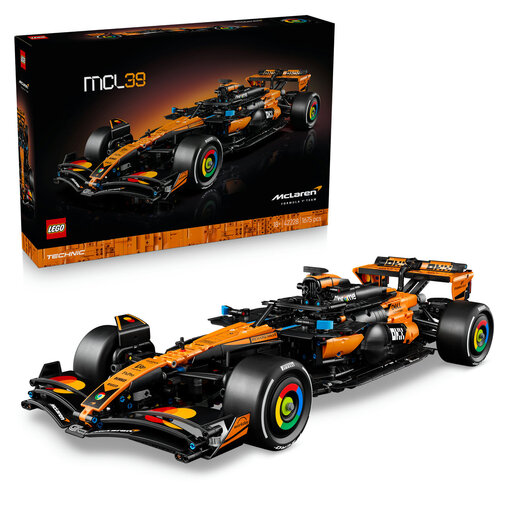
Why This Fits Their Persona: Designed for adult McLaren supporters, Technic builders and collectors who want a substantial project for a home office, hobby room or display cabinet.
The adult age guidance and 1,675-piece format make its advanced purpose clear, avoiding the expectation of a quick children’s toy.
Features push-rod and pull-rod suspension, steering, a differential, a V6 engine, a two-speed gearbox and a DRS rear-wing activator.
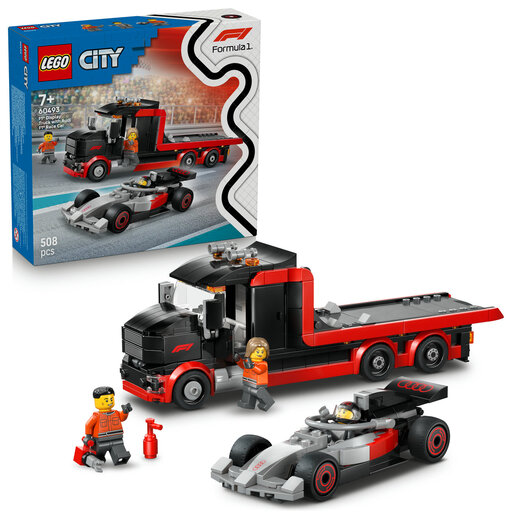
Why This Fits Their Persona: A strong match for families and children aged seven and over who want a larger play scenario with transport, pit crew and unloading action.
It offers more than a static car: the lifting platform lowers the Audi F1 car from the truck to ground level for repeated play.
Contains 508 pieces, an Audi race car, a truck with storage and engine-bay details, plus three minifigures.
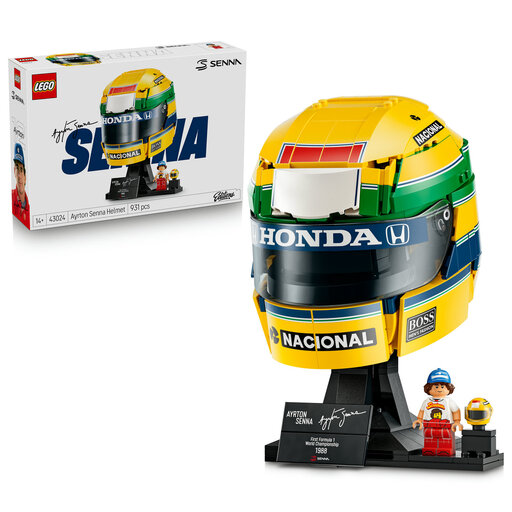
Why This Fits Their Persona: Suitable for adult fans seeking motorsport décor and a focused collectable rather than a rolling LEGO F1 race car.
Its helmet format and 14+ guidance clearly communicate that the finished piece is intended for display and collecting.
Contains 931 pieces, a Senna minifigure, mini helmet and bright yellow-and-green display styling.
We have compiled a complete, real-time list of products that fully satisfy these strict selection criteria and UK safety regulations.
Some are. LEGO City options are available for children aged six or seven and over, while many LEGO Speed Champions F1 models are aimed at age 10+. Technic cars and LEGO F1 helmets usually require older builders. Check the specific product warning rather than relying on the Formula 1 theme alone.
The products covered here do not require batteries. Movement comes from manual features such as wheels, steering, pit-stop mechanisms, suspension or a DRS-style wing activator.
Choose according to the recipient’s age and preferred team. Ferrari, McLaren, Audi, Red Bull Racing, Alpine, Mercedes-AMG, Williams and Haas fans can find team-themed LEGO F1 cars, while driver helmets suit older fans who prefer display pieces. For younger children, a pit-stop or transport set generally offers more play scenarios than a static collector model.