Families packing everyday school lunches
For the usual lunchbox drink, the NHS recommends water or milk for children. A multipack of fizzy drinks need not become part of the daily routine.


For an everyday school drink, choose water or milk: the NHS recommends these for children and advises avoiding sugary fizzy drinks. If a fizzy lemon drink is an occasional lunchbox choice, compare the sugar shown on the cans, check any sweetener or phenylalanine warning, and confirm the school’s packed-lunch policy before buying a multipack.
For the usual lunchbox drink, the NHS recommends water or milk for children. A multipack of fizzy drinks need not become part of the daily routine.
Compare the sugar figures for regular and zero-sugar cans, then choose a pack size that fits how often the cans will be used.
Check the individual school’s packed-lunch policy and read the current can label where sweeteners or a phenylalanine warning matter.
Decide whether the drink is for everyday use or an occasional lunch, then check the exact can and pack rather than relying on the words on the front.
| Priority | What to check | Your needs |
|---|---|---|
| Everyday drink | Consider water or milk for the usual lunch. The NHS recommends these drinks for children and advises avoiding sugary fizzy drinks. | For most school days, I want a drink that does not make sugary fizzy drinks a routine choice. |
| Sugar in one can | Read sugars per 100ml and per can where both are shown. ASDA lists 7.9g sugars per 330ml can of R. White’s Lemonade; Sainsbury’s lists less than 0.1g per 100ml for Sprite Zero Sugar 8x330ml. | If a fizzy drink is going in the lunchbox occasionally, I want to know what the whole can contains, not just what the front label suggests. |
| Pack quantity | Check the can count and volume. For occasional use, consider whether a larger case will be used before its best-before date and where it will be stored. | A smaller multipack may fit our occasional lunches; a larger case only makes sense if we will use the cans. |
| School and label checks | Read the school’s packed-lunch policy and the current ingredient list. Check for a phenylalanine warning where relevant. | I need to know whether this drink fits the school’s expectations and any ingredient requirements in our household. |
ASDA lists both sugar and sweeteners in R. White’s Lemonade, with 7.9g sugars per 330ml can. The presence of sweeteners does not settle the sugar question.
Compare the sugars figure on the current can with an explicitly zero-sugar alternative if that distinction matters to you.
A 24-can case is a greater storage and usage commitment than a six- or eight-can pack, particularly when fizzy drinks are reserved for occasional lunches.
Check the can count, available storage space and best-before date before choosing the pack size.
Department for Education guidance describes requirements for food and drink provided in state-funded schools in England; that does not tell you what a particular school expects in a lunch brought from home.
Consult the school’s packed-lunch policy or ask the school before including fizzy drinks.
Names such as “diet” and “regular” do not give a complete ingredient list. Some of the regular and zero-sugar products described here carry a phenylalanine warning.
Read the current label of the exact variant, especially where sweeteners or that warning are relevant.
These examples illustrate different can formats and labels; they do not describe every product made by each brand.
A regular lemonade example sold as a 24 x 330ml can pack.
Lemon-lime cans with regular and zero-sugar multipack examples.
Its Diet Lemonade is listed in a six-can, 330ml-per-can format.
Tesco Diet Lemonade Cans are listed as a 6x330ml multipack.
These zero-sugar lemon-and-lime or lemonade-style cans are options to consider for an occasional fizzy packed-lunch drink. Water or milk remains the everyday choice recommended by the NHS.
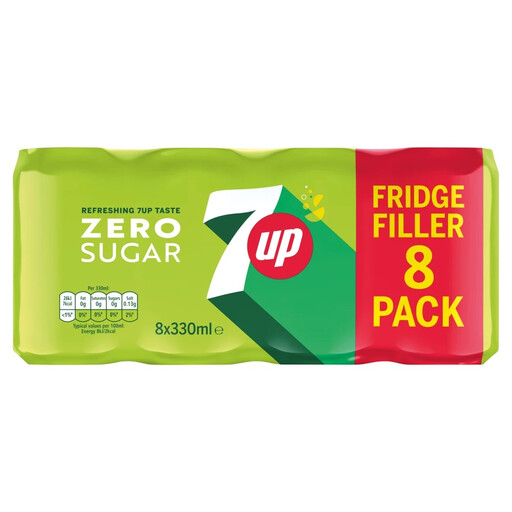 No image available
An eight-can lemon-and-lime option for occasional lunches. Check the current can label for aspartame and the phenylalanine warning where relevant.
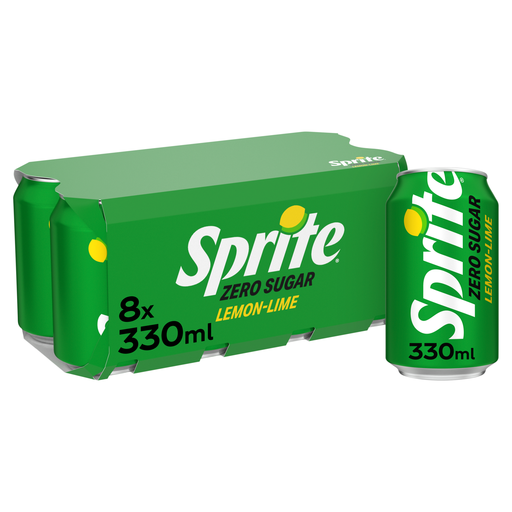 No image available
Eight 330ml cans offer individual portions for an occasional fizzy lunch. Check the current label for aspartame and the phenylalanine warning where relevant.
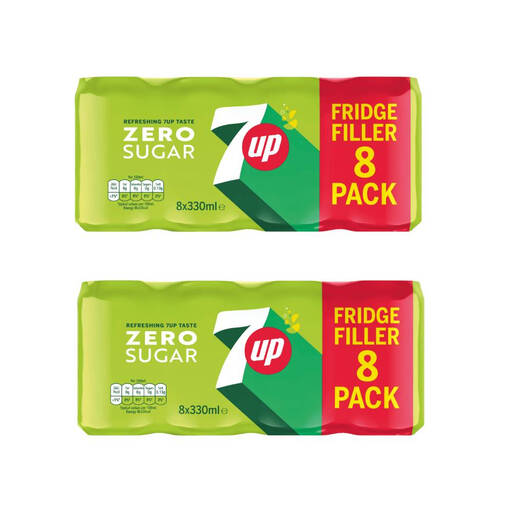 No image available
Two eight-can packs provide 16 individual cans, so consider storage and likely use if fizzy drinks are occasional. Check the current label for the phenylalanine warning where relevant.
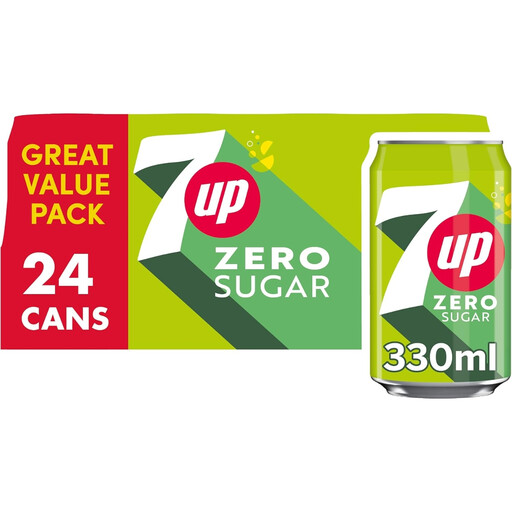 No image available
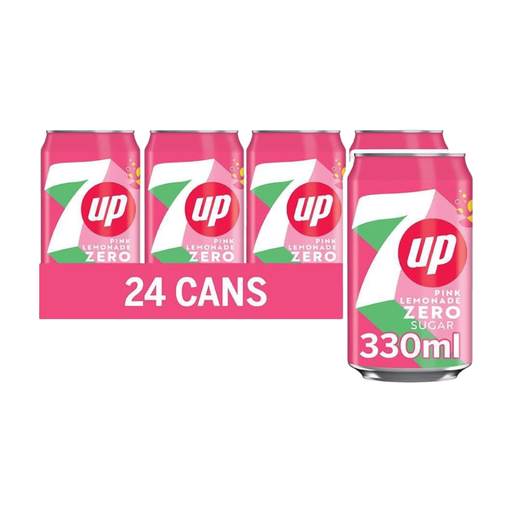
A 24-can case is a larger commitment for an occasional lunchbox drink; check storage space and likely use. Read the current label for the phenylalanine warning where relevant.
 No image available
This 24-can format calls for enough storage and likely use. Confirm the exact flavour on the current pack before buying: the product information describes a pink-lemonade variant more specifically than the title. Check its phenylalanine warning where relevant.
Water or milk is the everyday choice recommended for children by the NHS, which also advises avoiding sugary fizzy drinks. If you include a fizzy lemon drink occasionally, check the sugar content of the exact can.
No. “Zero sugar” describes the product’s sugar content, not its role as an everyday drink. The NHS recommends water or milk for children.
Some regular and zero-sugar lemonade-style products containing aspartame carry a “contains a source of phenylalanine” warning. Read the current label of the exact product when that warning is relevant to the pupil.
No. Department for Education guidance describes requirements for food and drink provided in state-funded schools in England; it does not establish a UK-wide rule for lunches brought from home. Check the individual school’s packed-lunch policy.