Solo pressure-cooking soup maker
You want to sauté ingredients and pressure-cook dried lentils in one compact appliance. You are also willing to follow the model's instructions for liquid, fill level, lid and steam release.


For lentil soup made mainly for one, start with a compact pressure multicooker if you want to sauté and pressure-cook in one appliance and are comfortable following its liquid, fill-level and steam-release instructions. A larger conventional multicooker makes more sense if you prefer slow cooking, easier-to-schedule meals or deliberate batch cooking, but its extra capacity also means more space and a plan for leftovers.
You want to sauté ingredients and pressure-cook dried lentils in one compact appliance. You are also willing to follow the model's instructions for liquid, fill level, lid and steam release.
You would rather use slow cooking, a delayed start or automatic warming than manage a pressure-cooking cycle. A removable bowl and straightforward cleaning matter to your routine.
You cook for yourself but intentionally make several portions at once. Room for the batch is useful only if you also have a practical plan to cool and store the leftovers.
Consider it when: You mainly cook for one and want to sauté and pressure-cook in the same pot. Instant Pot UK positions its 3.8L Classic Mini for one to two people.
Accept that: Pressure cooking adds model-specific liquid and fill limits, lid steps and a controlled steam release.
Consider it when: You prefer slow-cooked soup and deliberately want room for several portions. Tefal UK lists slow cooking, a delayed start and keep warm for its 5L RK302E15.
Accept that: The larger bowl takes more storage space, and conventional cooking functions do not establish that a model can pressure-cook.
| Concern | What to check | Who this matters to |
|---|---|---|
| Workable solo capacity | Compare your usual soup quantity with the exact model's capacity and, for pressure cooking, its minimum-liquid and maximum-fill instructions. | If I usually make one serving, I want a cooker that accommodates it without choosing batch capacity I rarely use; around 40% of consumers would put workable solo capacity first. |
| Cooking route | Look for an explicit pressure-cook function if you want that method; check for sauté and slow cook if you plan to use them. | I want to cook lentils and sauté ingredients in one pot, so the available cooking methods matter more to me than bowl size; for around 30% of consumers, that flexibility would be the main concern. |
| Cleaning and routine | Check which bowl, lid and accessories are removable or dishwasher safe, and read the model's care instructions. | When soup is a regular one-person meal, I do not want washing several parts to outweigh the convenience of using the cooker; roughly 20% of consumers would prioritise everyday upkeep. |
| Batch cooking | Choose capacity for the portions you intend to make, then consider where and how you will cool and store them. | I cook for one but make soup for later meals, so room for extra portions is worth the space the appliance takes; around 10% of consumers would make batch capacity their primary concern. |
A 5L or 5.7L cooker may suit planned batches, but it is not automatically more useful for a single serving. A compact pressure model can also have liquid and fill requirements that affect a small recipe.
Start with the amount of soup you normally make, then check the exact model's instructions before assuming your smallest batch will work.
Slow cook, steam, soup and keep warm are distinct from pressure cooking. A conventional multicooker may cover the soup routine you want without offering the pressure method.
If pressure cooking matters, confirm that the function is explicitly listed for the exact model; otherwise, compare its slow-cook and soup programmes with the way you intend to cook.
Instant Pot's Classic Mini instructions require liquid for pressure cooking and specify lid, fill-level and release procedures. These are operating requirements, not optional shortcuts.
Read your model's manual before first use. For the Classic Mini, follow its test-run instructions and wait for the float valve to drop before opening after pressure release.
A larger bowl is useful when you intend to make extra portions, but those portions still need cooling and suitable storage. Capacity alone does not make batch cooking convenient.
Decide how many portions you will keep before selecting a larger cooker. If preparing food for a child, follow the NHS advice to cool it quickly and refrigerate or freeze it promptly.
Instant Pot UK offers pressure multicookers ranging from the 3.8L Classic Mini, which it positions for one to two people, to larger models intended for more portions.
Tefal UK's cited 5L multicookers offer a conventional route for soup and larger batches rather than the compact pressure-cooking route.
Russell Hobbs UK describes its Cook@Home 21850 as a 5L multicooker for broader everyday cooking.
These choices cover compact pressure cookers and larger multicookers that may suit slow cooking or planned batches. Check each model's functions and operating instructions against the way you make soup.
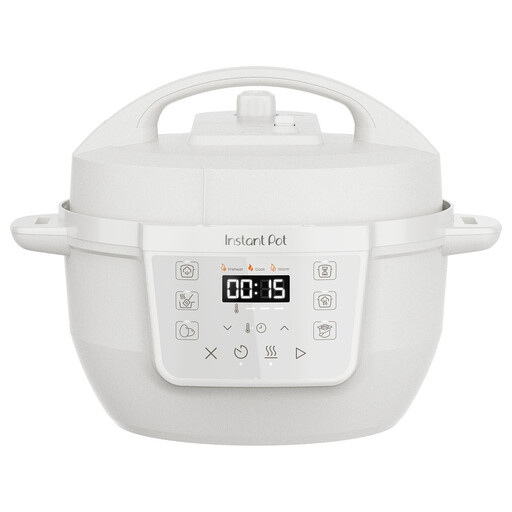 No image available
Consider this compact pressure-cooking route if you mainly make soup for one and want to sauté ingredients in the same appliance. Its stated capacity is 3.8L; check this exact variant's liquid, fill and pressure-release instructions against your intended recipe.
 No image available
Consider its larger 5L format if you want to slow-cook soup and keep extra portions. The product name lists soup, slow cook and steam among its functions; confirm the exact model's functions if pressure cooking matters to you.
 No image available
This pressure-cooking option is more relevant if you deliberately make soup for later meals as well as today's portion. Its stated capacity is 5.7L; consult the exact model's minimum-liquid, fill and release instructions before using a small lentil-soup recipe.
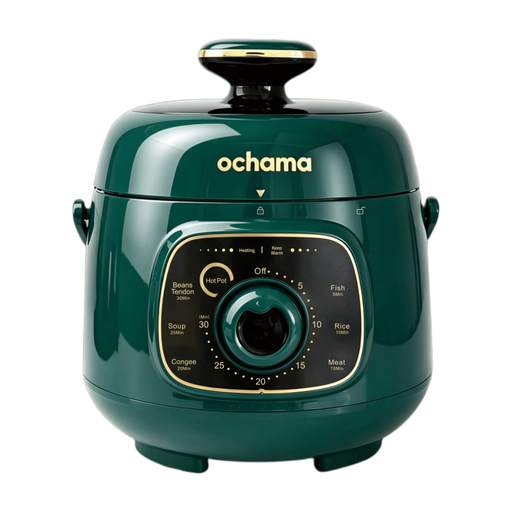 No image available
Its 1.8L capacity makes this a compact option to examine for one-person soup, provided your intended quantity meets the exact model's pressure-cooking instructions. Check its functions if sautéing or keep warm is important to your routine.
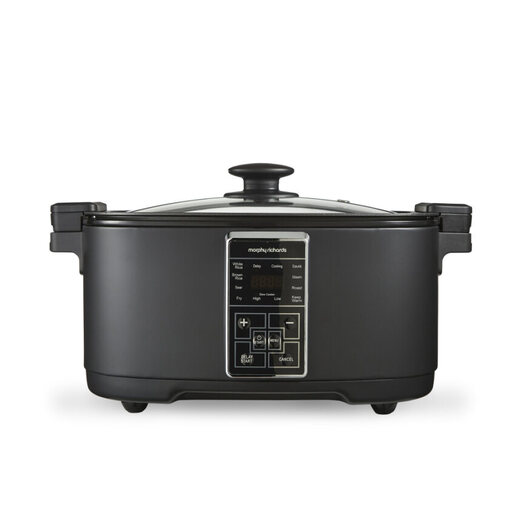 No image available
Consider this larger cooker if soup is part of a deliberate batch-cooking routine rather than an occasional single portion. Its name specifies a 6.5L capacity, 1350W rating, 10 preset functions and a dishwasher-safe pot and accessories; check the exact functions if you need pressure cooking.
A compact model is a sensible starting point if you usually make one or two portions: Instant Pot UK positions its 3.8L Classic Mini for one to two people. Consider a larger bowl when you intend to make and store several portions, and check any pressure model's liquid and fill instructions before choosing it for a very small recipe.
Use the recipe only if its quantity and ingredients meet your exact model's pressure-cooking instructions. Instant Pot UK says the Classic Mini needs liquid and must remain below its PC Max 2/3 line; its 375ml minimum-liquid instruction for canned, condensed or cream-based soup is specific to that guidance, not a rule for every lentil soup or multicooker.
No. A conventional multicooker can suit a slow-cooked soup routine; Tefal UK lists slow cook and keep warm for its 5L RK302E15. Choose pressure cooking when you specifically want that method and are prepared to follow its additional lid, liquid and release steps.
Check the care instructions for the exact bowl, lid and accessories rather than assuming the whole appliance is dishwasher safe. Instant Pot's Classic Mini instructions include cleaning the inner pot and condensation collector, while Tefal UK describes the RK302E15's removable bowl as dishwasher safe.
Confirm the exact model and variant, its electrical specification, the seller's return conditions, the manufacturer guarantee and whether replacement parts are available. Instant Pot UK lists 220–240V, 50–60Hz operation and a one-year guarantee for its Classic Mini; those details should not be assumed for another model or seller.