
24/7 Customer Support

Free returns

Same-day & Next-day Delivery

Quality Guaranteed

Unlock Your Welcome Offers: FREE Delivery | Up to 80% OFF | Free 30-day JoyPlus trial
Download the APP
A bold interior update doesn't have to involve days of painting or the commitment of traditional wallpaper. If you're looking to inject instant personality and a touch of glamour into a room, leopard print peel and stick wallpaper offers a striking solution that's both stylish and straightforward to apply.
This decorating choice is perfect for creating an eye-catching feature wall, reviving a tired piece of furniture or adding a fashionable accent to an overlooked nook. As a Joybuy Product Recommendation Officer, my role is to help you navigate the options. This guide provides practical advice and highlights a couple of our top recommendations to help you find the right self-adhesive wallpaper for your next DIY project.
Before you add a roll to your basket, a few practical considerations will ensure your project is a success.
The first step is always to measure the height and width of the area you plan to cover. Multiply these to get the total square metres. When purchasing, it's wise to order about 10% more than you need to account for pattern matching and any potential mistakes. Pay close attention to the roll dimensions; some are designed for large areas like a feature wall wallpaper, while others are better suited to smaller tasks like wallpaper for furniture upcycling.
Most self-adhesive leopard wallpaper is made from vinyl animal print wallpaper, a material known for its durability and ease of cleaning. It's resistant to moisture and can be wiped clean with a damp cloth, making it practical for everyday living spaces. For the strongest adhesion, always apply it to a smooth, clean and dry surface. Unprepared, textured or dusty walls can prevent the wallpaper from sticking properly.
The beauty of removable leopard wallpaper is its flexibility, especially for renters or those who enjoy frequent decor changes. The random, organic nature of a leopard print can be more forgiving to align than a strict geometric pattern. However, for a professional finish, you'll still want to pay attention to how the pattern flows from one panel to the next.
Based on features that cater to common DIY projects, here are our recommendations for bringing a touch of the wild into your home.
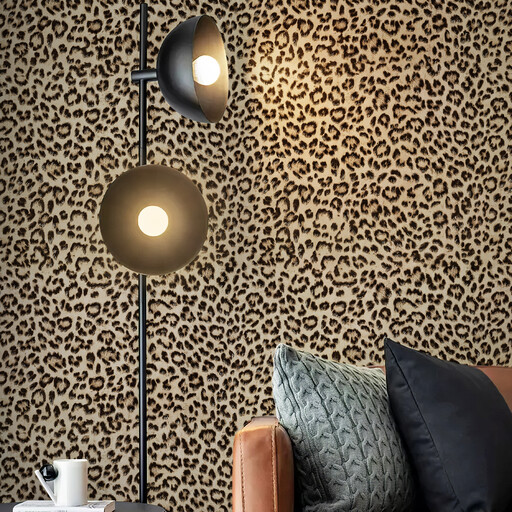
Why It Stands Out: This roll’s significant length is its key advantage. Measuring 44cm x 508cm, it is specifically suited for creating tall, seamless feature walls with fewer visible joins, resulting in a more continuous and high-impact look.
Pros:
Who is it for? This is an excellent choice for anyone planning to cover a full feature wall, such as the space behind a sofa in the living room or a headboard wall in a bedroom. Its length is designed to handle floor-to-ceiling applications in most UK homes with minimal interruption to the pattern.
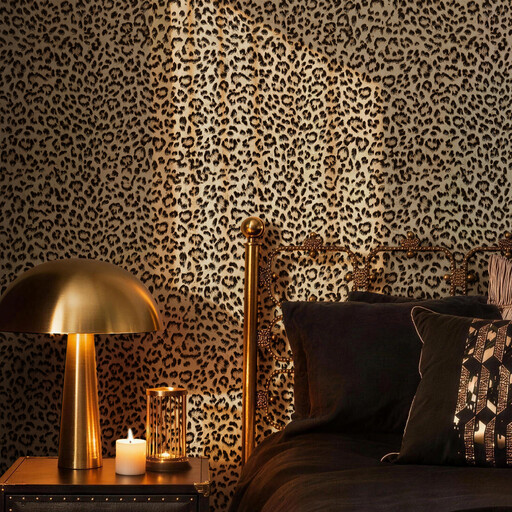
Why It Stands Out: With dimensions of 44cm x 305cm, this standard roll is perfectly sized for smaller, targeted DIY projects. It provides a practical and cost-effective way to introduce a bold pattern without committing to a full room.
Pros:
Who is it for? This roll is aimed at the creative DIYer looking to make a statement on a smaller scale. If your project involves refreshing a chest of drawers, lining the back of a bookcase or creating a small accent panel, this size is more practical and economical.
Leopard print makes a confident statement, but it might not be the right fit for every style or room. If you're still exploring options and want to see a wider variety of designs, from subtle botanicals to modern geometrics, there are many other patterns to discover.
Explore our complete range of wallpaper pictures here.
Yes, but with some limitations. Because it is typically made of vinyl, it can handle humidity well. However, it is best used in "dry zones" of a bathroom, such as a feature wall away from the shower or bath. Direct and constant contact with water can eventually weaken the adhesive.
Generally, yes. Quality removable leopard wallpaper is designed to peel away from well-prepared surfaces without leaving significant residue or damaging the paint underneath. For peace of mind, it is always a good practice to apply a small test strip to an inconspicuous area first and leave it for 24 hours before removing it.
The key is to work slowly and methodically. Start by peeling back only the first few inches of the backing paper. Align the wallpaper at the top of your surface and, using a smoothing tool or a plastic card, press the wallpaper onto the wall, working from the centre outwards. Continue to pull the backing paper down gradually as you smooth, pushing any air bubbles towards the edges.