What matters when choosing?
Begin with the pupil’s taste preference, then check whether the drink’s nutrition, allergen information and storage instructions fit the way it will be used.
| Priority | What to check | Your needs |
|---|
| Less-sweet taste |
Compare no-sugars and standard variants on their labels. Oatly describes No Sugars as less sweet; Alpro UK lists 0g sugars per 100ml and no sweeteners for Oat No Sugars. Neither statement predicts an individual pupil’s taste preference. |
I would rather try a plain, less-sweet drink than commit to a multipack the pupil may not enjoy. |
| Fortification |
Compare calcium, iodine, vitamin B12, riboflavin and vitamin D on the exact pack. The UK’s SACN and COT assessment says plant-based drinks differ considerably in fortification; M&S states that its Only 3 Ingredients Oat Drink is not fortified. |
If oat drink regularly replaces dairy at home as well as at lunch, I want to know which nutrients this particular product contains. |
| Allergens |
Read the current ingredient and suitability statements for oats and any relevant milk, wheat, soya or nut concerns. The Food Standards Agency says gluten-free oats can still present an oat-allergy risk. Check the school’s own packed-lunch arrangements. |
A general dairy-free or gluten-free description is not enough when the pupil has a specific allergy or intolerance. |
| Storage |
Distinguish storage before opening from instructions after opening or decanting. Oatly says its ambient No Sugars carton can be kept at room temperature before opening; M&S specifies refrigeration at 0°C to +5°C for Only 3 Ingredients Oat Drink. |
I need a drink whose pack instructions and the school’s storage arrangements work with the lunch routine. |
Oat drinks on Joybuy
These long-life cartons include two No Sugars variants for a less-sweet starting point and an Original variant for pupils open to a standard oat drink. Each listing is a multipack of 1L cartons, so check how an individual carton will be served and stored for lunch.
 No image available
Alpro Oat No Sugars Long Life Drink 8 x 1L
A starting point for a pupil who wants to avoid a sweet-tasting lunch drink, though they may want to taste it at home first. Alpro UK lists 0g sugars, 120mg calcium and 22.6µg iodine per 100ml for Oat No Sugars. Check the exact carton for the pupil’s allergen requirements and instructions after opening.
View on Joybuy
 No image available
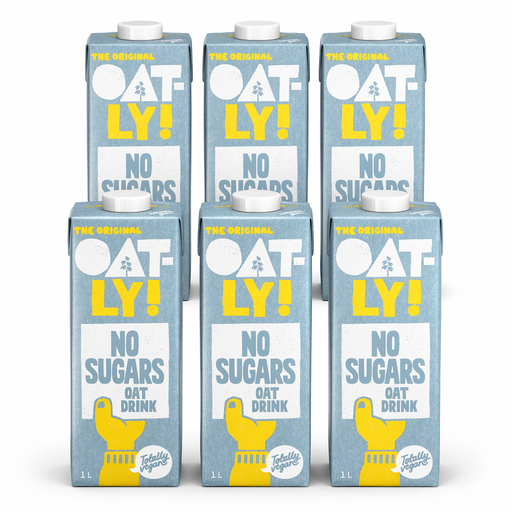
Oatly No Sugars Oat Drink 6 x 1L
Oatly describes its No Sugars drink as less sweet, making it another option to try before settling on a regular lunch drink. Its ingredient list includes oats, calcium, iodine and vitamins D2, B2 and B12. Oatly says the ambient carton can be kept at room temperature before opening; follow the exact pack’s instructions once opened.
View on Joybuy
 No image available
Alpro Oat Original Long Life Drink 8 x 1L
This long-life Original variant is an option if the pupil is open to a standard oat drink rather than specifically seeking No Sugars. Check its own nutrition and allergen label instead of applying figures from Alpro Oat No Sugars, and try the flavour before relying on it for lunches.
View on Joybuy
Common questions
Is every oat drink suitable for someone with a milk allergy?
No. Suitability must be checked on the exact product: M&S labels its Semi Oat Drink as unsuitable for people with a milk allergy. Read the current carton and follow the pupil’s individual allergy plan rather than relying on the term “oat drink”.
Is gluten-free oat drink safe for an oat allergy?
No. The Food Standards Agency says oat remains an allergen even when an oat product is gluten-free or very low gluten. Check oat-allergy suitability separately from any gluten-related requirement.
Should I check with the school before packing oat drink?
Check the individual school’s packed-lunch and allergy arrangements, particularly where a pupil has an allergy. England’s Department for Education guidance says schools should consider food brought from home in their allergy-safety approaches and set clear expectations for labelling, preparation and storage. Families elsewhere in the UK should check their own school’s arrangements.
What should I compare if oat drink regularly replaces dairy?
Compare the exact products’ labels for calcium, iodine, vitamin B12, riboflavin and vitamin D. The UK’s SACN and COT assessment says plant-based drinks vary considerably in fortification, so a short ingredient list or an oat-drink name alone cannot tell you which of those nutrients a carton contains.
Can a long-life carton stay out after it has been opened?
Do not apply before-opening storage instructions to an opened carton. Oatly says its ambient No Sugars carton can be kept at room temperature before opening; after opening or decanting any drink, follow its own pack instructions and the school’s storage arrangements.


