Choose around the task that most interrupts your level-design work: a programmable layout with the keys you use for repeated commands and numeric entry, an ergonomic shape if typing comfort is your priority, or a lower-profile or smaller-footprint option when desk space and device switching matter more. Check the exact physical layout and compatibility before buying. Keyboard shape is only part of comfort: the Health and Safety Executive advises positioning the keyboard just below elbow height and leaving space in front to rest your hands and wrists.
Who is this for?
Shortcut-heavy level designers
If you frequently change editor tools, enter numeric values or repeat commands, consider which keys must remain directly accessible and whether you will use remapping. Keychron describes key and macro customisation through VIA for its V6 Max; check that the exact keyboard and configuration method fit your computer.
All-day home-office creators
If level editing sits alongside documentation and messages for much of the day, assess the keyboard in its actual desk position rather than judging its shape alone. The Health and Safety Executive advises placing the keyboard just below elbow height and leaving room in front to rest hands and wrists when not typing.
Compact or shared-space workers
If your desk also accommodates another computer, or typing sound affects someone nearby, weigh device switching, the keys you would give up in a smaller layout and your preferred key feel. Logitech lists multi-device features for MX Keys S; Razer describes quieter typing for Pro Type Ultra, but that description is not a sound measurement for your room.
What matters when choosing?
Start with the commands and numeric keys your editor requires, then check whether the keyboard fits your workstation and the people sharing it. A smaller board can free desk width, but only if its key arrangement still works for your tasks.
| Concern |
What to check |
Who this matters to |
| Shortcuts and numeric entry |
Check for the keys your editor uses and whether the exact model supports your required remapping method and operating system. |
If I repeatedly switch tools or enter coordinates, I want commands and numeric keys within easy reach. Around 31% of consumers put that workflow need first. |
| Typing comfort and position |
Check keyboard height, shape and available desk depth; the Health and Safety Executive advises a position just below elbow height with resting space in front. |
During long editing and writing sessions, I need a keyboard arrangement that fits my desk and feels comfortable to use. For around 31% of consumers, sustained comfort is the primary concern. |
| Typing sound |
Check the selected switch variant and, if sound is decisive, seek a demonstration of that model; a quieter-typing claim does not establish how it will sound on your desk. |
When someone else works or takes calls nearby, I want to avoid typing that distracts them. Around 23% of consumers place shared-space noise first. |
| Desk space and devices |
Check the keyboard's footprint, missing or layered keys, connection method and compatibility with each device you intend to use. |
With limited desk room or more than one computer, I want switching to be straightforward without losing keys I rely on. That is the leading need for around 15% of consumers. |
Buying pitfalls
-
Treating an ergonomic keyboard as a complete workstation fix
Keyboard shape alone cannot address an awkward desk position or the rest of a display-screen workstation. The Health and Safety Executive considers equipment, working conditions and workstation arrangement together.
Check that the keyboard can sit centrally just below elbow height with space for your hands when you pause. Consider your chair, screen and breaks alongside the keyboard.
-
Choosing the right model in the wrong layout
Physical key positions and printed legends can differ between UK-ISO, US and other variants, affecting the symbols and shortcuts you use in an editor.
Check the selected variant for an explicit English UK or UK-ISO designation if that layout matters to you; do not rely on a product photograph that may show another variant.
-
Assuming a mechanical keyboard will be quiet enough
Switch choice, typing force, desk surface and room acoustics affect what others hear. Razer describes its Pro Type Ultra as quieter, but that manufacturer description is not a measured result for every setup.
Check the exact switches and seek a model-specific sound demonstration if you share the room. Review the retailer's applicable returns terms before ordering when noise is decisive.
-
Choosing customisation without checking how it works
Key mapping and macros may require a compatible configuration tool. Ordinary typing and the particular shortcuts you want to programme are separate things to check.
Confirm the exact model's remapping method, software or firmware requirements, and operating-system compatibility before making customisation your reason to buy.
Brands to consider
Logitech
Wave Keys is a shaped wireless option, while MX Keys S takes a lower-profile, multi-device productivity approach. Assess the particular line rather than treating either design as suitable for every desk.
- Logitech lists Bluetooth and Logi Bolt connectivity for Wave Keys, and shortcut keys, backlighting and multi-device features for MX Keys S.
- Check the selected physical layout, supported operating system and whether the key feel suits you; software-based workflow features also need a compatible setup.
Keychron
Keychron offers UK-ISO mechanical options across different keyboard sizes. Its V6 Max is relevant when a full-size arrangement and configurable commands matter.
- Keychron describes VIA key and macro customisation and a UK-ISO option for the V6 Max.
- Check the exact layout and switch variant; size, feel, sound and connection options should not be assumed identical across models.
Razer
The Pro Type Ultra is a mechanical productivity option to examine if typing sound is important in a shared home office.
- Razer describes a quieter typing experience for the Pro Type Ultra; consider that positioning alongside your preference for mechanical keys.
- The description is not an independent acoustic test. Check the selected layout, switches and compatibility before deciding whether it fits your workspace.
Joybuy keyboards for these needs
These keyboards cover different approaches to comfort, full-size typing, configurable mechanical keys and desk space. Compare each exact variant against your layout and software needs: a product's format or switch description does not by itself establish that its shortcuts, noise level or key feel will suit you.
 No image available
HP 960 Ergonomic Split Layout Wireless Keyboard with Padded Wrist Rest
Consider the HP 960 if a split key arrangement appeals to you for long desk sessions, allowing for time to adjust to its shape.
Its product name identifies a wireless keyboard with a padded wrist rest. Check the physical key layout and whether the configuration software works with your operating system before relying on it for editor shortcuts.
View on Joybuy
 No image available
Targus EcoSmart Full Size Wireless Keyboard (UK)
Consider this full-size option if you prefer a familiar key arrangement at a fixed desk rather than prioritising the smallest footprint.
The product name identifies it as wireless and labels it UK; inspect the selected variant's physical keys to confirm the layout you need. Allow enough desk width to position it comfortably.
View on Joybuy
 No image available
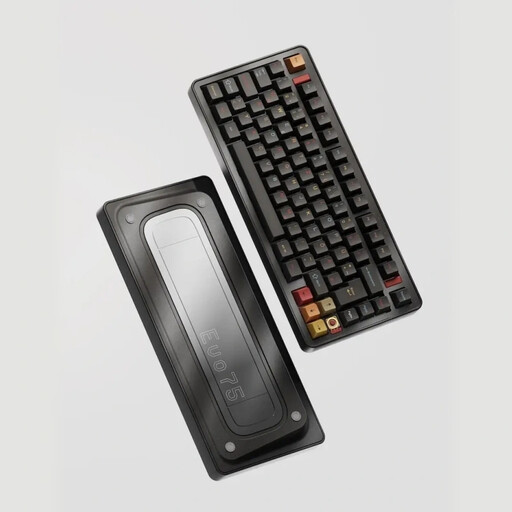
Ticktype EVO75 mechanical keyboard, Spray-coated Nebula, Creamy Rye Switches, US layout
Consider this model if you want to explore configurable mechanical controls, but make the US layout part of your decision before planning editor shortcuts around it.
The named variant has hot-swappable switches, a full-aluminium construction and an 8000mAh battery. Check that your operating system works with the mapping method you intend to use and that the available keys cover your numeric-entry tasks.
View on Joybuy
 No image available
ASUS ROG Falchion Ace HFX 65 Analog Gaming Keyboard, UK layout
Consider this UK-layout model if desk width matters, but check that its key arrangement leaves the editor controls you use easy to reach.
The product name identifies an analog gaming keyboard. The listed compatibility is Windows 10/11; check support for another operating system or for shortcut remapping if either is essential to your work.
View on Joybuy
 No image available
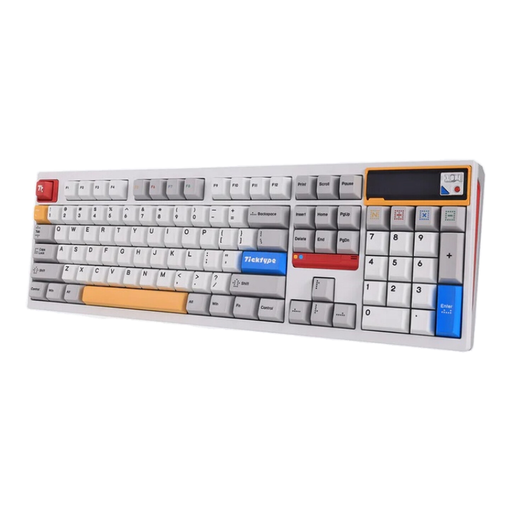
Ticktype DP104 mechanical keyboard, Powder White, Silent Tactile Switches, US layout
Consider this full-size mechanical option if you want a 108-key arrangement and are comfortable choosing a US-layout variant.
Its product name specifies hot-swappable Silent Tactile Switches and an 8000mAh battery. The switch name does not establish how quiet it will be in your room; also check operating-system compatibility and whether the shortcut remapping you want is available.
View on Joybuy
Common questions
Do I need an ergonomic keyboard for level design at home?
No particular keyboard shape is necessary for every level designer. If an ergonomic shape appeals to you, assess how it fits your hands and desk; the Health and Safety Executive also advises positioning the keyboard just below elbow height and leaving space in front to rest hands and wrists.
Should I choose a UK-ISO keyboard?
Choose an explicitly labelled UK-ISO or English UK variant if you need that physical key arrangement and its printed legends for typing symbols or using shortcuts. Keychron identifies UK-ISO models, but check the exact variant rather than assuming every keyboard in a model family has the same layout.
Will macros help with repeated level-editor commands?
Macros can help if you repeatedly use commands that your keyboard and editor allow you to assign conveniently. Keychron describes VIA-based key and macro customisation for the V6 Max, while Logitech describes software-based customisation for compatible MX devices; check the exact model, configuration tool and operating system before depending on either approach.


