Dual-view level designers
You need the level editor alongside a game, UI, reference or documentation view, with each view occupying its own physical screen.


Choose two matching 27-inch 4K monitors if your puzzle-level workflow needs an editor and a preview or reference view on physically separate screens. A 34-inch ultrawide suits a continuous workspace instead, while a single larger 4K monitor keeps work on one panel but requires more window management. Before committing to two displays, check your computer’s external-display support and the space available on your desk.
You need the level editor alongside a game, UI, reference or documentation view, with each view occupying its own physical screen.
You inspect tiles, sprites, UI or reference art while designing levels and want documented colour-space coverage and a workable calibration setup.
You move between a laptop and a desk setup and want to check whether the laptop can handle the intended displays, peripherals and charging arrangement.
Choose when: The editor and a separate game or reference view need their own physical screens.
Allow for: More desk width and two supported display connections, whether direct or through compatible equipment.
Choose when: You want one continuous canvas for the editor, panels and documentation.
Allow for: A single screen that cannot be positioned or used as two independent displays.
Choose when: You prefer a larger single workspace for level layout and artwork inspection.
Allow for: More window management when the editor and preview must remain visible together.
| Concern | What to check | Who this matters to |
|---|---|---|
| Separate working views | Check that your computer can drive two external displays at your intended resolution and refresh rate. Dell UK cautions that display daisy-chaining requires Thunderbolt; a USB-C connector alone is not enough to establish support. | I need to keep the editor and a distinct game or reference view visible without arranging them on one canvas. Around 36% of consumers put that physical separation first. |
| Art and UI colour | Compare the exact model’s stated colour-space coverage with your project workflow, and check the calibration equipment or software you plan to use. | When I inspect tiles and UI states, documented colour coverage matters more to me than the number of screens. For around 29% of consumers, colour and detail are the primary concern. |
| Laptop connections | Confirm your laptop’s external-display limit, video support through USB-C or Thunderbolt, and charging requirements before planning the cables or dock. | I move my laptop between desks and want the display connection and charging arrangement to work with my machine. Keeping those connections manageable comes first for around 21% of consumers. |
| Desk fit and positioning | Measure desk width and depth, then check stand adjustment or a compatible mount. The Health and Safety Executive advises placing the screen about an arm’s length away, with its top at eye level. | On a shallow desk, I need to position the screens comfortably before adding more workspace. Around 14% of consumers make desk fit and adjustment their main priority. |
USB-C ports do not all offer the same video capabilities. Dell UK states that display daisy-chaining requires Thunderbolt and warns that some M-series chips may not support certain features.
Check your laptop’s exact external-display limit and port specifications before choosing how to connect a pair of monitors.
Depending on that plan, you may need a compatible dock, additional display cables or a separate power supply.
A large 4K display or ultrawide can hold several windows, but it cannot give the editor and preview independently positioned physical screens.
Decide whether the second view needs its own display or whether extra room on a continuous desktop will serve the workflow.
Stated colour-space coverage describes a monitor characteristic; it does not control the settings of every device on which a game might be viewed.
Check that the model’s stated colour spaces suit your project and confirm the calibration tools your workflow requires.
Colour-managed work may also call for separate calibration hardware or software.
Two stands or one large panel still need enough room for suitable viewing distance and screen height. The Health and Safety Executive advises placing the top of the screen at eye level and the display about an arm’s length away.
Measure the usable desk surface and check stand adjustment, mounting pattern and monitor-arm compatibility before buying.
An arm or mounting hardware may be needed if the supplied stand does not suit the planned position.
Dell’s cited UltraSharp models cover a 27-inch 4K option for a matched pair and an ultrawide option for a continuous workspace.
BenQ’s PD3205U is relevant to buyers considering one larger 4K screen for level work and asset review.
LG’s 27UP850K-W is a 27-inch 4K IPS option to consider for a matched pair or a compact single-screen desk.
These choices include 27-inch displays to consider as individual panels for a two-monitor desk, plus one larger single-screen alternative. A listing for one monitor does not constitute a matched pair: check that your computer supports the complete setup before buying two.
 No image available
Consider this as one panel when an editor and preview need separate screens. The listed variant has a nano-glossy panel, USB-C and a height-adjustable stand; check your computer’s support for two external displays and its USB-C compatibility before planning a pair.
 No image available
This 27-inch, 16:9 4K model is another individual display to consider for separate editor and reference views. Confirm the connections and adjustment you need on the exact variant, and check your computer’s two-display support before selecting a pair.
 No image available
Consider this larger single display if you prefer to arrange level tools and artwork on one canvas rather than use two physical screens. The nano-glossy variant lists USB-C and a height-adjustable stand; check computer compatibility and allow for window management when keeping a preview visible.
 No image available
This is a 27-inch option to consider as one of two separate work screens. Its listed features include 60 Hz, DCI-P3 95%, HDMI and DisplayPort; if colour-managed asset work is central to the project, check the calibration setup you will use.
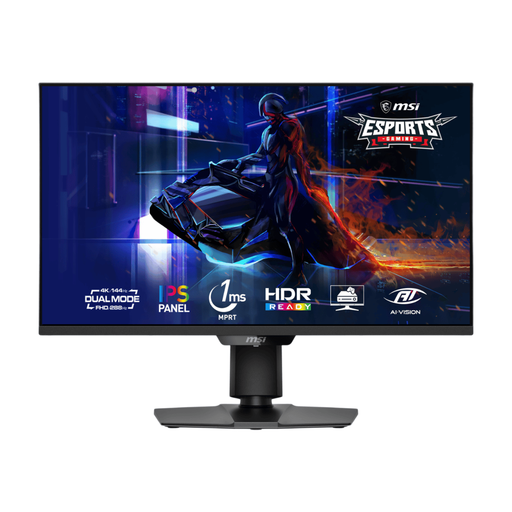 No image available
This individual 27-inch display can be considered for a physically separate level-editing or preview view. The listed dual modes are UHD at 144 Hz and FHD at 288 Hz; check which mode suits your work and whether your computer can run the intended two-display arrangement.
Choose two monitors if the editor and game or reference view need physically separate screens; choose an ultrawide if you mainly need one continuous horizontal workspace. An ultrawide can hold multiple windows, but it cannot give those views independent physical positions.
It can when the laptop and monitor support the required video and charging functions, so check both devices’ specifications. A second external display needs its own compatible connection plan; Dell UK states that daisy-chaining requires Thunderbolt and cautions that some M-series chips may not support certain features.
Plan the layout so the main screen sits in front of you at a comfortable viewing distance. The Health and Safety Executive advises placing the top of the screen at eye level and the display about an arm’s length away; check desk depth and stand or mount adjustment before choosing a larger panel or a pair.
The Health and Safety Executive’s display-screen guidance focuses on workstation use and positioning rather than selecting a particular retail monitor size. It says the Display Screen Equipment Regulations apply to workers who use display-screen equipment daily for continuous periods of an hour or more; if this is a work setup, ask your employer how its workstation assessment applies.