
24/7 Customer Support

Free returns

Same-day & Next-day Delivery

Quality Guaranteed

Unlock Your Welcome Offers: FREE Delivery | Up to 80% OFF | Free 30-day JoyPlus trial
Download the APP
Licensed character toys can turn a familiar film, television or game character into a birthday present, display piece or imaginative play companion. However, a recognisable logo alone does not tell you whether a toy suits the child, the intended type of play or your available space.
Whether you are comparing action figures, collectible figures, Disney toys, Marvel toys, Star Wars toys, Toy Story toys or character dolls, a few checks can help prevent an unsuitable purchase.
Some collectible figures are designed mainly for shelves and cabinets. Small scale, fixed poses, delicate accessories and collector-style packaging may not suit a young child who wants to handle the toy frequently.
Conversely, a large action figure with several moving joints may be more enjoyable for role play but less convenient for a compact display area. Check whether the product is described as poseable, interactive, static, display-oriented or suitable for imaginative play.
A character may appeal to a child under three, while the actual toy contains small accessories or detachable components. Always read the stated age range and warning information rather than relying on the appearance of the product.
For UK purchases, look for clear manufacturer information, safety warnings and the relevant conformity marking, such as CE or UKCA, where applicable. These markings should not replace checking the individual product’s age guidance, materials and instructions.
Interactive toys can offer sounds, lights or movement, but batteries may be included, excluded or required in a particular format. Button-cell batteries need especially careful storage and disposal because they can be hazardous if swallowed.
Before ordering, check:
For action figures, height and articulation are practical indicators of how the toy may be used. The 29.2 cm Spider-Man figures, for example, are easier to see and handle than miniature collectible figures, while a 4 cm die-cast figure set is more suitable for arranging, carrying or expanding a collection.
Look at the number of moving points, but do not assume a higher number automatically means a better choice. A younger child may benefit from a chunky, simpler figure, while an older fan may prefer a highly articulated collectible figure for posing.
Product descriptions may identify materials such as die-cast metal, vinyl, plastic, fabric or soft plush. Die-cast metal can provide a weightier feel for display, while plastic figures are often easier for children to carry and pose. Soft character toys may be more suitable for cuddling, but should still be checked for age guidance, seams and cleaning instructions.
For die-cast model toys, check whether the wheels, stands or other parts are fixed. Some are intended for display rather than transforming or motorised play.
A single figure may be more affordable initially, but a set can offer more characters and storytelling options. Check exactly what is included: accessories, stands, vehicles, backgrounds and compatible figures should be listed clearly.
Interactive ranges may only communicate with matching products. For example, certain Toy Story figures are designed to recognise other compatible figures, while a transforming dinosaur may include its own vehicle component. Treat compatibility as a specific feature, not a general promise across an entire franchise.
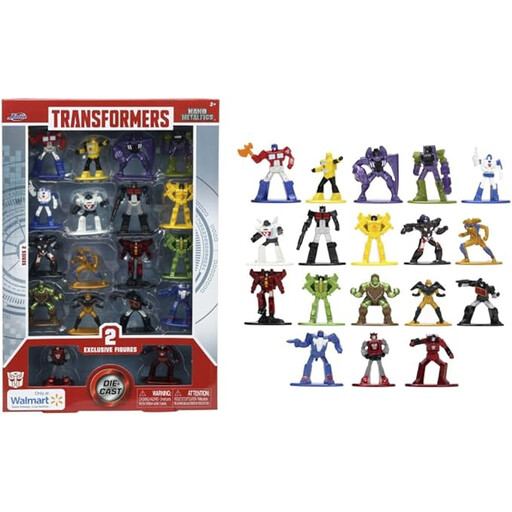
Why This Fits Their Persona: An 18-piece set gives a new collector several Transformers characters in one purchase, making it practical for shared play, a bedroom shelf or a growing collection.
The listing clearly identifies 18 non-transforming figures, so buyers are less likely to expect vehicle conversion or larger play-scale parts.
Includes 18 die-cast metal mini figures, approximately 4 cm tall, in display-ready window-box packaging.
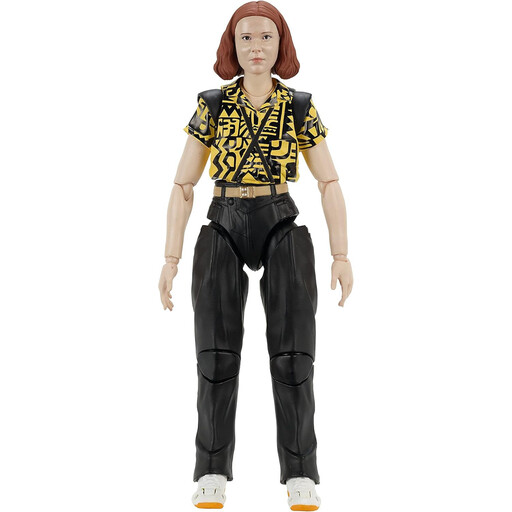
Why This Fits Their Persona: Suitable for older fans and collectors aged 15 and over who want a character figure for display rather than toddler play.
Its stated 15+ age guidance and display-ready packaging make the intended collector audience clearer than a general children’s toy listing.
The 6-inch figure has over 20 articulation points and comes in collector-friendly packaging.
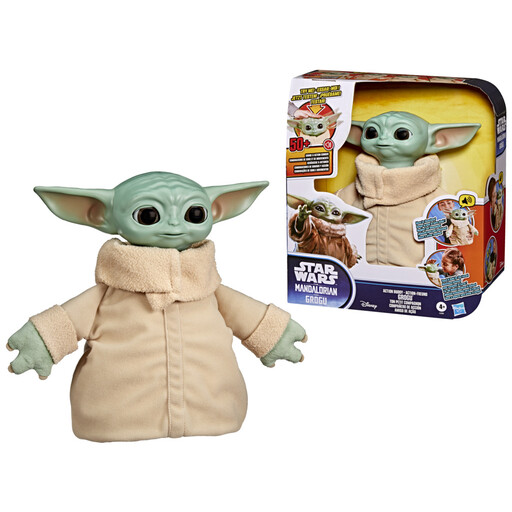
Why This Fits Their Persona: A choice for children aged 4 and over who want repeated interactive play, sound effects and a soft character companion rather than a static figure.
The listing explains the controls, modes and battery requirement, helping buyers assess whether the sounds and movement match their home environment.
The 25 cm plush figure includes motion responses, multiple sound and action combinations and 3 x AA batteries.
We have compiled a complete, real-time list of products that fully satisfy these strict selection criteria and UK safety regulations.
Only if the individual product is specifically marked as suitable for that age group. Many action figures, dolls and collectible sets include small parts and carry a 3+ or 4+ warning. Check the product listing and packaging before purchase, and follow supervision guidance where stated.
They can require recurring battery purchases, depending on usage and battery type. Check whether batteries are included and consider choosing a non-electronic figure if the toy will be used frequently or if sound could be disruptive at home.
Choose an action figure when the recipient wants posing, storytelling and hands-on play. A collectible figure may be more suitable for display, franchise collecting or an older recipient. For younger children, prioritise clear age guidance, chunky construction and easily handled parts over packaging or character popularity.