Budget curry and soup cooks
A light canned coconut milk may suit a curry, soup or sauce when you want a cooking ingredient rather than a coconut drink. Check the can size against the amount your recipe needs.


For a budget curry or soup, start with light or reduced-fat canned coconut milk if the recipe calls for a cooking ingredient, then compare fat and saturates per 100ml rather than relying on the wording on the can. Tesco Light lists 6.0g fat and 5.2g saturates per 100ml, while Waitrose Essential Reduced Fat lists 6.2g and 5.5g respectively; a carton coconut drink is a different format and should not be assumed to give the same result in a curry.
A light canned coconut milk may suit a curry, soup or sauce when you want a cooking ingredient rather than a coconut drink. Check the can size against the amount your recipe needs.
Read both fat and saturates per 100ml on the particular can. Tesco Light lists 6.0g fat and 5.2g saturates per 100ml; Waitrose Essential Reduced Fat lists 6.2g and 5.5g.
A carton coconut drink and canned culinary coconut milk serve different uses. Check which format the recipe asks for before choosing on the basis of a nutrition figure.
Match the product format to the recipe first, then compare the nutrition panels and choose a can size you can use.
| Priority | What to check | Your needs |
|---|---|---|
| Cooking format | Check whether the product is canned culinary coconut milk or a carton drink. Follow the ingredient format specified by the recipe. | My curry or soup calls for coconut milk as a cooking ingredient, so I do not want to choose a drink just because its fat figure is lower. |
| Fat and saturates | Compare both figures per 100ml on the exact product. Tesco lists 6.0g fat and 5.2g saturates for Tesco Light; Waitrose lists 6.2g and 5.5g for Essential Reduced Fat. | I want to know what the can contains rather than treating “light” and “reduced fat” as identical nutrition figures. |
| Can size | Check the pack quantity against the recipe and the number of meals planned. Tesco Light and Waitrose Essential Reduced Fat are listed in 400ml cans; Sainsbury's Coconut Milk Light is listed as 400g. | For a budget shop, I want to buy an amount I can use in the curries, soups or sauces I have planned. |
Tesco Light lists 5.2g saturates per 100ml, and Waitrose Essential Reduced Fat lists 5.5g per 100ml. The wording on either can does not replace its nutrition figures.
Compare fat and saturates per 100ml on the products you are considering.
Alpro Coconut No Sugars is a drink format, whereas light canned coconut milk is sold as a cooking ingredient. The drink’s lower fat figure does not establish that it will produce the same curry or soup.
Check the recipe and product format before substituting a carton drink for a can.
Tesco Light Coconut Milk is a 400ml canned cooking option.
Sainsbury's lists Coconut Milk Light in a 400g pack.
Essential Reduced Fat Coconut Milk is a 400ml canned option.
M&S lists a Reduced Fat Coconut Milk.
Alpro Coconut No Sugars is a 1-litre coconut drink rather than a canned cooking ingredient.
This reduced-fat canned coconut milk fits the curry and soup cooking scenario; compare its current label with your recipe requirements.
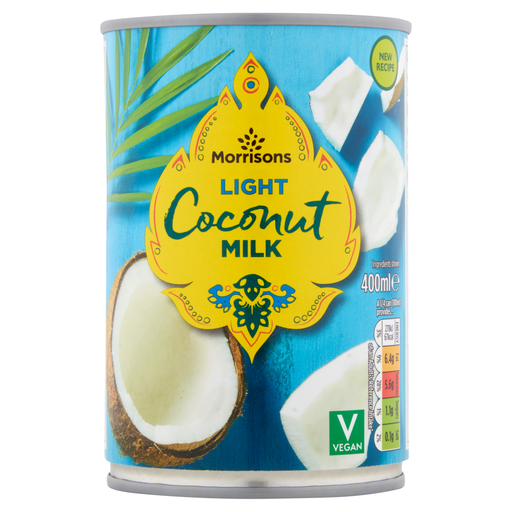 No image available
This 400ml reduced-fat can is a cooking-format option for a curry or soup rather than a carton coconut drink. Check fat and saturates per 100ml on the current label when comparing it with other cans.
No: read the per-100ml nutrition panel for the particular product. Tesco Light lists 6.0g fat and 5.2g saturates per 100ml, while Waitrose Essential Reduced Fat lists 6.2g fat and 5.5g saturates per 100ml.
Do not assume the two formats will give the same result. Alpro Coconut No Sugars is a 1-litre drink listing 1.2g fat per 100ml, whereas Tesco Light is a 400ml canned cooking ingredient; check what your recipe calls for before substituting one for the other.
Check the ingredients and allergens, date marking and nutrition information, alongside the amount your recipe needs. UK food-labelling guidance from the Department for Environment, Food & Rural Affairs and the Food Standards Agency identifies these as information provided on prepacked food labels; use the current pack when making your choice.