Who might choose a lighter coconut milk
A light cooking tin is worth considering when the recipe needs coconut milk but a rich coconut flavour or texture is not the aim.
Cooks after a subtle coconut note
For Easter soups, curries and vegetable sauces where other ingredients should lead, compare light tins by their listed coconut extract. A lower figure is a starting point for choosing, not a promise about how the finished dish will taste.
Shoppers comparing richness
Look at fat and saturates on the same per-100ml basis rather than relying on the word ‘light’. Sainsbury’s lists 4.9g saturates per 100ml for its light coconut milk and 13.8g for its standard coconut milk.
Vegan cooks serving a shared meal
A tinned cooking milk may fit a vegan Easter recipe, but check the exact pack’s ingredients and allergen statements for the people eating it. A coconut drink sold as a milk alternative is a different format from a cooking tin.
What to check before buying
Start with the ingredient your recipe calls for, then compare tinned products by coconut extract and nutrition values on the same label basis.
| Priority | What to check | Your needs |
|---|
| Coconut flavour |
Compare coconut-extract percentages between tinned cooking milks. Tesco Light lists 22%, Blue Dragon Light 25% and Sainsbury’s Light 40%, according to their product listings; these figures are not taste-test results. |
I want coconut to sit behind the other flavours in a savoury dish, so I would use the extract figure as a guide and allow for my recipe and taste. |
| Richness |
Compare fat and saturates per 100ml. Sainsbury’s lists 5.6g fat and 4.9g saturates for its light tin, against 14.8g and 13.8g for its standard tin. |
For a sauce that needs a richer base, I may prefer a standard tin; for a lighter cooking base, I would compare light tins without assuming they will taste alike. |
| Product format |
Check whether the recipe specifies tinned cooking coconut milk, coconut cream or a coconut drink. Alpro describes Coconut Original as a drink; M&S lists coconut cream among its dessert ingredients. |
If I am making a curry or sauce, I need the cooking ingredient specified by the recipe, not just any carton or tin labelled coconut. |
| Guest suitability |
Read the purchased pack’s ingredients, vegan statement where relevant, and allergen and precautionary information. The Blue Dragon Light listing carries a may-contain warning for peanuts and nuts. |
When guests have dietary requirements, I need to check the exact product before serving it rather than assume that ‘vegan’ answers an allergy question. |
| Leftovers |
Read the tin’s instructions for storage and use after opening before planning how much the recipe needs. |
If the Easter recipe uses only part of a tin, I want to know how to store the remainder and when to use it. |
Brands and ranges to compare
These examples show why the exact product label matters more than the brand name alone; a light tin, standard tin and coconut drink serve different recipe needs.
Tesco
Tesco Light Coconut Milk is a tinned option to compare for a less rich savoury base.
- Tesco lists 22% coconut extract, 6.0g fat and 5.2g saturates per 100ml for this 400ml tin.
- The extract figure alone cannot tell you how mild it will taste in a finished recipe.
Sainsbury’s
Its light and standard cooking milks offer a label-based comparison for different levels of richness.
- Sainsbury’s lists 40% coconut extract, 5.6g fat and 4.9g saturates per 100ml for Light, versus 68%, 14.8g and 13.8g for its standard milk.
- Those label differences do not establish how the two tins will taste in every dish.
Waitrose
Essential Reduced Fat Coconut Milk is another tinned cooking option for comparing ingredients and nutrition.
- Waitrose lists 23% coconut extract, 6.2g fat and 5.5g saturates per 100ml, and marks the product suitable for vegans.
- Check the physical pack when buying: the online page’s headline and detailed fat figures are inconsistent.
M&S
M&S distinguishes coconut milk, reduced-fat coconut milk and coconut cream in its cooking range.
- M&S suggests coconut cream for desserts including rice pudding, panna cotta and mousse.
- Choose the specific product and check its pack rather than treating milk and cream as the same ingredient.
Blue Dragon
Blue Dragon Light is a 400ml cooking tin to consider for curries, soups and sauces.
- The Blue Dragon Light listing gives 25% coconut extract, 6.2g fat and 5.1g saturates per 100ml.
- Its listing also warns that it may contain peanuts and nuts; check the current pack for guests with allergies.
Alpro
Alpro Coconut Original is a plant-based drink, relevant when a recipe asks for a milk alternative rather than tinned cooking coconut milk.
- Alpro lists 5.3% coconut milk and 0.9g fat per 100ml for Coconut Original.
- Do not assume the drink will give a sauce the same texture as a cooking tin.
Joybuy coconut milk for Easter cooking
This option is a reduced-fat canned coconut milk for recipes calling for tinned cooking milk. Check the pack and your recipe before choosing it for a particular flavour, texture or guest.
 No image available
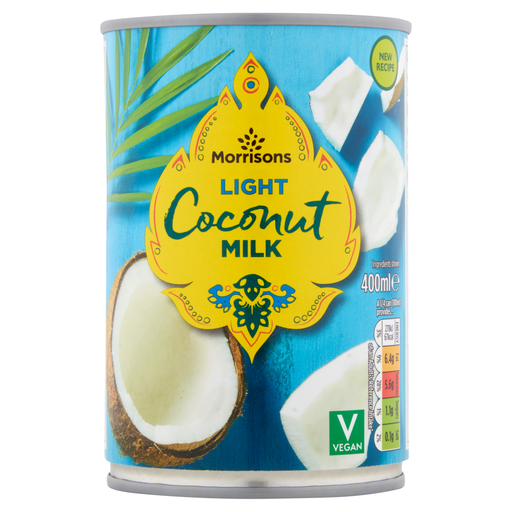
Morrisons Reduced Fat Coconut Milk 400ml
For an Easter recipe that calls for tinned coconut milk, this is a 400ml reduced-fat canned option. Check the current pack’s ingredients and allergen information before serving guests, and do not rely on the reduced-fat description alone to predict flavour or sauce texture.
View on Joybuy
Questions about cooking with coconut milk
How do I choose a milder tinned coconut milk?
Start with light or reduced-fat cooking tins and compare their coconut-extract percentages. Tesco lists 22% for Light, the Blue Dragon Light listing gives 25%, and Sainsbury’s lists 40% for Light; a lower figure is a useful starting point, not a tested ranking of how they taste.
Can I use a coconut drink in an Easter curry?
Use a coconut drink when the recipe calls for a milk alternative, but do not assume it will replace tinned cooking coconut milk without changing the result. Alpro Coconut Original is a drink, while light cooking tins are sold for dishes such as curries and sauces.
What should I do with coconut milk left in an opened tin?
Follow the storage instructions on the exact pack, including any direction to transfer the remainder to another container, refrigerate it and use it within the stated period. Check those instructions before opening a tin if your recipe needs only part of it.
What should I check when serving guests with allergies?
Read the current pack’s ingredients and precautionary allergen statements before serving. GOV.UK says that prepacked foods containing any of the UK’s 14 regulated allergens must clearly label them in the ingredients list; the Blue Dragon Light listing also carries a may-contain warning for peanuts and nuts.
Do Easter desserts need coconut cream?
Choose coconut cream when the recipe calls for its richer texture; M&S suggests it for desserts such as rice pudding, panna cotta and mousse. If you want to use a light coconut milk instead, check whether the recipe can accommodate a different texture.


