Cottage cooks making curries or soups
If a recipe calls for cooking coconut milk but you want a less rich result, compare light and reduced-fat tins with regular tins. They remain cooking products, unlike carton coconut drinks.


For a holiday-cottage curry, soup or sauce that needs a cooking ingredient but not the richness of a regular tin, start with light or reduced-fat tinned coconut milk. Choose a regular cooking tin if the recipe depends on a richer texture; carton coconut drinks suit cereal and drinks but are not a like-for-like substitute in a creamy sauce. Check the pack size and instructions for storing leftovers before buying.
If a recipe calls for cooking coconut milk but you want a less rich result, compare light and reduced-fat tins with regular tins. They remain cooking products, unlike carton coconut drinks.
A carton coconut drink can serve a different purpose from a curry tin. Alpro and Koko identify the cited products as coconut drinks, so check which format each meal or drink calls for.
A 400 ml tin may cover more than one meal. Check whether the cottage has fridge space and whether you can use the remainder within the opened-pack period printed on the tin.
Start with the recipe’s required format, then compare the cooking tins’ labels and plan for anything left after the first meal.
| Priority | What to check | Your needs |
|---|---|---|
| Cooking format | Check whether the pack is tinned cooking coconut milk or a carton coconut drink. Match it to the recipe’s intended ingredient. | For a curry sauce, I want a cooking tin; for cereal or a drink, I want a carton product. |
| Richness | Compare the current labels for regular, light and reduced-fat tins, including fat per 100 g or 100 ml and coconut-extract content. Keep the stated measurement units distinct. | I would prefer a less rich curry, but I still need to consider whether the recipe relies on a fuller sauce. |
| Leftovers | Check pack size and the instructions for refrigeration, transferring unused contents and use after opening. The cited Sainsbury's Light pack says three days; the cited M&S and Waitrose cooking tins say two. | If I am only cooking one coconut-milk meal, I need a plan for the remainder during the stay. |
| Guest ingredients | Read the ingredients and allergen information on the pack being served, especially when a guest has a dietary restriction. | Before cooking for someone else, I want to check the actual product rather than rely on an earlier online description. |
The cited Alpro and Koko drinks are beverage-style products, while the cited cooking tins have different formulations. Substituting a drink may leave a sauce thinner than the recipe intends.
Check the product type on the front of the pack. Use a cooking tin when the recipe calls for one, and a carton drink where a thinner plant drink is intended.
Reduced-fat labels do not describe one shared formulation: Sainsbury's Light, M&S Reduced Fat and Waitrose Essential Reduced Fat list different coconut-extract proportions.
Compare the current labels and consider how much body the recipe needs. Choose a regular cooking tin if a richer texture is important to that dish.
The cited cooking tins give opened-pack use periods of two or three days. A short stay does not remove the need to refrigerate leftovers as directed.
Plan another use for the remainder, follow the pack’s transfer and storage instructions, and do not keep it beyond the stated opened-life.
The ingredients on the product being served are what matter when a guest has an allergy, intolerance or other dietary restriction.
Read that pack’s ingredients and allergen information before preparing the meal.
These brand examples illustrate the difference between cooking tins and coconut drinks; a brand’s inclusion does not indicate that its products are in the Joybuy selection below.
Sainsbury's Light Coconut Milk is a tinned cooking option for dishes such as curries and soups.
M&S lists regular and reduced-fat 400 ml cooking coconut milks.
Waitrose Essential includes regular and reduced-fat tinned cooking coconut milk.
Tesco lists both standard and Light 400 ml cooking coconut milk tins.
Alpro Coconut No Sugars is a coconut drink, not a tinned cooking coconut milk.
Koko Unsweetened is a carton coconut-based alternative drink.
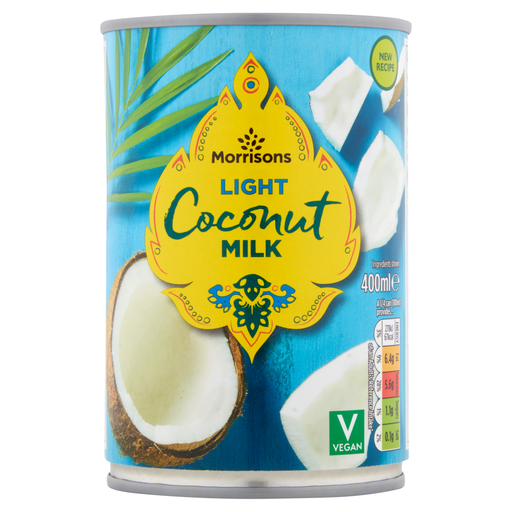
This Joybuy selection is a reduced-fat cooking tin for a cottage curry or soup, rather than a carton coconut drink.
 No image available
For a curry or soup that calls for tinned cooking coconut milk, this is a 400 ml reduced-fat option. Check the current pack’s ingredients and opened-storage instructions before serving guests or planning to keep leftovers.
Use a cooking tin if the curry recipe relies on a creamy sauce. The cited Alpro and Koko products are coconut drinks with different formulations, so a carton is not a like-for-like substitute; it makes more sense where the recipe calls for a thinner plant drink.
Start by comparing light or reduced-fat cooking tins, such as the cited Sainsbury's, M&S and Waitrose variants. They keep you in the cooking-tin format, but their formulations differ; use a regular tin if the recipe depends on a richer texture.
Follow the instructions on that tin. The cited Sainsbury's Light listing says to refrigerate and use within three days, while the cited M&S and Waitrose cooking tins give a two-day period and instructions for transferring unused contents.
Read the ingredients and allergen information on the actual pack before preparing the meal. GOV.UK guidance on pre-packed foods explains that allergens requiring declaration must be emphasised in the ingredients list; do not substitute an older online listing for the pack being used.
Check the storage directions on the tin first. The cited Sainsbury's, M&S and Waitrose cooking tins specify cool, dry storage before opening; follow the separate refrigeration and use instructions once opened.