Picnickers looking for low total fat
Check fat per 100g rather than relying on a light claim. M&S lists 1.1g fat per 100g for its Low Fat Birthday Cake Ice Cream; the NHS guide describes 3g or less per 100g as low in total fat.


For a low-total-fat ice cream, M&S Low Fat Birthday Cake Ice Cream lists 1.1g fat per 100g, below the NHS guide of 3g or less per 100g. A light sharing tub such as Carte D'Or Madagascan Vanilla Light offers a relative reduction—30% less fat than similar ice creams—but that claim alone does not establish its total fat per 100g. Bring a frozen dessert to a picnic only if you can keep it cold in a cool bag or box with frozen packs until serving.
Check fat per 100g rather than relying on a light claim. M&S lists 1.1g fat per 100g for its Low Fat Birthday Cake Ice Cream; the NHS guide describes 3g or less per 100g as low in total fat.
A sharing tub makes sense only if you can keep it cold until serving. The Food Standards Agency advises carrying picnic food that needs chilling in a cool bag or box with ice or frozen packs.
Calories per tub and fat per 100g answer different questions. Ocado lists 320 kcal per tub for Halo Top Peanut Butter, while its fat figure is 4.8g per 100g—above the NHS low-total-fat guide.
Start with the nutrition measure that matters to you, then check whether the dessert can stay cold throughout the journey and picnic.
| Priority | What to check | Your needs |
|---|---|---|
| Total fat | Compare fat and saturates per 100g on the current pack. The NHS guide defines low total fat as 3g or less per 100g; a light claim describes a reduction against a similar product, not that absolute figure. | I want to know whether a dessert is low in total fat, not just labelled light. In the Food Standards Agency and Ipsos Northern Ireland's 2024 survey of 611 Northern Ireland consumers, 49% said they actively used traffic-light labelling when shopping for food; that figure does not describe frozen-dessert purchases. |
| Cold transport | Check the pack's frozen-storage and refreezing instructions. Use a cool bag or box with frozen packs distributed through it, and keep it closed until serving, as advised in picnic guidance from the Food Standards Agency and Food Standards Scotland. | Can I keep the dessert cold from home until everyone is ready to eat? If not, I would choose a dessert that does not need frozen transport. |
| Serving format | Check the pack size against the number of people and consider how much must be taken out at once. Keep any remainder in the cool container while serving. | For a group, I need enough to share without leaving the rest of a tub out during lunch. |
| Ingredients and allergens | Read the allergen declaration and ingredients on the exact flavour's current pack. Do not assume that different flavours or dessert types have the same ingredients. | Someone joining the picnic may need to avoid a particular ingredient, so I need to check the product we will actually serve. |
The NHS says light or reduced-fat products have at least 30% less fat than a similar product. They can still exceed its low-total-fat guide of 3g per 100g.
If low total fat is your criterion, compare the pack's fat per 100g; check saturates separately.
Ocado lists 320 kcal per tub for Halo Top Peanut Butter, but 4.8g fat per 100g. Its calorie figure does not make it low in total fat under the NHS guide.
Choose the measure you intend to compare—such as calories per tub or fat per 100g—and use the same measure when checking other products.
Food Standards Agency picnic guidance says food that normally needs chilling should travel in a cool bag or box with ice or frozen packs. Some frozen-dessert packs also say not to refreeze after thawing.
Pack the dessert in the cool container, keep it closed until serving and follow the product's storage instructions.
A cool bag or box and frozen packs are practical requirements if you do not already have them.
A listing may not reflect the pack or stock at the shop where you plan to buy.
Check the local listing before a fixed-date picnic and read the physical pack for nutrition, ingredients and storage instructions.
Its frozen range includes Low Fat Birthday Cake Ice Cream and frozen yoghurt; check each product separately rather than assuming the range has the same nutrition profile.
Madagascan Vanilla Light is a sharing-tub option for shoppers considering a relative fat reduction.
Chocolate Cookie Dough Light is an option for people seeking that flavour with a relative fat-reduction claim.
Its Peanut Butter dessert illustrates why calories per tub and total fat per 100g need separate checks.
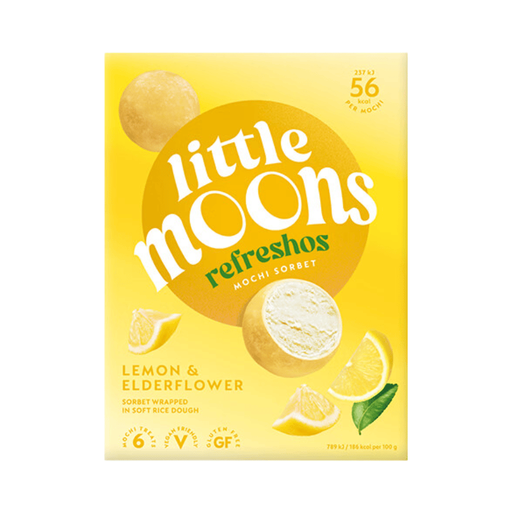
This portioned sorbet mochi is a frozen-dessert option for a picnic where you can keep food cold. Check its current pack's fat per 100g if low total fat is your deciding criterion.
 No image available
The 6 x 30g format allows portions to be taken out for serving. For a picnic, carry it in a cool bag or box with frozen packs; check the current pack for fat per 100g, allergens and storage instructions.
No. The NHS says light or reduced-fat products have at least 30% less fat than a similar product, while its guide for low total fat is 3g or less per 100g. Check the per-100g figure on the pack: a relative claim such as Carte D'Or Vanilla Light's 30% reduction does not establish that figure.
Yes, if you can keep it cold until serving. The Food Standards Agency advises a cool bag or box with ice or frozen packs for picnic food that normally needs chilling; keep the container closed as much as possible and follow the dessert's pack instructions.
Follow the instructions for that product rather than assuming it can be frozen again. M&S Low Fat Birthday Cake Ice Cream and Halo Top Peanut Butter both state that they should not be refrozen after thawing; take out only what you are serving and keep the remainder cold.
Read the allergen declaration on the exact pack before serving it. Ingredients differ between flavours and products, so a light or low-fat label does not tell you whether a dessert suits everyone at the picnic.