Hosts choosing a lighter tonic
If guests enjoy tonic’s bitterness, compare the calories and sugars on the exact pack. A light formulation says nothing about the alcohol level after a spirit is added.


For curry night, choose a tonic by its flavour and the sugar information on the specific pack, but do not treat a light or slimline label as a low-alcohol claim. If alcohol level is the priority, serve the mixer without an alcoholic base or check the base’s ABV and the amount added; the UK Department of Health and Social Care’s 2018 guidance describes low-alcohol drinks as those at 1.2% ABV or less.
Start with what guests mean by a lighter drink: fewer calories, less sugar and less alcohol are separate requirements.
If guests enjoy tonic’s bitterness, compare the calories and sugars on the exact pack. A light formulation says nothing about the alcohol level after a spirit is added.
Make the alcoholic base, if any, the first decision. A mixer served without added alcohol avoids relying on a light or slimline claim as a guide to the finished drink’s ABV.
Quinine bitterness and citrus or herbal notes will not appeal equally to everyone. Individual cans make it easier to offer a choice of tonic profiles alongside a non-tonic drink.
Decide on the alcohol level first, then compare nutrition labels and flavours for the drinks you plan to serve.
| Priority | What to check | Your needs |
|---|---|---|
| Alcohol level | Read the ABV of any alcoholic base and consider how much goes into the serve; the mixer’s light label cannot establish the finished ABV. The UK Department of Health and Social Care’s 2018 guidance describes low-alcohol drinks as those at 1.2% ABV or less. | I want to offer a drink without added alcohol, or know the alcohol level before serving a mixed drink. |
| Calories and sugar | Compare energy and sugars per 100 ml on the exact variants. Fentimans lists 18 kcal and 3.4 g sugar per 100 ml for Naturally Light Tonic Water; Tesco describes its 1 L Schweppes Slimline Tonic Water as having no sugar. | If sugar matters to me, I need an explicit sugar figure or no-sugar statement rather than the word “light”. |
| Tonic flavour | Check whether the tonic uses quinine and whether its stated flavour leans towards citrus or herbs. Fever-Tree describes its Premium Indian Tonic with bitter-orange oils; Fentimans describes citrus and lemongrass in its Premium Indian Tonic. | Will my guests enjoy a bitter tonic with their food, or would some prefer a different soft drink? |
| Serving format | Check the number and size of servings on the pack. A 150 ml can offers an individual portion; check whether that format suits the drinks you intend to make. | For a group with mixed tastes, I would rather open individual portions than commit everyone to one tonic. |
Those terms describe the mixer, not a drink made with an alcoholic spirit. Adding a spirit changes the alcohol level of the serve.
Choose whether to add alcohol before selecting a tonic. If you do add a base, check its ABV and the amount used rather than relying on the mixer’s name.
Fentimans lists 3.4 g sugar per 100 ml for Naturally Light Tonic Water. A lower-calorie description is not the same as a no-sugar statement.
Compare the nutrition panels for the exact variants you are considering, using the same per-100-ml basis.
Quinine gives tonic its bitter taste, while citrus and herbal ingredients change the flavour profile. Whether either works with dinner is a matter of preference.
For mixed groups, consider individual tonic portions and a non-tonic drink so guests can choose.
These references help distinguish tonic styles and formulations; a brand name alone does not establish the nutrition or ABV of a particular serve.
Fever-Tree describes its Refreshingly Light Indian Tonic Water as having a similar character to its Premium Indian Tonic Water.
Fentimans offers tonic formulations with citrus and herbal notes, including Naturally Light Tonic Water.
Schweppes Slimline Tonic Water is an option to examine when sugar content matters.
Britvic has described classic and zero-sugar Indian Tonic Water in a can format.
Tesco Groceries’ tonic and soda-water category provides a reference for comparing different mixer types.
These are light and slimline tonic packs for serving with curry-night drinks. Choose the format and flavour you want, then decide separately whether to add an alcoholic base.
 No image available
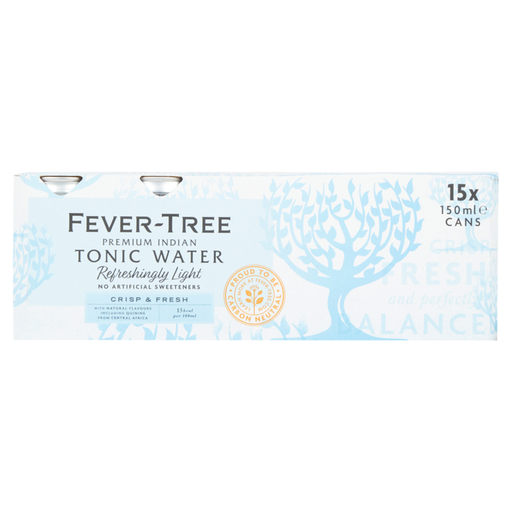
Consider this individual-can format if guests want a light Indian tonic with dinner: the pack contains 15 × 150 ml cans. Check the current label for its calorie and sugar figures, and assess any added alcoholic base separately.
 No image available
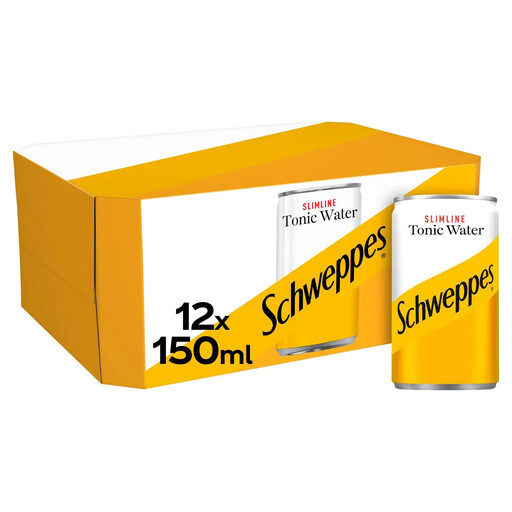
This 12 × 150 ml can pack offers individual tonic portions for a group. Check the exact pack’s sugar and sweetener information; if a guest needs to avoid phenylalanine, check the label for aspartame. Slimline does not describe a mixed drink’s ABV.
 No image available
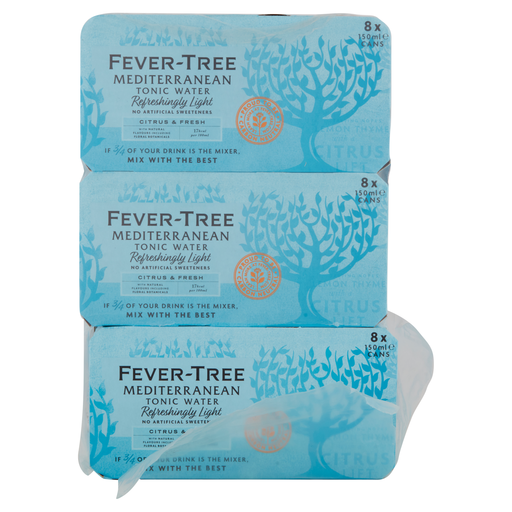
Choose this 8 × 150 ml can format if a Mediterranean-style tonic is the flavour you want to offer. Read the exact pack’s sugar information rather than treating “light” as sugar-free, and check any alcoholic base separately.
 No image available
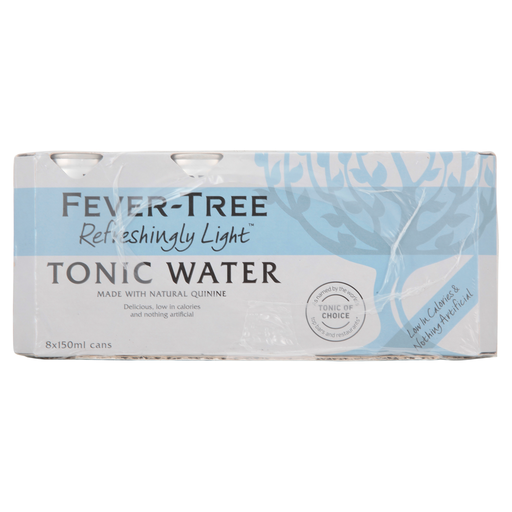
This pack contains 8 × 150 ml cans for individual tonic serves. Compare its current nutrition panel with other variants if sugar matters, and do not use its light name to judge the alcohol level of a drink made with spirits.
No. Light and slimline describe the mixer, while the alcohol level of a mixed drink depends on any alcoholic base and how much is added. Serve the mixer without added alcohol or check the base’s ABV and the amount used.
The UK Department of Health and Social Care’s 2018 guidance describes low-alcohol drinks as those at 1.2% ABV or less. A tonic labelled light or slimline is not, on that basis, a low-alcohol mixed drink.
Look for the sugar figure or an explicit no-sugar statement on the exact variant. Tesco describes its 1 L Schweppes Slimline Tonic Water as having no sugar, while Fentimans lists 3.4 g sugar per 100 ml for Naturally Light Tonic Water.
No flavour profile will suit every guest’s preferences. Fever-Tree describes a bitter-orange tonic profile, while Fentimans describes citrus and herbal notes; individual portions and a non-tonic option give guests a choice.
Check the current label for the exact variant and pack, including its ingredients and allergen information. For Schweppes Slimline, check for aspartame if a guest needs to avoid phenylalanine.