Hosts avoiding sugar
You need a tonic expressly described as having no sugar, rather than one that is simply lower in calories.


For a festival-food spread, choose a tonic explicitly labelled no sugar if avoiding sugar is the deciding requirement; a lighter tonic can still contain sugar. If flavour or serving format matters more, compare the nutrition and ingredients per 100ml, then choose small cans or bottles for individual drinks or a larger bottle for a self-serve table.
You need a tonic expressly described as having no sugar, rather than one that is simply lower in calories.
You want a lighter tonic but also care whether its bitter, citrus or botanical notes suit the drinks you plan to serve.
You are deciding between small cans or bottles for individual drinks and a larger bottle for a self-serve table.
Decide whether no sugar is essential before comparing flavour and pack size: a lower-calorie claim answers a different question.
| Priority | What to check | Your needs |
|---|---|---|
| Sugar and calories | Read sugars and energy per 100ml on the current pack. Compare any calorie-reduction claim with its named regular product, not with every tonic. | If I need to avoid sugar, I’ll look for an explicit no-sugar product. Tesco describes Schweppes Slimline as no sugar; Fentimans lists 3.4g sugar per 100ml for Naturally Light, despite its lighter positioning. |
| Ingredients | Check the ingredient list for sweeteners and quinine. GOV.UK says products with sweeteners must carry wording such as ‘With sweetener(s)’. | I want to know what is in the tonic before serving it to guests, particularly if someone has an ingredient they need to avoid. |
| Flavour | Look at the stated flavour ingredients and consider them alongside the spirit or alcohol-free drink being mixed. Fever-Tree describes bitter-orange oils in its Refreshingly Light Indian Tonic. | For these drinks, I may prefer a familiar tonic flavour or a more noticeable citrus and botanical profile; the sugar declaration still needs checking separately. |
| Serving format | Compare the volume of each can or bottle with the way drinks will be made. Tesco lists its Low Calorie Indian Tonic Water in 1-litre and 6 × 250ml formats. | Small containers would let guests make individual drinks; for a self-serve table, I’d consider a larger bottle after checking its current label. |
A tonic can have fewer calories than a regular version and still contain sugar. Fentimans lists 3.4g sugar per 100ml for Naturally Light, whereas Tesco describes Schweppes Slimline as no sugar.
If no sugar is essential, check that declaration and the current nutrition panel rather than relying on the word ‘light’.
A no-sugar tonic may use a sweetener, and tonic water can contain quinine. Those ingredients matter when you are serving someone who needs to avoid them.
Read the current ingredient list and label statements before buying or serving the mixer.
Individual cans or bottles and a large bottle suit different ways of making drinks alongside food.
Work out whether guests will make separate drinks or pour from a self-serve table, then choose a format that fits that plan.
These references show different sugar declarations, flavours and formats; check the individual product rather than assuming a claim applies to every mixer from a brand.
Slimline Tonic Water is an option when the requirement is an explicit no-sugar tonic.
Refreshingly Light Indian Tonic offers a lighter version of the brand’s Indian tonic in cans and bottles.
Naturally Light Tonic Water is a botanical tonic offered in 200ml bottles.
Tesco lists its Low Calorie Indian Tonic Water in formats for individual drinks or a shared table.
Britvic has described classic and zero-sugar Indian Tonic Water can variants.
These small-format tonic packs offer choices for individual drinks at a festival-food gathering. Check each product’s sugar declaration if no sugar is essential; a light or skinny name alone does not establish it.
 No image available
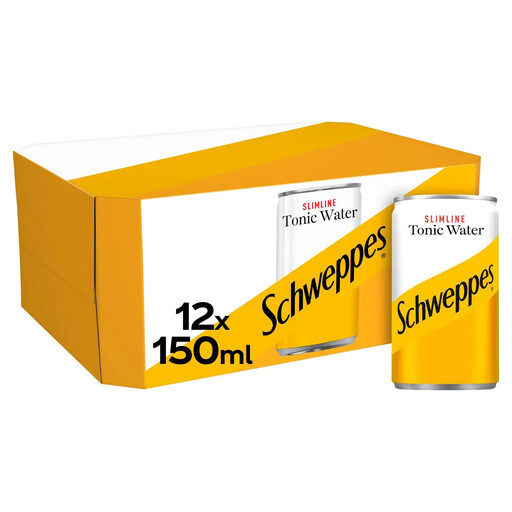
The 150ml cans are a format for individual serves. Tesco describes Schweppes Slimline as no sugar; check the current pack for its sweetener and quinine ingredients before serving.
 No image available
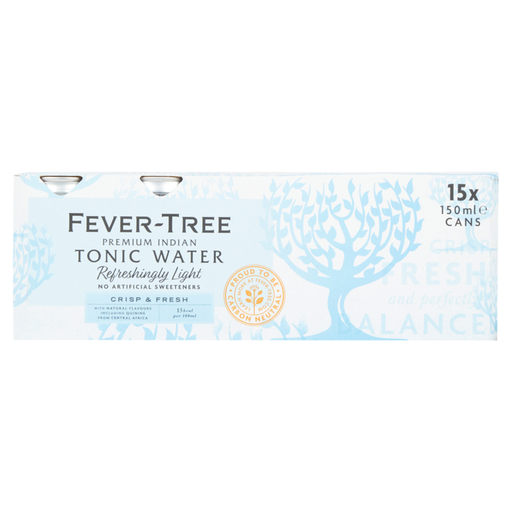
This pack provides 150ml cans for individual tonic drinks. Fever-Tree positions its Refreshingly Light Indian Tonic as lower in calories than its regular Indian Tonic; check this pack’s sugar and energy values rather than treating ‘light’ as no sugar.
 No image available
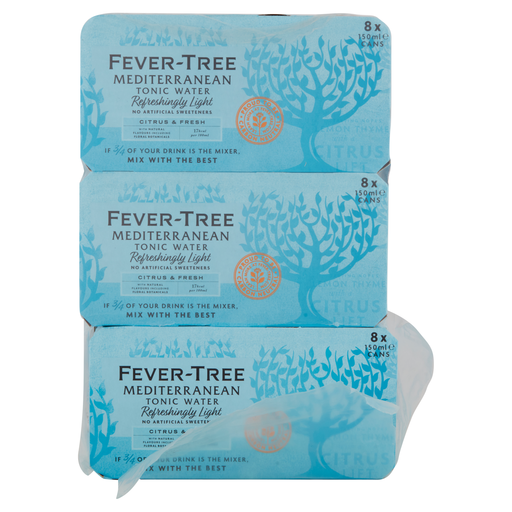
The Mediterranean variant comes here as eight 150ml cans for individual drinks. Compare its ingredients and per-100ml nutrition on the current pack if flavour or sugar content will determine your choice.
 No image available
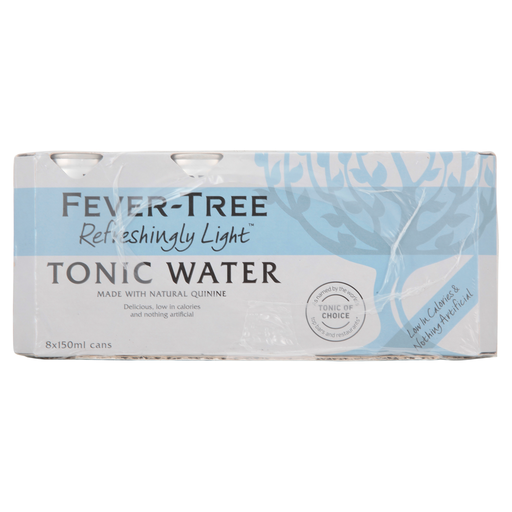
Eight 150ml cans offer an individual-serve format. If you need a no-sugar mixer rather than a light tonic, check this variant’s sugar declaration on the current pack.
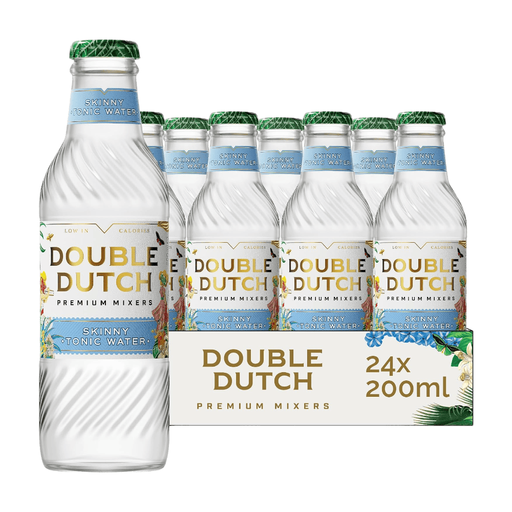 No image available
The 200ml bottles provide individual portions for a group. Check the current pack’s sugars and energy per 100ml before choosing it for a no-sugar or lower-calorie requirement; ‘skinny’ alone does not specify either value.
No. ‘Light’ can describe a calorie comparison rather than sugar content. Fever-Tree lists 15 calories per 100ml for its Refreshingly Light Indian Tonic against 30 for its Premium Indian Tonic, while Fentimans lists 3.4g sugar per 100ml for Naturally Light. Check the particular pack if no sugar is essential.
Read the ingredient list and label wording. GOV.UK guidance says products containing sweeteners must carry ‘With sweetener(s)’ wording; those containing both sugars and sweeteners must say ‘With sugar and sweetener(s)’.
Check whether a tonic contains quinine before serving it to that guest, and ask a pharmacist or clinician about a suitable alternative. The Medicines and Healthcare products Regulatory Agency notes that a previous adverse reaction to quinine can include exposure through tonic water or other beverages.