
24/7 Customer Support

Free returns

Same-day & Next-day Delivery

Quality Guaranteed

Unlock Your Welcome Offers: FREE Delivery | Up to 80% OFF | Free 30-day JoyPlus trial
Download the APP
A lightweight baby pushchair can make nursery runs, shopping trips and public transport considerably easier. However, a low weight does not automatically mean good comfort, suitable newborn support or reliable everyday handling. The right choice depends on how your family travels, your child’s age and the conditions where you expect to use it.
Before buying, watch for these common pitfalls:
A foldable baby pushchair should fit your actual storage space, not just appear compact in product photographs. Measure your car boot opening, hallway cupboard or luggage area before ordering.
Weight also needs context. A 6–8kg pushchair may be easier to lift than a larger pram, but the frame still needs to feel stable when loaded. A carry handle, one-hand folding mechanism or upright folded position can be more useful than saving a small amount of weight.
For frequent public transport or travel, compare:
A newborn pram or pushchair advertised from birth should provide a reclined position suitable for the manufacturer’s stated age range. Do not assume that every seat labelled “from birth” is interchangeable with a carrycot or infant car seat.
Look for an adjustable backrest and leg rest if you want one pushchair to serve from early months through toddlerhood. A fully reclining or near-flat position may support naps, while an upright position gives an older child a clearer view.
Always check:
Some models support up to 22kg, while others listed here have a 15kg maximum. That difference may affect how long the pushchair remains suitable.
A 5-point harness pushchair helps secure the child at the shoulders, waist and between the legs. It must be adjusted snugly according to the instructions and checked before every outing. A linked or dual rear brake can be convenient when stopping on pavements or while loading shopping.
For UK weather and city use, consider a pushchair with canopy that offers adjustable coverage, a viewing window or ventilation. A raincover is useful for showers, but it should be used as directed to maintain airflow.
Wheel size, swivel locks and suspension affect manoeuvrability. Front swivel wheels generally help with tight turns, while lockable wheels can add control on rougher paths. Suspension may reduce the impact of small bumps, but no compact travel pushchair should be treated as suitable for stairs or steep slopes.
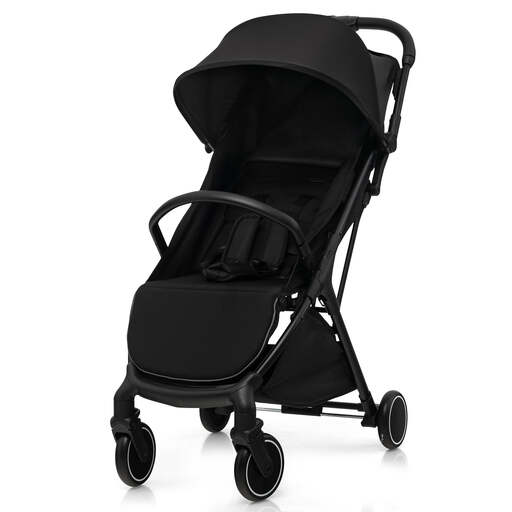
Why This Fits Their Persona: A practical option for families seeking a lighter everyday pushchair for pavements, shopping and short trips. It weighs 7kg and is specified for children from 0–36 months, up to 15kg.
The 115°–170° backrest range, adjustable footrest, canopy and 5-point harness provide more than a basic upright umbrella pushchair.
One-hand folding, a removable backrest section and a stated 2kg basket capacity support everyday errands.
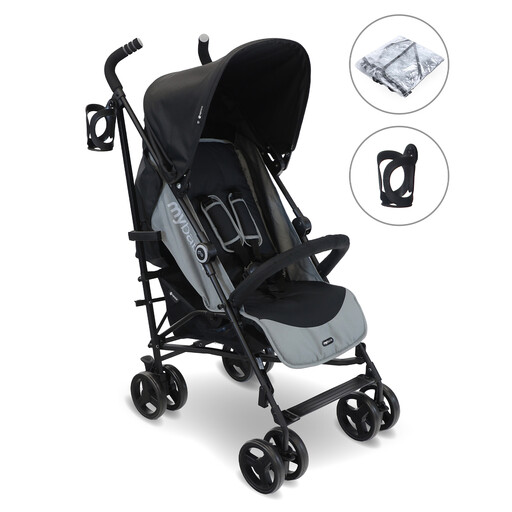
Why This Fits Their Persona: Suitable for parents who want a feature-rich compact pushchair for regular town walks, car travel and park paths, with a stated child capacity of up to 22kg.
Its 8kg frame is paired with a fully reclining seat, adjustable leg rest, suspension and lockable front swivel wheels.
It includes an XL three-position UPF50+ canopy, raincover, cup holder and a large under-seat basket. The product description states compliance with EN1888-1 & 2:2018.
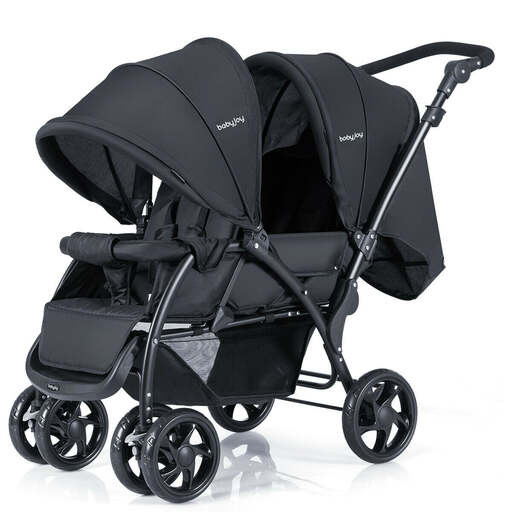
Why This Fits Their Persona: Designed for twins or siblings, this double pushchair places two seats one behind the other and supports up to 15kg in each seat.
It avoids buying two separate pushchairs, while each seat has a 5-point belt, adjustable backrest and folding sunshade.
The steel frame, linked rear brake and under-seat storage basket are suited to family outings, although its stated 14kg weight is considerably higher than a single pushchair.
We have compiled a complete, real-time list of products that fully satisfy these strict selection criteria and UK safety regulations.
It can be, but only when the product is specifically stated to be suitable from birth and offers the required reclined position. Check the manufacturer’s instructions rather than relying solely on the phrase “newborn pushchair”.
Lifespan depends on the child’s growth, the product’s maximum load and how frequently it is used. A model rated to 22kg may remain suitable longer than one rated to 15kg, provided the frame, wheels, harness and brakes remain in good condition.
Many are suitable for pavements, shopping centres, public transport and maintained park paths. If you regularly use rough ground, compare wheel size, suspension and wheel locks. A compact pushchair is not automatically suitable for stairs, steep slopes or heavily uneven terrain.