
24/7 Customer Support

Free returns

Same-day & Next-day Delivery

Quality Guaranteed

Unlock Your Welcome Offers: FREE Delivery | Up to 80% OFF | Free 30-day JoyPlus trial
Download the APP
A lightweight baby stroller can make school runs, shopping trips and journeys by car considerably easier. However, a low weight alone does not tell you whether a pushchair will suit your child, your local pavements or the space available in your home.
The most useful comparison points are the folded dimensions, recline position, harness, wheel design, basket capacity and age or weight limit. These details help separate a genuinely practical lightweight pushchair from one that is merely marketed as compact.
A very light frame may be convenient to lift, but some models have a lower maximum load. Check the stated limit rather than assuming the stroller will last until approximately four years old. For example, some models accept up to 15kg, while others are rated up to 22kg.
Also check the age guidance. A stroller described as suitable from birth should have a sufficiently deep recline, but you should still follow the supplied instructions and ensure the baby is correctly supported.
“Compact” can mean different things. An umbrella-style fold may be tall and narrow, while a one-hand folding pushchair may fold into a shorter, boxier shape. Measure your car boot opening, hallway cupboard or luggage space before ordering.
The package dimensions may also differ from the folded stroller dimensions, so look for the product’s specific folding measurements where available.
A cup holder or raincover is useful, but it should not distract from essential features such as a 5-point harness pushchair, reliable brakes and a suitable recline. Similarly, a large canopy is only useful if it remains stable when extended and does not interfere with folding.
For a baby buggy from birth, look for a multi-position backrest with a near-flat or fully reclining position. This can provide more flexibility for naps and younger babies, while an upright setting is useful when an older child wants to look around.
A footrest or leg rest that adjusts with the seat can improve comfort as your child grows. Always use the harness as directed, even when the seat is reclined.
A stroller weighing between approximately 6kg and 8kg is generally easier to carry than a full-size pram, although the frame design and handle position also affect portability. A carry handle is useful for lifting an umbrella fold stroller into a car boot.
A one-hand folding mechanism is convenient, but check whether the seat must be placed in a particular position before folding. Keep fingers clear of hinges and confirm that the frame locks securely when unfolded.
Small swivel front wheels can help with manoeuvring around shops and pavements. Lockable front wheels may provide additional directional stability on rougher paths. An all-wheel suspension stroller can help reduce the sensation of bumps on ordinary city streets and park paths, although no lightweight model should be treated as an off-road vehicle.
A linked rear brake or single-pedal brake can be quicker to operate when you are holding a child or shopping. Engage the brake whenever the stroller is stationary, particularly on slopes.
A stroller with storage basket can hold nappies, snacks and lightweight shopping, but do not overload it beyond the stated limit. Avoid hanging heavy bags from the handles, as this can affect stability.
A baby stroller with canopy should offer enough coverage for everyday outdoor use. Features such as a viewing window, adjustable sections and a raincover can be practical in changeable UK weather. UPF-rated fabric is a product feature, but it does not replace sensible sun protection or supervision.
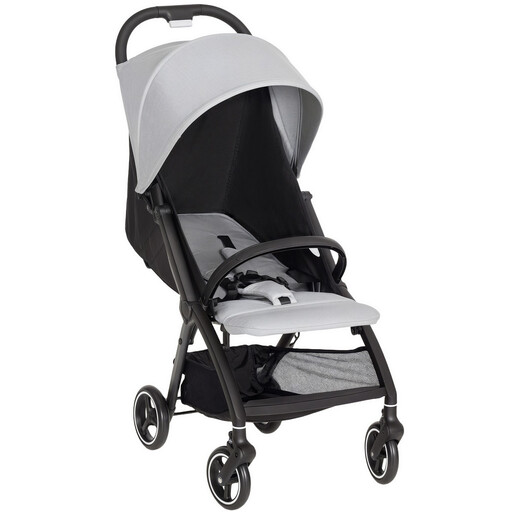
Why This Fits Their Persona: At 6.3kg, this compact pushchair suits parents who want a manageable option for short trips, public transport and car-boot storage without a bulky frame.
The 115°–170° backrest range, adjustable footrest, canopy and 5-point harness provide more than a basic seat and frame.
One-hand folding, front-wheel suspension, under-seat basket and a stated 15kg maximum load.
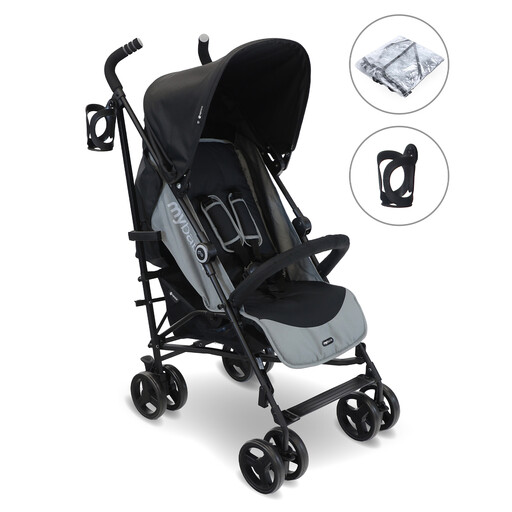
Why This Fits Their Persona: This 8kg model is suited to families seeking a fuller feature set for frequent walks, shopping and everyday use from birth.
Its fully reclining seat, 5-point harness, linked parking brakes and stated EN1888-1 & 2:2018 standards address key omissions found in simpler strollers.
All-round suspension, XL UPF50+ canopy, large basket, raincover and cup holder; maximum child weight is stated as 22kg.
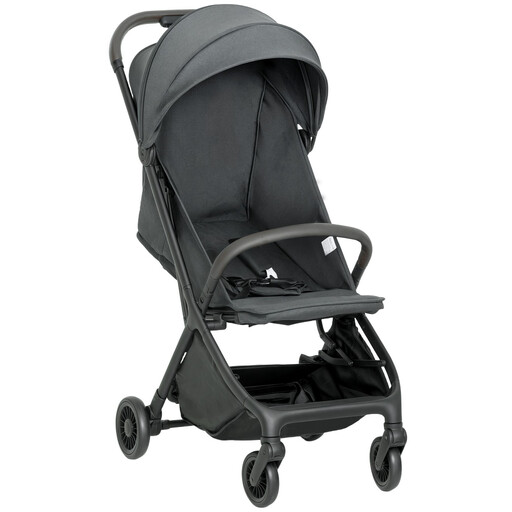
Why This Fits Their Persona: The 6.3kg frame and single-hand fold are practical for trains, holidays and moving between a home and car boot.
The product lists a 56 x 50 x 25cm folding size, rather than relying only on the word “compact”.
170° maximum recline, three-section canopy, four-wheel suspension, EVA tyres and a spacious storage basket.
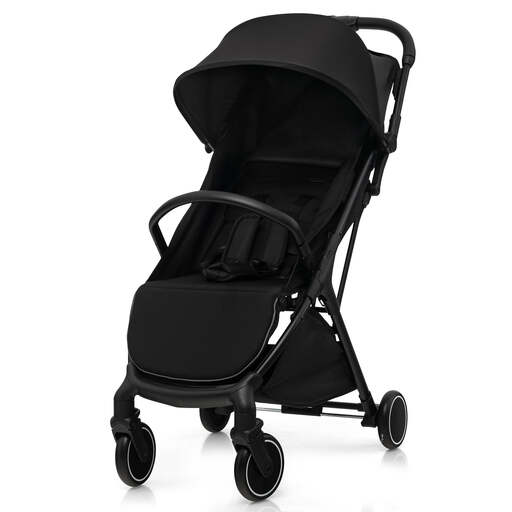
Why This Fits Their Persona: This option suits families prioritising cleanability, adjustable comfort and a sturdy everyday arrangement for pavements and shopping trips.
It combines a 7kg aluminium frame with a 5-point harness, rear-wheel one-step brake and adjustable backrest rather than focusing on weight alone.
115°–170° recline, three-position footrest, removable seat cover, large basket and stated 15kg seat capacity.
Before the first outing, assemble the stroller according to its manual and check that:
Do not use a stroller on stairs or steep slopes, and avoid attaching heavy bags to the handles. Inspect the frame, wheels, brakes and harness regularly. Fabric can usually be wiped with mild soap and water, while the metal frame should be dried before storage.
We have compiled a complete, real-time list of products that fully satisfy these strict selection criteria and UK safety regulations.
Only if the product specifically states that it is suitable from birth and provides an appropriate recline position. Follow the manufacturer’s age, weight and harness instructions. A stroller designed only for sitting should not be used with a newborn.
The usable period depends on the child’s weight, age guidance and the condition of the frame. Models in this guide have stated limits of either 15kg or 22kg. Stop using a stroller if the brakes, harness, frame or wheels are damaged, even if the child is below the maximum weight.
Most have no ongoing power costs. Regular expenses may include replacement wheels, covers or other manufacturer-approved parts. Keeping the frame dry, cleaning the fabric correctly and avoiding overloading can help reduce avoidable wear.