
24/7 Customer Support

Free returns

Same-day & Next-day Delivery

Quality Guaranteed

Unlock Your Welcome Offers: FREE Delivery | Up to 80% OFF | Free 30-day JoyPlus trial
Download the APP
A lightweight baby stroller can make trips to the shops, nursery, railway station or airport considerably easier. However, a low weight alone does not guarantee a practical pushchair. Some compact models sacrifice basket space, seat support or wheel performance, while others are advertised as suitable from birth without clearly explaining the required recline position.
Before choosing a foldable baby stroller, look beyond promotional wording and check the measurements, age range, safety features and folding method. The following guide highlights common buying traps and matches several options to different UK family routines.
A frame weighing 6–8kg is convenient to lift, but it may not tell you how easy the stroller is to push when the basket is loaded. Small wheels can be suitable for pavements and shopping centres but less comfortable on gravel, grass or poorly maintained paths.
Check the wheel size, suspension system and handle design rather than relying on the word “travel”. A baby stroller with suspension may provide a more controlled ride over ordinary bumps, but no compact pushchair should be treated as an all-terrain model unless its instructions say so.
A baby pushchair from birth should offer a recline position appropriate for a young baby, with the child correctly supported according to the manufacturer’s instructions. A seat that reclines may still not be a carrycot or a completely flat newborn pram.
Read the approved age range, maximum load and recline guidance carefully. Never add an unapproved cushion, nest or accessory to alter the seat position, as this may affect fit, harness use and stability.
“Compact” can mean different things. A stroller may fold quickly but remain too tall or wide for a small car boot, cupboard or train luggage space. Compare the folding size with your available storage area, and check whether the folded pushchair can be carried comfortably.
A one-hand folding stroller is helpful when holding a child or shopping, but practise the mechanism before relying on it. The frame should lock securely when open and remain stable when folded.
For frequent lifting, compare the net weight rather than the packaged weight. The AIYAPLAY travel model listed below weighs 6.3kg and folds to 56H x 50L x 25W cm. Another lightweight model weighs 7kg and folds to 28 x 50 x 77cm.
Also check the child’s maximum weight. A newborn to toddler stroller may be listed for 0–36 months but have a 15kg limit, while another option may support up to 22kg. The age range and weight limit should both suit your expected period of use.
For naps and longer outings, a reclining baby stroller with more than one seat position can be more adaptable. An adjustable footrest may improve leg support as your child grows.
A correctly fitted 5-point harness pushchair should have adjustable shoulder and waist straps. Use the harness every time, even for short journeys, and follow the supplied instructions for tightening and positioning. Check that the buckle is easy for an adult to operate but cannot be opened accidentally by a child.
Look for a clearly described parking brake, preferably one that locks both rear wheels together. Swivel front wheels can improve manoeuvrability in shops and narrow pavements, while wheel locks may offer more directional control on uneven surfaces.
A stroller with storage basket should have enough capacity for nappies, snacks and light shopping without encouraging you to hang heavy bags from the handle. Excessive handle weight can affect balance.
Product listings may reference standards such as EN 1888 or EN 1888-1 & 2:2018. These references are useful points to check, but they do not remove the need to read the product warnings, assembly instructions and maintenance guidance. Inspect brakes, locks, wheels, harnesses and frame joints regularly.
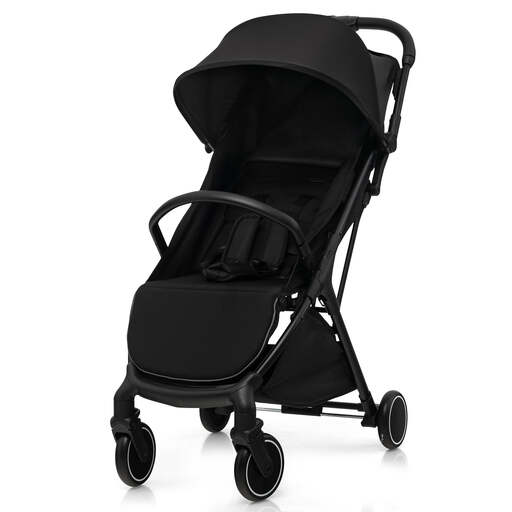
Why This Fits Their Persona: A practical choice for families wanting a straightforward lightweight pushchair for travel, local errands and occasional car journeys.
The listing provides unfolded and folded dimensions, a 15kg seat limit, one-hand folding and a 5-point harness, making key buying details easier to compare.
7kg aluminium frame; adjustable backrest, footrest and canopy; rear-wheel one-step brake and under-seat basket.
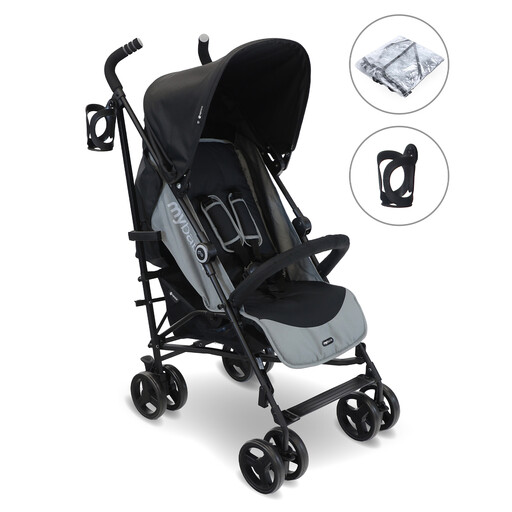
Why This Fits Their Persona: Suits parents who prioritise a longer stated usage range, added padding and practical extras for regular outings.
Its 8kg weight is clearly stated alongside an umbrella fold and carry handle, so portability can be weighed against its higher 22kg maximum load.
Fully reclining seat; adjustable leg rest; all-round suspension; XL UPF50+ canopy, raincover and cup holder included.
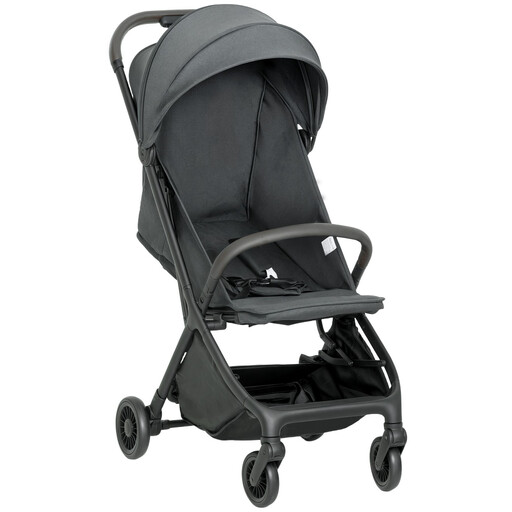
Why This Fits Their Persona: Designed around compact storage and quick handling for car boots, public transport, city walks and weekend trips.
The 6.3kg weight is paired with a stated folded size, four-wheel suspension and EVA tyres, giving more useful information than a generic travel label.
115°–170° backrest recline; adjustable footrest; single-pedal double brake; large basket and three-section canopy.
We have compiled a complete, real-time list of products that fully satisfy these strict selection criteria and UK safety regulations.
Use this checklist after assembly:
It can be, but only when the product is specifically approved from birth and its recline and harness instructions are followed. Check whether the seat offers the required supported position for a newborn. If you need a fully flat sleeping surface, compare the stroller with a carrycot-compatible pram rather than assuming every reclining seat is suitable.
Lifespan depends on the frame, wheels, frequency of use, terrain, cleaning and maximum load. A stroller rated from birth to 36 months may be outgrown sooner if your child reaches the weight limit first. Regularly check brakes, folding locks, harnesses and wheel attachment points, and stop using the pushchair if any structural part is damaged.
The main ongoing costs may include replacement rain covers, wheels, harness parts or other manufacturer-approved components. Before buying, check whether spare parts and care instructions are available. Avoid unapproved accessories that alter the seat, harness or balance, even if they appear inexpensive.