
24/7 Customer Support

Free returns

Same-day & Next-day Delivery

Quality Guaranteed

Unlock Your Welcome Offers: FREE Delivery | Up to 80% OFF | Free 30-day JoyPlus trial
Download the APP
A lightweight baby stroller can make nursery runs, public transport and car-boot storage considerably easier. However, a low weight figure alone does not tell you whether a pushchair will suit your child, your routes or the UK weather.
Marketing descriptions can also hide practical compromises. A stroller may fold compactly but have limited basket space, or claim to be suitable from birth without offering a genuinely suitable reclined position. Before buying, check the details that affect everyday use rather than relying on appearance or a single headline feature.
A very light pushchair may be easy to lift, but it still needs adequate seat padding, leg support and suspension. Hard urban pavements, kerbs and park paths can make a basic frame uncomfortable if the wheels and suspension are not suited to your usual routes.
Look for a reclining baby stroller with adjustable leg support, particularly if you expect your child to nap during longer outings.
A baby pushchair from birth should offer a suitably deep recline and a secure harness arrangement that can be adjusted as your baby grows. Always check the manufacturer’s age, weight and usage instructions. A stroller designed mainly for an upright toddler position may not be appropriate for a newborn simply because the product listing uses “0+”.
“Compact” can mean different things. Check the folded dimensions against your car boot, hallway cupboard or luggage space. Also confirm what is included. A stroller with raincover may be more practical in changeable weather than a similar model requiring separate purchases. A stroller with footmuff can also reduce the need for extra layers during colder months, although it should be used according to the supplied instructions.
For frequent lifting, a frame weighing around 6–8kg may be easier to carry than a heavier full-size model. The AIYAPLAY travel models listed below weigh 6.3kg, while the My Babiie MB02 Plus is listed at 8kg. Compare this with the folded footprint and the folding method.
An umbrella fold can be convenient for public transport and storage, while a one-hand fold may be useful when holding a child or shopping. A carry handle or upright standing position can make a noticeable difference in daily use.
For a child who will use the stroller from birth, check the recline range and whether the seat is described as fully reclining or lay-flat. A 5-point harness stroller should allow adjustment for a snug fit without restricting movement.
Also check the maximum load. Several models in this selection are rated to 15kg, while the My Babiie MB02 Plus and MB30 Plus are listed up to 22kg. Do not exceed the stated limit, and remember that basket capacity may have a separate restriction.
An adjustable canopy stroller can provide more useful coverage as the sun moves during a walk. UPF-rated fabric, viewing windows and ventilation panels are practical details, but a canopy does not replace sensible sun protection or supervision.
For pavements and park paths, suspension, swivel front wheels and linked brakes can improve handling. Look for published information about relevant standards, such as EN1888 or EN1888-1 & 2:2018, but still follow the product manual, warning labels and assembly instructions. These details do not remove the need to check locks, brakes, wheels and harnesses before each use.
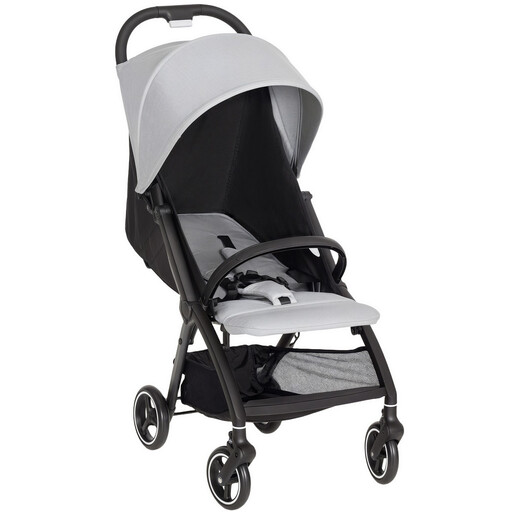
Why This Fits Their Persona: At 6.3kg, this compact pushchair is suited to parents who need a manageable option for short city trips, car journeys and everyday errands.
The 115–170° adjustable backrest, two-position footrest and 5-point harness address the common problem of prioritising low weight over adjustability.
One-hand folding, front-wheel suspension, a storage basket and a canopy are specified; the listed maximum load is 15kg.
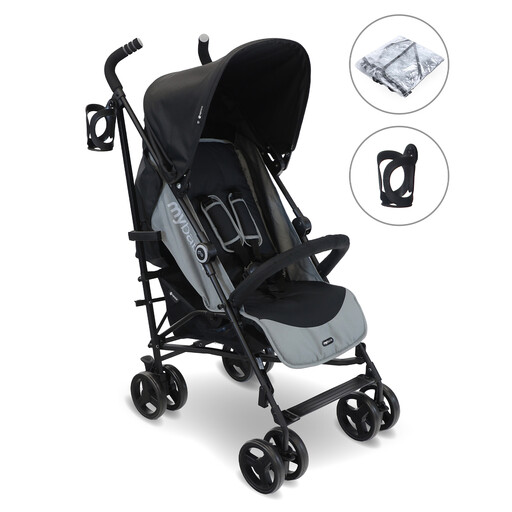
Why This Fits Their Persona: This option suits parents seeking more detailed comfort and handling features for regular urban walks and longer outings.
Its fully reclining seat, adjustable leg rest and all-round suspension provide more than a basic umbrella stroller specification.
The 8kg frame has an umbrella fold, UPF50+ canopy, linked parking brakes, lockable swivel wheels and an included raincover and cup holder.
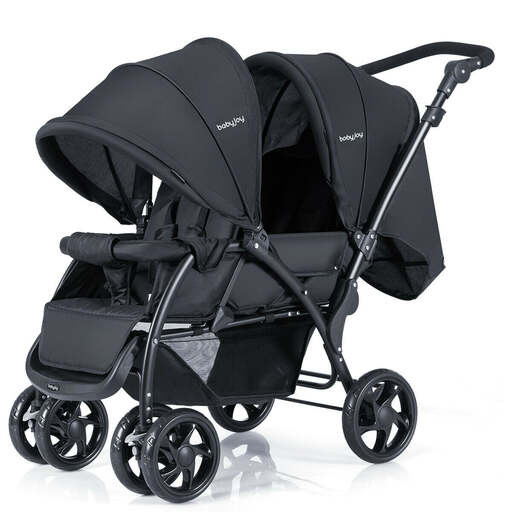
Why This Fits Their Persona: Families travelling with two young children may value two seats more than the lower weight of a single stroller.
The front seat is listed for 6–36 months and the rear seat from birth to 36 months, helping buyers match each position to a child’s age.
It has two 5-point belts, adjustable backrests and sunshades, a one-step rear brake and a folded design for transport.
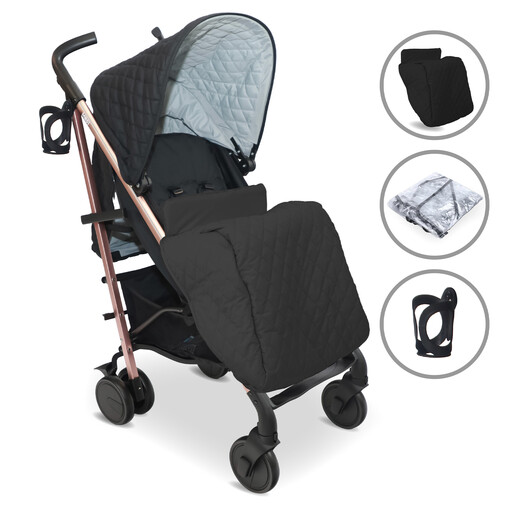
Why This Fits Their Persona: Parents combining car travel, public transport and daily walks may appreciate its umbrella fold and supplied weather accessories.
The fully reclining seat helps address the “from birth” pitfall, while the supplied raincover and footmuff reduce accessory gaps.
It includes a 3-position UPF50+ canopy, adjustable leg support, padded seat, 5-point harness, basket and cup holder.
We have compiled a complete, real-time list of products that fully satisfy these strict selection criteria and UK safety regulations.
It can be, provided the model is specifically approved for newborn use and offers the required recline position. Check the stated age range, maximum weight and instructions before use. Do not rely on the word “lightweight” alone.
Lifespan depends on the weight limit, frequency of use, storage conditions and maintenance. A model rated to 15kg may suit birth to toddlerhood, while one rated to 22kg may provide a longer usable period. Regularly inspect the frame, folding lock, brakes, wheels, harness and fabric.
Assemble it according to the manual, confirm that every locking device engages, test the brakes and check that the harness is correctly adjusted. Avoid stairs and escalators, do not hang heavy bags from the handles, and never leave a child unattended.