
24/7 Customer Support

Free returns

Same-day & Next-day Delivery

Quality Guaranteed

Unlock Your Welcome Offers: FREE Delivery | Up to 80% OFF | Free 30-day JoyPlus trial
Download the APP
For UK parents, a lightweight foldable baby pushchair can make daily life easier on buses, trains, narrow pavements and family holidays. However, a low weight alone does not guarantee a suitable pushchair. A frame may be easy to lift but uncomfortable for a newborn, awkward to fold or too small for a growing toddler.
Before buying, consider how the pushchair will be used: commuting, shopping, park walks, holidays or regular car journeys. The right choice should balance age suitability, safety features, folded dimensions, comfort and storage rather than focusing on a single headline feature.
Some listings use “from birth” while offering only a partial recline. A newborn generally needs a well-supported, near-flat position and a correctly adjusted harness. Check the manufacturer’s recommended age, maximum weight and recline specifications. A baby pushchair from birth should also provide adequate head and body support, not simply a seat that tilts backwards.
A pushchair can be described as compact yet still be too long for a small car boot, cupboard or hallway. Compare both unfolded and folded measurements. For example, a folded length of 105cm may require more boot space than a model measuring approximately 56cm high, 50cm wide and 25cm deep.
Measure the boot opening as well as the available internal space. This is particularly important when looking for a travel pushchair for car boots or a pushchair for public transport.
A lower weight can help with stairs and lifting, but very small wheels and limited suspension may make kerbs, gravel and uneven pavements uncomfortable. Look for practical details such as baby pushchair with suspension, lockable swivel wheels and reliable brakes. Also check the basket capacity: a pushchair with storage basket should carry everyday essentials without making the frame unstable.
Check whether the model is suitable from birth, six months or another stated age. A reclining baby buggy with several backrest positions can be useful for naps and upright viewing, but the stated age guidance remains the deciding factor.
Maximum load also matters. Some compact options support up to 15kg, while others are rated to 22kg. A higher limit may allow longer use, but the seat width, backrest height and footrest should still suit your child as they grow.
A 5-point harness pushchair should allow adjustment around the shoulders, waist and legs. It must be secured snugly according to the instruction manual, without bulky clothing interfering with the fit. Look for a parking brake that is easy to engage and test it on level ground before regular use.
Several products in this selection list EN1888 or EN1888-1 & 2:2018 compliance. These references relate to requirements for wheeled child conveyances, but parents should still read the supplied instructions, warnings and product documentation. Do not use a pushchair with damaged locks, loose wheels or a harness that does not fasten correctly.
A one-hand folding pushchair may be useful when holding a child or carrying shopping, but confirm whether the fold requires the seat to be upright, the canopy to be closed or both hands to release a safety catch.
For regular lifting, compare weights carefully:
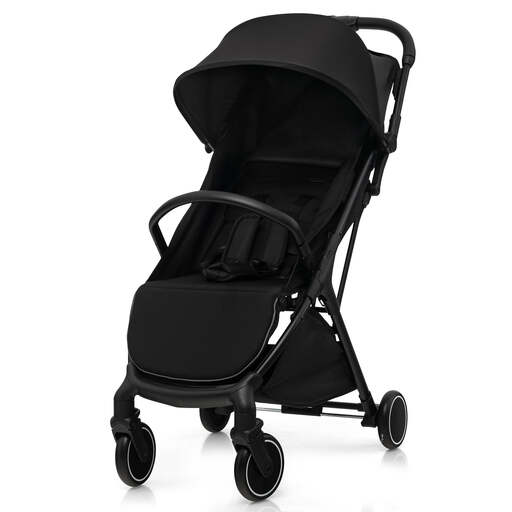
Why This Fits Their Persona: A practical option for parents seeking a portable everyday pushchair for town trips, shopping and car travel without moving to a heavier frame.
The specifications state a 0–36-month recommendation, a 115°–170° reclining backrest and a 5-point harness. Check the manual before use with a newborn.
7kg aluminium frame, one-click folding, storage basket, adjustable canopy and rear-wheel one-step brake.
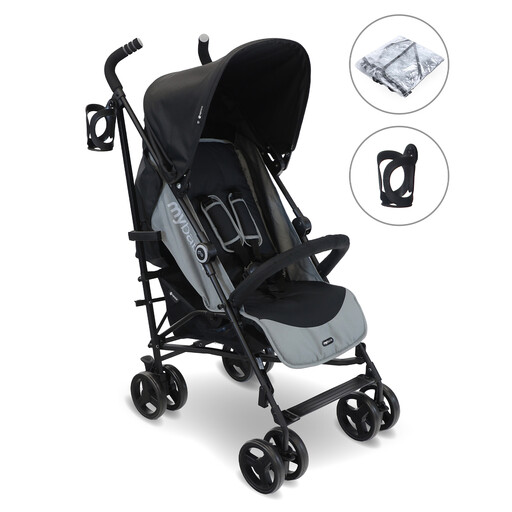
Why This Fits Their Persona: Suits families wanting extended use, a padded reclining seat and additional weather and travel accessories for frequent outings.
Its listed 8kg frame is paired with all-round suspension, a fully reclining seat and a 5-point harness rather than relying on low weight alone.
Suitable from birth up to 22kg, with umbrella folding, carry handle, XL UPF50+ canopy, raincover and cup holder.
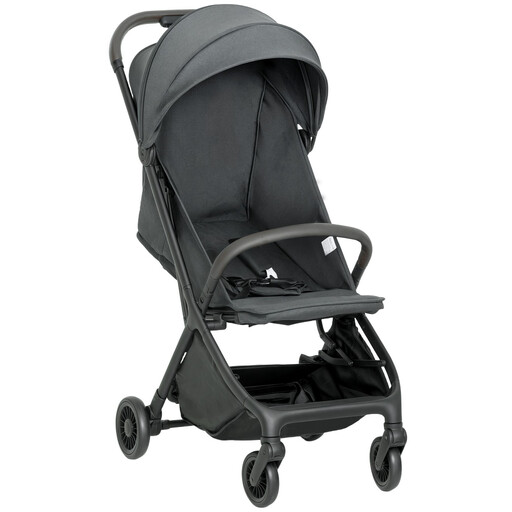
Why This Fits Their Persona: Its 6.3kg weight and compact fold are suited to parents lifting onto public transport or placing a pushchair into a smaller car boot.
The folded dimensions are listed as 56cm high, 50cm long and 25cm wide, while four-wheel suspension addresses the limitations of a lightweight travel frame.
6.3kg aluminium frame, single-hand fold, 115°–170° recline, adjustable footrest, storage basket and listed EN1888 and BS5852 standards.
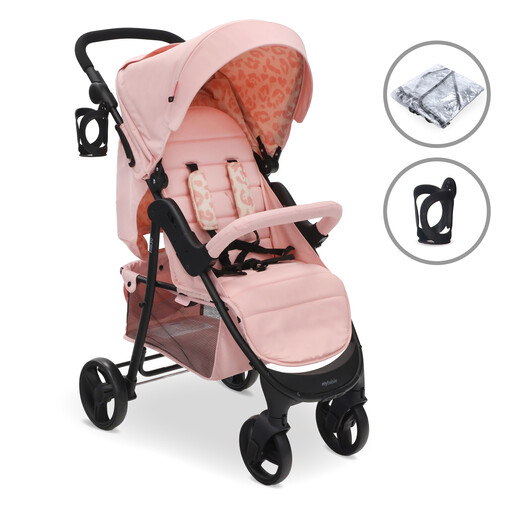
Why This Fits Their Persona: A suitable match for families prioritising a higher maximum child weight, adjustable parent comfort and a sizeable everyday basket.
It combines an 8.1kg weight with front and rear suspension, a multi-position recline and a 5-point harness, rather than offering a basic lightweight frame.
Suitable from birth up to 22kg, with a 74–105cm adjustable handle, adjustable leg rests, raincover, cup holder and large shopping basket.
We have compiled a complete, real-time list of products that fully satisfy these strict selection criteria and UK safety regulations.
Before each outing, check that the frame has locked open, the wheels are secure and the brake releases correctly. Use the harness every time, even for short journeys. Avoid hanging heavy bags from the handles, as this can affect stability. Keep within the stated maximum load and do not use a pushchair for running, skating or steep steps unless the manufacturer specifically permits it.
Clean fabric according to the manual and wipe the frame dry after wet weather. Periodically inspect wheels, folding joints, screws and suspension. Stop using the pushchair if any part is damaged or if it has been involved in an accident.
Some are, but not all. Look for a clearly stated birth recommendation and a recline position suitable for a young baby. Always follow the product manual and use the harness correctly.
A model between approximately 6kg and 8kg is generally easier to lift than a heavier frame, although the best fit depends on your strength, stairs and available storage. Also check the folded dimensions and whether a carry handle is included.
This depends on its maximum load, construction and care. Models listed up to 15kg may suit children through the stated 0–36-month range, while models rated to 22kg may offer longer use. The child’s height, seat width and comfort should be checked as well as the weight limit.